You Can't Automate People
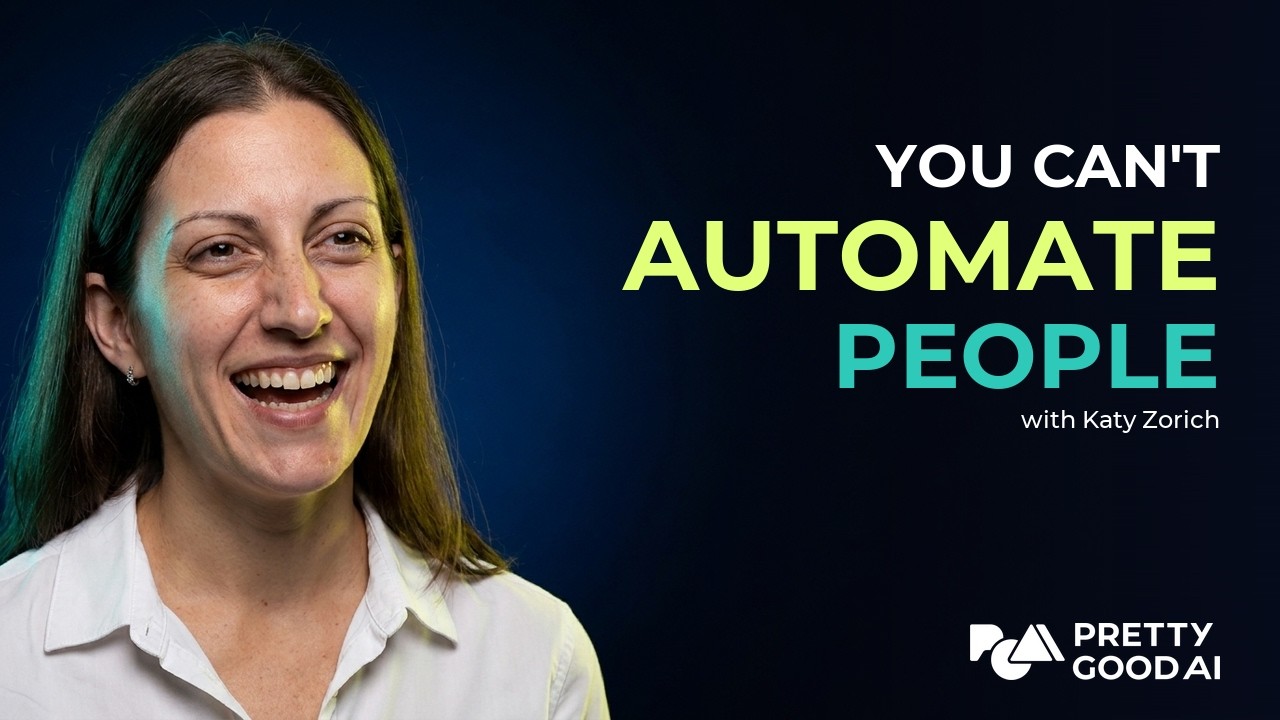
Katy Zorich, VP of People Operations at Zarminali Pediatrics, on how a three-person team supports 800+ employees through roughly a dozen acquisitions, and why the first thing you standardize is not the software.
With Katy Zorich, VP of People Operations at Zarminali Pediatrics
Key takeaways
- A three-person people ops team carries 800+ employees, only because the boring HR machinery is templatized, not because anyone is working harder.
- Standardize the definition of full-time equivalency before you standardize anything else. Benefits, PTO accrual, and holiday pay all hang off it.
- A transition of services agreement buys the acquired practice time: changes land in sequence over months, not all at once on day one.
- Run the benefits comparison during diligence so the first conversation with a new group has real dollar figures in it.
- "Do no harm" beats "day-one alignment" on compensation, roles and pay do not change overnight.
- The more standardized a practice already is, the less there is to automate twice.
Everybody loves the roll-up story from the deck: raise the fund, buy the clinics, march toward scale. Almost nobody talks to the person who has to actually merge the people, the handbooks, the benefits, the job titles, the twelve different definitions of “full-time.”
Katy Zorich is that person. She is VP of People Operations at Zarminali Pediatrics, a venture-backed pediatric platform that has raised over $100 million and completed roughly a dozen acquisitions in about two years. She and two teammates, plus a Chief People Officer and two recruiters, support more than 800 employees spread from rural Tennessee to downtown Las Vegas.
Her path there is not the usual one. She left a neuroscience PhD program after realizing she did not want to spend a career writing grants, took a job at a University of Pittsburgh research center sitting across the table from people going through cognitive testing, and learned to build a room where someone will tell you the truth. That turns out to be the whole job.
“I learned very quickly how to create safe spaces so that people could show up as their full selves — and that is a skill set that has carried through every single job experience I’ve had since then.”
Twelve acquisitions, twelve open enrollments
Most HR leaders run open enrollment once a year. Katy has effectively run it once per deal. The thing that makes that survivable is not stamina, it is sequencing.
Every acquisition starts with a transition of services agreement (a TSA) that deliberately staggers what changes and when. New employees are not handed a new handbook, a new benefits plan, a new payroll system, and a new EHR on the same Monday. Full integration runs anywhere from a couple of months to closer to a year depending on the group.
The other lever is diligence. Her broker team runs a benefits analysis before the deal closes, comparing the group’s existing plan against what Zarminali offers, so the very first conversation with employees uses actual dollars rather than reassurance.
“Whether that’s for the best, or there’s a little bit of change management we have to do right out of that first conversation, we are at least going into it prepared with actual dollars.”
The first thing to standardize is a definition, not a system
Asked what she would put at the top of the standardization list, Katy did not name a platform. She named a phrase: full-time equivalency.
Every group they acquired had been thinking about it slightly differently. Some counted patient-facing hours; others counted patient-facing hours plus admin time. Some clinicians worked four ten-hour shifts but were clocked for eight and a half or nine. Is that a 36-hour week or a 40-hour week? Had someone been working 30 hours and calling it full-time?
None of that is academic. Benefit eligibility, paid leave eligibility, PTO accrual rates, and holiday pay all hang off that one definition, which is why the questions show up downstream as “why wasn’t I paid for this holiday?” weeks after close.
“We need to level set on full-time equivalency — really start at the basics — in order to adequately support and iron out a lot of those wrinkles.”
Moving a practice onto athenaOne without breaking it
Systems come later, and the EHR is the loudest change of all. Katy is blunt about the amount of unglamorous work that sits underneath a migration to athenaOne: mapping the data over, confirming the configuration is right, and understanding how the clinic actually operates before go-live.
The bar she sets is not “launch on schedule.” It is: do not break the thing you came to improve.
“It takes a lot of legwork just to map over to Athena and make sure things are set up correctly — that we’re not breaking things when we’re introducing a process that’s supposed to improve things at the clinic.”
Rural Tennessee is not downtown Vegas
A national platform still runs local clinics, and Katy’s answer to holding both is a principle rather than a policy: aim to do no harm through the transition. Your role is not changing overnight. Your compensation is not changing overnight. Each acquisition gets its own compensation analysis, and to date they have not used the transition as a moment to reset pay.
What employees get instead is legibility, what is happening, when, why, and what they need to do about it. That is a lower-drama promise than “day-one alignment,” and it is the one that keeps a practice’s staff intact through the handoff.
Why this matters if you are automating anything
There is a line in the middle of the conversation that is really about software, even though nobody was talking about software.
The easier a process is to automate, the more standard it already was. When a group arrives with one intake workflow, one definition of a full-time clinician, and one way of handling after-hours calls, automation is a build. When it arrives with twelve variants, automation is twelve builds, and every one of them is a place for something to drift.
That is the case for doing the boring work Katy describes: the standardization that looks like HR hygiene is what makes the rest of the roll-up automatable at all. The machinery gets templatized so a team of three can carry 800 people. The part in the middle, the conversation where someone finds out what is happening to their job, is the part you do not hand off.
You can’t automate people. You can stop making them absorb twelve versions of everything.
Transcript
Read the full transcript
So currently I support two people on my team. So the three of us collectively run people operations with the support of our chief people officer as well. We also have two recruiters, one that's completely dedicated to clinician recruiting and another that recruits for all other roles. but with 800 plus employees at the company, that's a lot. It's a it's a big undertaking, right?
Welcome to the Pretty Good AI podcast. I'm your host, Kevin Henrikson, Co-founder of Pretty Good AI. We build voice agents and automations for athena practices.
Every episode I sit down with operators that are actually running healthcare, practice owners, executives, the people behind the front desk and the EHRs get specific about what's working, what's breaking, and where technology actually helps.
No hype, no hand waving, just how the work actually gets done.
Three things that go wrong when you scale a healthcare roll up this fast. you standardize too slow, you drown in 20 versions of everything, and then you burn out the tiny team holding it together before you even get the build for scale part.
Three things that can actually work is a real integration playbook that you rebuild on each deal, a comp philosophy and culture that sort of admits that rural Tennessee and downtown Vegas are not the same, and automating the boring HR machinery so a team of three can really carry 800 people. My guest today lives all of it. That's the frame. Let's get into it.
Katy Zorich, VP of People Operations at Zarminali Pediatrics, venture-backed pediatric platform that's done a ton of acquisitions that we're gonna get into, raised over a hundred million dollars. And excited to have you here.
I'm excited to be here. Thanks for having me, Kevin.
Cool. So I always like to start off with a an easy one. Like your path to HR is not normal. Like neuroscience, neuropsych and now HR at pediatrics. Like how did that happen? And like walk me through the kind of the origin story of how you got to where you are today.
Yeah, I can honestly say that, you know, coming out of college, this is not where I saw my career
Yeah.
trajectory going. I So I had full intents of having a l research lab of my own. Neuroscience really fascinated me. I was in a PhD program And I realized I didn't want to write grants for the rest of my career. So My first job I found at a research center at the University of Pittsburgh, where I was directly across the table from people who were coming in to go through cognitive testing. And I learned very quickly how to create safe spaces so that people could show up as their full selves. And that is a skill set that has carried through every single job experience I've had since then. What it really comes down to is creating spaces, like welcoming spaces for people. and you know, going from that. to HR. It might not directly like look like there's a lot of correlation, but the reality is that sometimes personal life you know directly impacts where your professional life goes and one of my my oldest daughter was born. I made the hard decision to stop working for about a year just because I couldn't afford childcare at the time. So I had to abruptly stop. I had a part-time job at the time that I was able to pivot into a management position and then go down this path of HR and people operations and never looked back.
That's cool. And now you're on this rocket ship, you know, a ton of money raised and you guys have done a ton of acquisitions. Maybe like give us the scoreboard on like where's that at today? Like how many acquisitions have you all done? How many new clinics have you opened and kind of what's the, you know, sort of lay of the land in terms of how this has grown for you?
we've done roughly twelve acquisitions over the roughly two years that the company has been around.
I joined a little over a year ago first as as a contractor and then came on as a full-time employee. and my job is really to support the acquisitions from an HR perspective. We put something called a TSA or transition of services agreement into place with each acquisition that allows us to kind of ease employees who are merging into our company, ease that experience so they're not getting all of the changes overnight that we you know introduce this here and then we do this here and then we do this here and so their full timeline to like fully integrate with our company can be anywhere from you know a couple months to closer to a year honestly just depending on the the company and different factors.
you've done, you know, people do open enrollment once, but you're like, I've done it now twelve times because you kind of do it for every practice that comes on. Like, how does that work? And like, how do you optimize or or sort of even templatize something like that?
Yeah, yeah. So Get yourself a really amazing broker. Like I would not be able to do it without my broker team. I'm obsessed with them. and it starts with like when we're like doing diligence for a merger, like they're helping us run a benefit analysis to compare like the group's existing benefits against like what we offer so that we go into our first conversations with that group saying This is what you're looking at coming over to us. And whether that's for the best or there's a little bit of a change management that we have to do right out of that first conversation, we are at least going into it prepared with actual dollars as far as what employees are looking at. but every single group we've learned a little bit, something a little bit new, and every single one has gone down a little bit differently, as much as we have been able to streamline it.
I have certain preferences, of course, but we do try to meet meet the teams where they're at.
That's cool. I mean, one of the things we see when we roll out AI to practices is like the more organized and standard they are, like the easier it is to sort of automate a process if it's standard versus like, you know, trying to automate it 12 times. I'm curious for y'all, when you sort of bring these practices, is there a first thing that you're like, I wish I could standardize this or I really prefer to standardize this thing first? Is there something that you sort of like, you know, sort the list of opportunities and sort of deciding which one stacked to the top?
we identified that a glaring area of opportunity is for us to better align right out of the gate with future groups exactly what we mean by full-time equivalency and what that means in terms of benefit eligibility, time off eligibility, paid leave eligibility, all these downstream effects. what we discovered through you know, our our recent groups that we brought over, every group was thinking about a role a little bit differently. And we are in healthcare, right? We were dealing with clinicians. so some groups are thinking about patient facing hours, for instance, rather than that plus that like admin time. some people were on like an equivalent of of four tens, like like working four ten day shifts, but actually only being clocked in for like eight and a half to nine hours a day. So it was like this it's this process of like, okay, are we talking about you're working 36 hours a week or 40 hours a week? Or have you been working 30 hours a week and saying that it's full-time? And that has caused a lot of downstream effects in terms of people reaching out saying, well, why am I not getting paid for this holiday? Or why am I not accruing PTO at this rate when I was getting it this way before? And so we need to level set on full-time equivalency, really start at the basics in order to make sure that we can adequately support and really like iron out a lot of those those wrinkles that that have happened early on in the process so far.
How about systems? I think, you know, as you guys sort of centralize and bring practices in, you move them to your sort of platform, athena,
Yeah.
like how do you decide when's the right time to do that Like, how do you, how do you sort of approach that or navigate that?
athena is definitely like the last change that we introduce just because of how big it is, right? Every EHR, well, first of all, EHRs are a topic in and of themselves, right? But there's a lot of data in them and so it takes a lot of legwork just to map over to athena, make sure things are set up correctly, that we understand, you know, operations and filling all of it so that it's ready to go right out of the gate. We're not breaking things when we're when we're introducing a process that is supposed to improve things at the clinic.
Yeah, you mentioned sort of the the sort of the human factors and like when you think of teams that are so diverse, like you guys have Tennessee you know, Tennessee and rural, and then you like downtown Vegas,
Yeah.
like how do you deal with like the difference in sort of styles, culture, and then obviously even things like comp, like how do you kind of make something that makes sense nationally for the pr you know, sort of all practices, but also has sort of some kind of local leave behind?
Yeah, absolutely. so our approach to date has been to really aim to do no harm with these like
Yeah.
transitions. And what I mean by that is like Your role isn't gonna change overnight, your compensation isn't gonna change overnight. Like we're not coming in and trying to like break a bunch of stuff. Like we really want this to you know, be a transition where you understand what is happening, when it is happening, why it is happening, right? And like what you need to do as well. So the from a comp perspective, we truly have not made comp changes. What we do with each acquisition is a compensation analysis just to see where people fall within a market. and if there are people who are outside of r of range, like we do take that into consideration and we will adjust accordingly. otherwise we wait until a group has integrated into our performance and then compensation cycles in order to get them onto that cadence. We don't do like standard of living increases, we truly do like merit-based increases on a yearly, yearly basis.
Like right now we have a group that recently came on. Our compensation increases won't happen until February-ish. And they have some people who are are at their one year mark. They're they were told like that they were going to have a evaluation and an increase at their one year mark.
So we try to like be accommodating like where we can while still being as like consistent and fair like across the the global organization, recognizing that every market is is nuanced, right? Every team is nuanced, every every the the the teams, the people on the teams themselves, all have a little bit of bit of a different vibe. And that's where I'm saying like we do try to meet people where they're at
Yeah, it's cool. And I think here's like a twist that a lot of people wouldn't expect is it as like you guys continue to grow, like you're actually a really lean team. Like the way you're supporting these organizations is pretty incredibly
Yeah. Mm-hmm.
lean. And I'm curious, like both, you know, tell us how kind of l small this team is, you know, so everybody can understand. But also like, what are you guys doing? I think you'd mentioned this this chat bot that you're rolling out and sort of like one of these, you know, pretty exciting new things where it allows your team to scale with technology. I'm curious, kind of, on that aspect, how being lean, but also like Sort of adapting automation has helped you.
Yeah, absolutely.
So currently I support two people on my team. So the three of us collectively run people operations with the support of our chief people officer as well. We also have two recruiters, one that's completely dedicated to clinician recruiting and another that recruits for all other roles. but with 800 plus employees at the company, that's a lot. It's a it's a big undertaking, right?
And the reality is like there are only so many hours in the day where people like we are doing our best in order to like triage and focus on the most urgent and important things at any given point in time. And we realize a lot of times that we are slower to respond for when people reach out than a lot of people would like to see. And like I understand that as an employee if I have a question and I'm asking I would I'd want an answer quickly too And so this is where this chatbot comes into play.
Zarbot will be a resource that lives in our team's environment that people can chat just as easily as they would have like sent a message to me, they can say, Hey Zarbot, like I'm trying to take some time off. What do I need to do? And through like resources that we've fed it, ways that we've trained it, answers immediately and consistently, regardless of who's asking the question or how they're asking it, so that they understand, all right, this is generally like what we expect of time off. Make sure you're coordinating with your manager. This is how you submit the request and where do you want me to do it like to walk you through it step by step, right? And so rather than waiting anywhere from you know hours to sometimes days, I I will say that, to get a response from my team. you know, Zarbots giving people that information right at their fingertips. So we're still in like the testing phases. we're hoping to roll it out over the next like month or so. but really, really optimistic about how this will free up my team's capacity, just the sheer volume of outreach that we get on a daily basis is is staggering.
And I truly see this as like just one of several ways that we need to automate across like our different processes. But this is the most urgent for sure. So hopefully it should should have a very big impact across all of our employees.
those employees feel the same, like, you know, sitting at a front desk of a pediatric clinic, right? Or, you know, dealing with
Yeah.
sort of patients, you know, scheduling, insurance, anxious parents, all of the things that sort of happen when you bring your kid in and they're not feeling well, or you think they're feeling well and you're trying to find out if there's something wrong.
It's like you have technology, respond to like in minutes or hours. Like, how does that work for the broader field
Yeah.
teams that are actually in these clinics sitting at the front desk? Like, how are they sort of like dealing with the expectations of, you know, everybody just picks up their phone and they expect the other person to be like on the other end, you know, getting right back to them, answering a phone or picking it up? Have you guys
Yeah.
changed the way you hire or the culture of how you think about front desk and just the general staff that are, you know, dealing with You're cut customers, customers, right? If you guys think of it as that or your patients, you know.
Yeah, absolutely. No, I I get it. I I say that like from in HR people like your employees are your customers, but it's true, like our our company's customers are the patients and our we call them patient care coordinators, but they're really like the first faces in a clinic that any of our patients are seeing whenever they walk in. And with any of our hires, we hire for alignment with our company values. And so it that is absolutely something that is equally as important as any job competencies that someone might have within their role. So So yes, we we do expect those patient care coordinators to be, you know, kind and empathetic and like helpful to the patients while also managing the phones, you know, understanding what's going on in the back, so triaging things as appropriate, like for like the back office. but I I another like effort that like we've done on the enterprise side to help stem some of the volume that those patient care coordinators are facing is standardizing our phone system on a national level through another tool but one that really like people call in they can say what clinic are you going, you know, what hours, what are what are the hours that you're open, right? Have like some initial questions that are answered right through the phone system. and someone doesn't have to actually like answer The phone in order to get
Yeah.
those. So that's been a really big positive change.
What would be one rule that you would hand like another VP of people based on what you've seen that would be like, wow, if I was going to tell, you know, this person one thing that would make them successful, you know, integrating a healthcare acquisition like you've been done, you know, many times now, like what would be that one thing that you'd kind of lead with for them?
Yeah, overcommunicate like written to anyone, especially with other VPN people, like sometimes you may think that you've said something and you have said something because it's in your notes. But the reality is that like the that group who is being acquired, they're getting so much information in such a short amount of time that even if you talk about something, you need to talk about it again and again.
And again, closer to like whenever it's actually relevant to them or even after they actually encounter that experience with a specific employee. So it's never ill, it's not it's not ill intent by any means. It's just the nature, right? Like there's only so much that someone can retain and there's a lot whenever you're learning a completely new company. So assuming the best. over communicating and really with any kind of initiative. the 401k stuff is very top of mind right now because we're leading a team through a planned termination and rolling them onto ours and it's been a lot of different moving parts just making sure that everyone understands the timeline. This is where your funds are going. This is what you should be doing. This is what's happening, right? These are your options. and yeah just going from there.
I love it. What would be like one first week signal when you kind of get into a new acquisition that you kind of say, like, wow, this is gonna be great or wow, this is gonna be a challenge?
Yeah, it's truly I the practice manager from my perspective.
Yeah.
because like the information that I need to know all comes down to nuances with their team. And depending on how in the weeds a practice manager is with understanding their team, performance, any like kind of like attendance situations, nuances to you know, well, this this person might have this coming up and how good at communicating, the practice manager is up front. it makes all the difference like down the road in terms of what we've been able to plan for versus what we have to react to whenever we learn of a situation down the line. responsiveness really plays a big part in this. We'll during our diligence phase, like we usually have at least weekly meetings with the teams and so we'll request certain things so that we can move forward on certain aspects and the if we get that information immediately, that gives us a full another week to like make progress before we meet again. Whereas if, you know, they kind of sit on it, maybe send it to us the night before the next meeting, like it gives it we're in a bit more of a bind as far as what we're what we're able to do. prior to to that protected FaceTime. So yeah, just other partners make or break the experience.
Love it. All right. Last question. Finish this sentence. If you can automate almost anything in a practice except
people, like truly.
I mean, people will always surprise you. and like that's The nature of it too, right? Like everyone is coming from a different perspective. We all have different experiences that bring us to where we are. So even if you see certain like trends or themes like across, you know, certain people, like you're always gonna be faced with like situations that you never would have thought of or you always have to like think through critically and like that's where that's where like it takes usually like not just me, but maybe a couple of people in order to help make sense on like what clear next step should be. but people for sure.
Incredible. That's a great way to wrap it up. I think where can people find you or your work and where would they connect with you if they have questions or want to reach out?
Yeah, absolutely. I'm on LinkedIn, Katy Zorich, and I mean reaching out to Katy.zoric at zarmimili.com, welcome to do that too. Looking forward to any conversations.
I love it. Katy, this is generally one of the most honest looks at like what it actually, you know, kind of costs the people function I've had. It's kind of cool to walk through like how you do it and how you do it with such a small team. So thank you so much for coming on.
You're welcome. Thank you. It's been pleasure's been all mine.
That was Katy Zorich, the human side of scaling a pediatric roll-up, one practice at a time. I think the thing that really stuck with me was this notion of you can't automate people. You can build automation to support them and help them. And it's what we see in the practices we work with every day. You're really providing those technology and new tools and AI.
As an accelerator to actually help the best people and the best humans that are on your team. And it's that sort of ethos that I think Katy really described well with how she thinks about both scaling the team and bringing, you know, different groups and different culture together under one national umbrella, but really make them feel and act like a single team.
That's the show. If you got something you can use, give a like, a subscribe, or send it along to an operator who needs it. I'm Kevin Henrikson from Pretty Good AI. See you next time.
**Version 1**
Transcribed from the episode recording, with names and spellings corrected.