Practice Operations
Behavioral Health AI Appointment Scheduling
Behavioral health scheduling lives or dies on recurring series and no-shows. How AI books the series, confirms each visit, and refills cancellations.
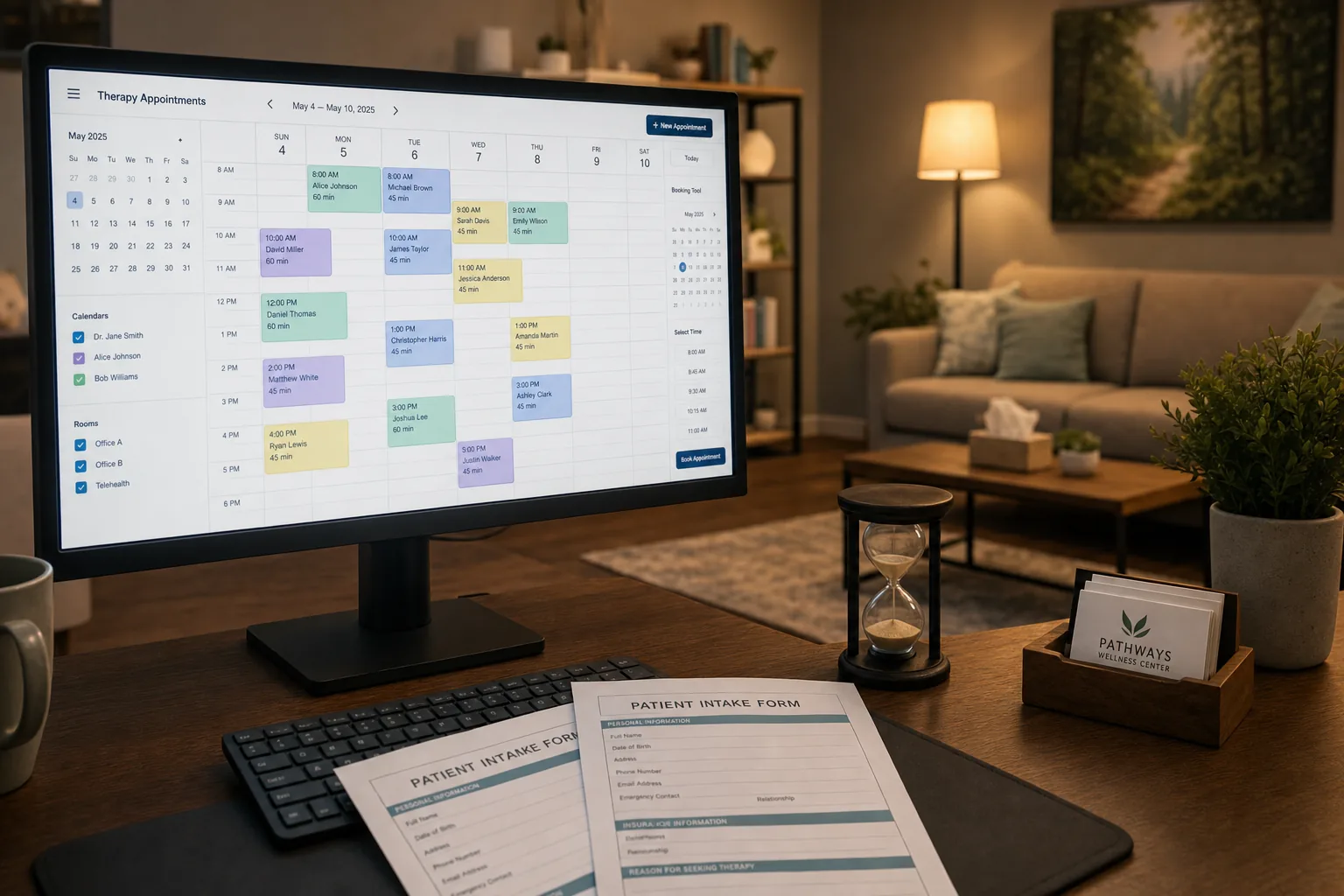
A 3pm Thursday slot sits empty in your behavioral health practice. The patient confirmed 48 hours ago. They did not show up. They did not call. Your provider had an hour blocked for this patient, the next available slot is three weeks out for a new patient, and your practice just absorbed the cost of a no-show without recovering the revenue or giving someone else the appointment.
This happens in behavioral health at rates other specialties would find catastrophic.
No-show rates in behavioral health run well above other specialties. One large academic outpatient psychiatry clinic recorded an 18.1% overall no-show rate, and the rate for initial psychiatric evaluations is roughly twice that of most other specialties. The reasons are clinical, mental health conditions including depression, anxiety, and substance use disorders directly affect patients’ ability to follow through on appointments, manage transportation and logistics, and navigate insurance barriers. None of that is going away. But the scheduling and communication system around those appointments is something practices can actually control.
Why behavioral health no-shows are a structural problem
The behavioral health no-show problem is not primarily a patient motivation problem. It is a system problem that the industry has handled with the wrong tools.
Phone call reminders sent by automated systems with no two-way capability are the most common approach. The patient gets a call, presses 1 to confirm, and either shows up or does not. There is no mechanism for the patient to flag that they need to reschedule, that they have a transportation issue, or that their insurance lapsed. The practice has a “confirmed” appointment that becomes a no-show.
Portal-based self-scheduling and reminders reach the patients who are digitally engaged and organized enough to use them. These are often not the patients at highest no-show risk.
The patients most likely to no-show in behavioral health are the ones who are symptomatic, dealing with life instability, or managing the practical barriers (insurance gaps, transportation, childcare) that accompany mental health conditions. They are also the patients most likely to benefit from consistent care. The scheduling system that works for a well-organized primary care patient does not work the same way for them.
Insurance verification is its own driver of behavioral health no-shows. Mental health parity laws do not require a plan to cover behavioral health; they require that a plan covering it not apply more restrictive limits than it applies to medical care. Most plans do cover it, but implementation of parity is uneven. Patients often do not know their behavioral health benefits, their in-network status, or their copay until they arrive, or until they get a bill after the fact. Patients who discover at check-in that their session will cost more than they expected are less likely to schedule the next appointment.
What AI scheduling automation does differently in behavioral health
AI voice agents integrated with athenaOne handle the outbound and inbound scheduling communication that reduces no-shows in behavioral health. The difference from standard automated reminders is bidirectionality: the AI can receive responses, adjust appointments, and route edge cases to staff.
Appointment reminders with a two-way response path. The AI places reminder calls or sends reminder messages before appointments. When a patient responds, confirming, requesting to reschedule, or asking a question, the AI can handle the next step without requiring a staff member to make a callback. A patient who says they need to reschedule reaches the AI, which accesses the practice’s athenaOne schedule and offers available slots.
Pre-visit insurance verification outreach. The AI contacts patients before behavioral health appointments to confirm insurance eligibility. This is particularly important for behavioral health because patients on Medicaid or marketplace plans have higher rates of coverage transitions than the general population, and discovering a coverage issue at check-in in a behavioral health context creates a patient experience problem that extends beyond the billing issue.
Waitlist management and same-day slot recovery. When a patient cancels or no-shows, the AI can immediately contact waitlisted patients to offer the slot. A 3pm Thursday cancellation at 2pm can become a filled appointment. Without automated outreach to the waitlist, that slot stays empty.
Chronic patient re-engagement. Behavioral health practices have a pattern of patients who engage with care for a period, disengage, and then need to re-engage when symptoms worsen. The AI can manage scheduled re-engagement touchpoints, a check-in call 30 days after a patient’s last visit, an outreach call when a series of appointments has lapsed.
The athenaOne integration for behavioral health scheduling
Pretty Good AI integrates with athenaOne through the Marketplace API. The integration gives the AI read and write access to the scheduling and patient communication workflows in athenaOne.
The AI reads the full schedule context, including appointment type, provider, and patient history. For behavioral health practices that distinguish between evaluation appointments, therapy sessions, and medication management visits, the AI can handle the correct reminder content and rescheduling options for each appointment type.
The AI writes schedule updates back to athenaOne. Cancellations, reschedules, and waitlist fills processed through the AI update the athenaOne schedule in real time, so staff see the current state without reconciling a separate communication log.
Insurance eligibility checks run through athenaOne’s eligibility verification integration. When the AI confirms insurance before a behavioral health appointment, it is using the same verification engine your billing team relies on. Catching a coverage problem there matters more in this specialty than most, because behavioral health authorization denials run well above the medical average.
The AI also supports the sensitive communication requirements of behavioral health. Reminder messages for behavioral health practices use language appropriate for the patient relationship. They do not reference diagnosis or treatment detail in any outbound communication, and they route any patient call that involves clinical content to the clinical team.
What this looks like in practice
A behavioral health practice with 6 providers and 200 appointments per week is dealing with a no-show problem that costs real money. At a 25% no-show rate, that is 50 empty slots per week. At an average session rate of $180, that is $9,000 per week in unrecovered revenue, not counting the downstream effects on patient care continuity.
The scheduling automation workflow addresses this at multiple points:
Before the appointment, the AI handles reminders with two-way response capability, collects reschedule requests before they become no-shows, and verifies insurance to prevent check-in surprises.
On the day of the appointment, the AI handles morning-of confirmation calls for high-risk appointments, processes same-day cancellations immediately, and contacts the waitlist to fill open slots.
After a no-show, the AI sends outreach to the patient to reschedule rather than waiting for the patient to initiate contact. Many behavioral health no-shows are patients in a rough patch who need the practice to reach out, not patients who chose to stop coming.
Practices that deploy this workflow typically see no-show rates fall by 30 to 50% within 90 days. The improvement is not uniform; it is largest for the reminder and same-day cancellation workflows, and more gradual for the re-engagement outreach.
What AI does not change about behavioral health scheduling
Behavioral health scheduling has a human component that AI does not replace.
New patient intake conversations, especially for patients in acute distress or crisis, require clinical staff. The AI does not conduct intake interviews or assess clinical urgency.
Complex insurance benefit explanations, helping a patient understand their mental health parity rights, their out-of-pocket maximum, or why their claim was denied, require billing staff who can navigate the parity compliance questions that come up in behavioral health billing.
Patients who are in crisis at the time of a scheduling call need to be routed to clinical staff immediately. The AI is configured to recognize crisis indicators and transfer those calls to clinical staff or an on-call line.
What the AI does is remove the structured, administrative communication work from the staff’s plate so clinical staff can focus on the patients who need their skills, and administrative staff can focus on the edge cases that require human judgment.
Practical takeaways
- Behavioral health no-show rates run well above other specialties, roughly double for initial evaluations, driven by clinical and practical barriers that are structural, not patient-by-patient.
- Standard automated reminders with no two-way capability do not address the root cause. Patients who need to reschedule need a way to do it.
- AI voice agents integrated with athenaOne handle two-way reminders, pre-visit insurance verification, waitlist outreach, and post-no-show re-engagement.
- The integration reads and writes to athenaOne’s scheduling and eligibility systems, keeping the practice’s records current without manual reconciliation.
- Measure the reminder workflow and the same-day cancellation workflow separately. They fail for different reasons, and a blended no-show rate will not tell you which one is working.
- AI handles structured communication. Clinical staff handle intake, crisis calls, and complex insurance conversations.
The no-show problem in behavioral health is partly clinical and partly systemic. The systemic part is addressable.
If your behavioral health practice is running on athenaOne and your no-show rate is costing you revenue and disrupting care continuity, Pretty Good AI integrates directly with your scheduling workflow. The AI handles the outreach. Your staff handles the patients.
Sources
Ready to reduce missed calls?
15-minute demo. See how an AI team works inside your athenaOne practice.
Schedule a Demo →Written by Kevin Henrikson