Practice Operations
Endocrinology Scheduling and GLP-1 Surges
GLP-1 prescriptions more than tripled nationally between early 2020 and late 2022, pushing new-patient volume at endocrinology practices sharply higher. AI voice agents integrated with athenahealth absorb the scheduling demand without adding front desk headcount.
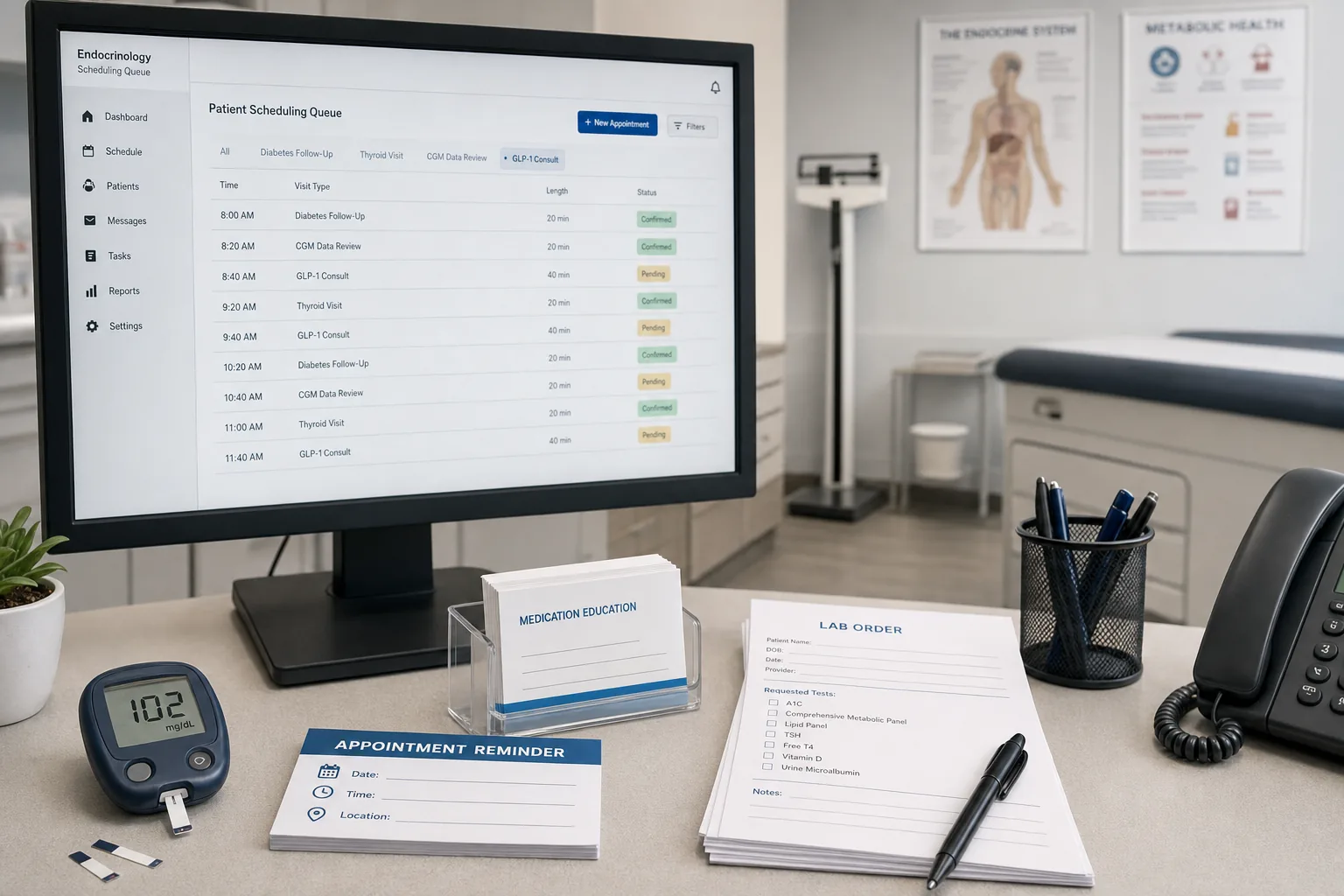
The GLP-1 medication surge created a scheduling problem that endocrinology practices did not anticipate and cannot hire their way out of. Endocrinology scheduling AI is the practical answer to managing that demand without burning through front desk staff or pushing existing patients out of their follow-up slots.
Endocrinology practices have always managed complex chronic disease panels. Diabetes management requires regular HbA1c checks, medication adjustments, CGM data reviews, and periodic specialist consultations. Thyroid conditions require TSH monitoring and dose titration. These are not simple appointment types. They require proper scheduling intervals, relevant lab work timed to the visit, and coordination with primary care.
What changed in 2023 and 2024 was GLP-1. The surge in semaglutide and tirzepatide prescriptions, driven by FDA approvals for obesity management in addition to diabetes treatment, created a new patient population at endocrinology practices. Many of these patients came with no prior endocrinology relationship, minimal baseline metabolic workup, and scheduling needs that look very different from an established diabetes management patient. The demand hit practices that were already operating at capacity.
What the GLP-1 scheduling surge looks like operationally
A mid-sized endocrinology practice with 4-6 providers that managed 200-250 new patient appointments per month before 2023 may be fielding 400-600 new patient requests per month now, with a substantial portion driven by GLP-1 interest. The practice’s actual capacity has not changed. The phone has.
The scheduling pressure comes from multiple directions simultaneously.
New patient intake calls. A patient who has been prescribed a GLP-1 by their primary care physician and referred to endocrinology calls to schedule a new patient appointment. The call requires gathering insurance information, confirming the patient is in-network, identifying the appropriate provider, checking lab work requirements, and offering available appointment times. In a manual process, this takes 8-12 minutes per call. With 20 new patient calls per day and a two-person front desk, that is 2-4 hours of scheduling calls before the morning walk-ins start.
Medication management follow-up calls. GLP-1 patients require regular follow-up to adjust dose titration, address side effects, nausea and GI symptoms are common, especially in the first months, and monitor metabolic markers. These are not clinical calls, but they require scheduling coordination, lab reminders, and confirmation calls that generate front desk volume even when the appointments are routine.
Prior authorization status checks. GLP-1 medications are among the most frequently prior-authorized prescriptions in endocrinology. Patients who have been waiting on authorization approvals call to check status. The front desk cannot answer those calls without pulling the chart, finding the auth request, and calling the pharmacy or payer to check. Each status check call takes 5-10 minutes.
No-show and reschedule management. The GLP-1 patient population includes patients who are managing the medication for weight loss alongside other priorities and who reschedule more frequently than established chronic disease management patients. Each reschedule requires real-time availability checking and a rebooking call.
What endocrinology scheduling AI handles
AI voice agents integrated with athenahealth handle the high-volume, lower-complexity scheduling calls that are consuming front desk time without requiring clinical judgment.
New patient intake and scheduling. The AI conducts the new patient intake conversation: confirms the patient’s insurance, verifies in-network status against the practice’s payer contracts, identifies the appropriate provider type (endocrinologist vs. NP for GLP-1 management, for example), explains the new patient packet and lab requirements, and schedules the appointment directly in athenahealth. The call that takes a front desk staff member 10 minutes takes the AI 3-4 minutes, and the AI can handle multiple calls at the same time during peak morning hours. Explaining the packet is not the same as getting it back, and raising health history form return rates before the endocrinology visit is what decides how that first appointment starts.
Appointment reminders with two-way response. The AI places appointment reminders for upcoming visits and receives responses. A patient who needs to reschedule can do so in the reminder call rather than requiring a callback. The AI accesses athenahealth’s open schedule and books the new appointment without staff involvement. For GLP-1 management patients whose follow-up schedule is routine and predictable, this eliminates most of the reschedule call volume.
Lab result routing and pre-visit reminders. Endocrinology appointments require timely lab work: HbA1c, fasting glucose, lipid panels, thyroid panels. The AI identifies patients with upcoming appointments who have not had required labs drawn within the relevant window, places an outbound call or message reminding them to schedule the lab draw, and links them to the lab’s scheduling system when relevant. This reduces the rate of appointments where the provider does not have current lab data.
Prior authorization status updates. For patients with pending GLP-1 prior authorization requests, the AI places status check calls to the payer at defined intervals and updates the patient on current status via outbound call or message. This addresses a category of inbound call that currently consumes significant front desk time: patients calling to check on their medication approval.
The scheduling capacity math
An endocrinology practice handling 30 new patient scheduling calls per day, 20 reschedule calls per day, and 15 prior auth status check calls per day is absorbing 65 calls that, in a manual process, consume roughly 6-8 staff hours.
AI handling 70-80% of those calls (the routine, information-exchange calls that do not require clinical judgment or complex payer escalation) frees 4-6 staff hours per day. In a practice where the front desk is already running at capacity, that capacity goes to patient care coordination, insurance verification, and the calls the AI cannot handle: complex prior auth appeals, patients with billing disputes, and clinical triage questions that require escalation to a nurse.
The math does not require adding staff. It requires routing calls better.
Implementation on athenahealth
Endocrinology practices on athenahealth can deploy AI scheduling integration without migrating EHR data or building a separate scheduling system. The AI reads provider schedules, appointment type configurations, and patient payer information directly from athenahealth.
Configuration for an endocrinology deployment covers the specific appointment types the practice uses, new patient GLP-1 consultation, established diabetes management, thyroid follow-up, CGM review, and the lab requirements for each. It also covers the GLP-1-specific prior authorization workflow, since that is the authorization type with the highest volume and the most patient-initiated status check calls. That same paperwork lands on the billing team a few weeks later, which is where GLP-1 and CGM authorization work turns into payer status and patient balance calls.
Structured workflow integration, rather than generic AI phone handling, is what produces meaningful reductions in administrative burden. The endocrinology-specific appointment logic, which patients need which lab work, which follow-up intervals apply to which medications, which prior auth rules apply to which payers, is what separates useful AI deployment from a more sophisticated answering machine.
Sources
Ready to reduce missed calls?
See how Pretty Good AI handles scheduling volume for endocrinology practices
Schedule a Demo →Written by Kevin Henrikson