Practice Operations
ENT Prior Authorization Automation With AI
Hearing aids, cochlear implants, FESS, and Inspire each have different payer criteria. AI handles the structured authorization work so ENT staff focus on exceptions, not submissions.
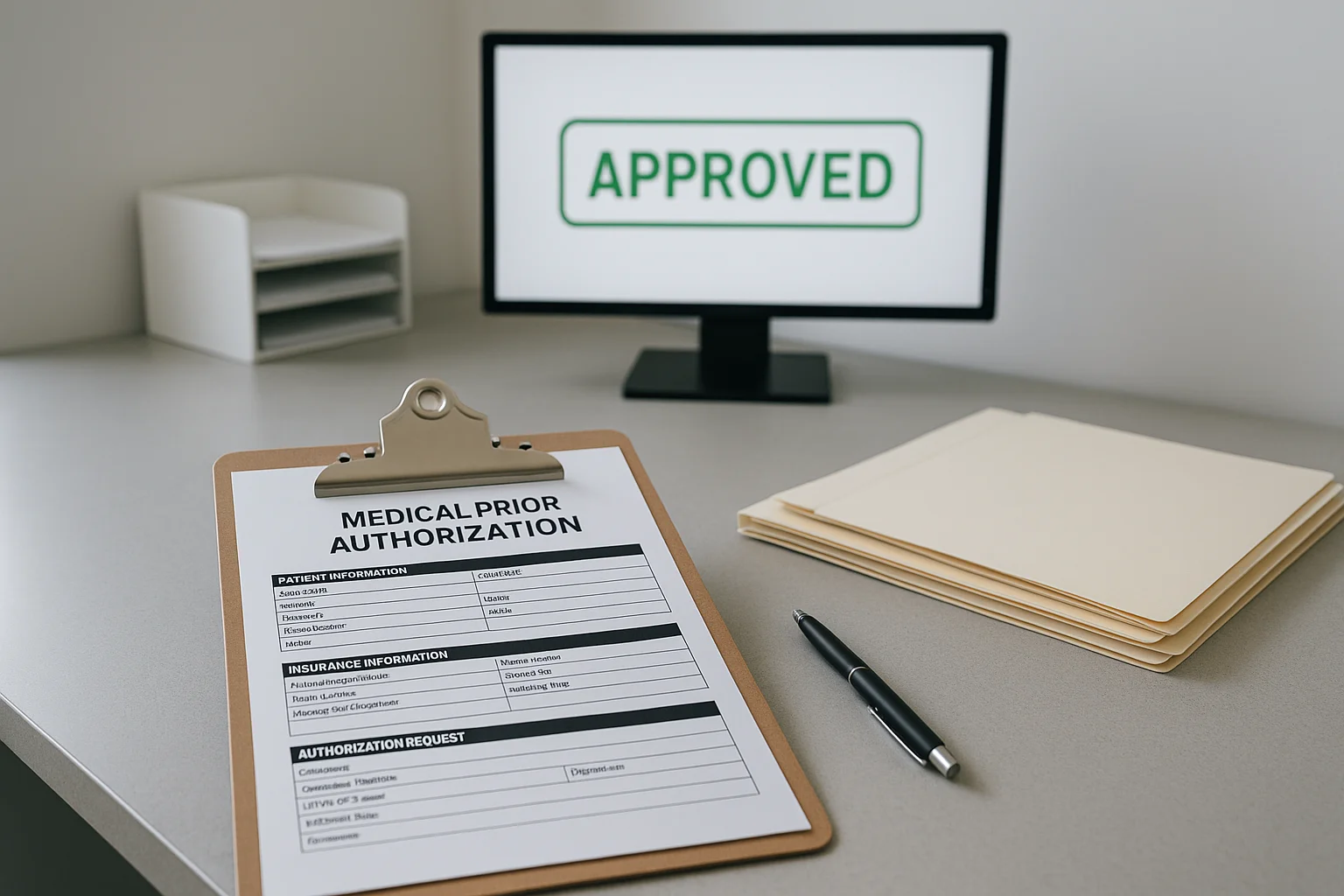
ENT practices deal with a prior authorization portfolio that is wider than most specialties handle. Within a single practice, the authorization team might be working on hearing aid approvals, cochlear implant documentation, functional endoscopic sinus surgery requests, Inspire sleep apnea device authorizations, and septoplasty functional impairment evidence, all in the same week, all with different payer criteria, different documentation requirements, and different timelines.
This breadth is what makes ENT prior authorization particularly labor-intensive. A cardiology practice spends most of its prior auth effort in a few procedure categories. An ENT practice may have many active procedure categories with authorization requirements that differ enough that staff cannot simply apply the same documentation package across them. Each payer has its own criteria. Each procedure category has different medical necessity thresholds. Each has its own documentation checklist.
AI reduces the staff burden by handling the structured elements of each authorization type: checking payer-specific criteria, pulling required documentation from the patient record, assembling the submission package, and managing follow-up. Staff review, submit appeals, and handle the cases that require clinical judgment.
Hearing aid authorization: navigating inconsistent coverage
Hearing aid coverage is one of the most variable areas in health insurance. Traditional Medicare does not cover hearing aids. Medicare Advantage plans vary significantly, some cover hearing aids with prior authorization; others exclude them. Medicaid coverage varies by state. Commercial payers cover hearing aids under some plans but not others, and coverage limits (dollar amounts, frequency of replacement) vary widely.
For an ENT practice with a busy audiology department, the first step in every hearing aid fitting is verifying what the patient’s plan actually covers, and whether prior authorization is required. This verification step, done manually, requires checking the specific plan’s benefits, confirming the authorization requirement, and documenting the coverage determination before the patient is fitted.
AI handles the coverage verification and prior authorization initiation automatically when an audiology appointment is scheduled. By the time the patient arrives for their hearing evaluation, the practice already knows whether their plan covers hearing aids, what the prior authorization requirements are, and what documentation will be needed to support the request. What happens after the visit matters to the practice too, and running patient surveys and reviews in an ENT practice is the part that usually goes unowned.
Functional hearing loss documentation. When plans require prior authorization for hearing aids, they typically require documentation of hearing loss severity from audiogram results and evidence that the hearing aid will provide functional benefit. AI pulls the audiogram results from the patient record, checks that the hearing loss thresholds meet the payer’s criteria, and flags cases where the thresholds are borderline or where additional documentation is needed before submission.
Medicare Advantage variability. For ENT practices with a significant Medicare Advantage patient population, the authorization requirements for hearing aids vary enough between plans that staff need to check each patient’s specific plan rather than applying a standard workflow. AI manages this by maintaining payer-specific criteria for each MA plan in the practice’s payer mix and applying the right criteria to each patient.
Cochlear implant authorization: the documentation burden
Cochlear implant prior authorization is among the most documentation-intensive requests in otolaryngology. Payers require extensive evidence of hearing loss severity, audiological evaluation results, trial of hearing aids, and candidacy assessment before authorizing a procedure that typically costs $30,000 to $100,000 including the device and surgery.
The standard documentation package for cochlear implant authorization includes:
- Audiological evaluation showing severe to profound sensorineural hearing loss meeting payer-specific thresholds
- Word recognition testing demonstrating limited benefit from conventional amplification
- Documentation of a hearing aid trial with results
- Medical and radiological clearance
- Candidacy assessment from a cochlear implant program
- Provider notes documenting the recommendation for implantation
Assembling this package manually requires pulling documents from multiple sources: audiology, radiology, the candidacy assessment (which may have been performed at a different institution), and the physician’s notes. A missing piece results in a denial or a request for additional information that delays the authorization by two to three weeks.
AI manages the documentation checklist for cochlear implant authorizations by tracking what is in the patient record and what is still needed. When a cochlear implant is recommended, AI generates a checklist of the required documentation and monitors for completion. Staff see which patients have all required documents ready for submission and which have open items to collect.
For documentation that needs to be obtained from other institutions, audiological records from a prior provider, imaging from a hospital system, AI can send the request and track receipt, flagging open items for staff follow-up rather than waiting until the submission date to discover something is missing.
Functional endoscopic sinus surgery: the failed-medical-therapy requirement
Prior authorization for functional endoscopic sinus surgery (FESS) requires documentation that the patient has chronic sinusitis that has not responded to appropriate medical management. Most commercial payers require:
- A diagnosis of chronic rhinosinusitis documented over a minimum period (typically 12 weeks or longer)
- CT imaging showing mucosal disease
- Documentation of antibiotic therapy trials
- Nasal saline irrigation documented in the treatment record
- Nasal corticosteroid use documented in the treatment record
The failed-medical-therapy requirement is where FESS authorizations most often run into problems. If the patient’s chart does not specifically document that they completed a course of nasal corticosteroids, even if the physician prescribed it, the payer may deny the authorization for insufficient conservative treatment documentation.
AI reviews the chart documentation before the FESS authorization request is submitted, checking for each element in the required checklist. When documentation is missing, an antibiotic course that the patient took but that is not clearly documented, or nasal irrigation that was recommended but not charted, the AI flags the gap for physician review so the documentation can be completed before submission.
This pre-submission review catches the most common denial reasons before they occur, reducing the rate of first-pass denials that require re-documentation and resubmission.
Inspire device authorization for sleep apnea
Upper airway stimulation (UAS) therapy, marketed as the Inspire device, is a surgically implanted treatment for obstructive sleep apnea in patients who cannot tolerate CPAP. Prior authorization for Inspire is required by essentially every payer that covers it, and the criteria are specific.
Standard payer criteria for Inspire authorization include:
- Diagnosis of moderate to severe obstructive sleep apnea (AHI 15-100 under the FDA’s 2023 expanded labeling, though some payers, including several Medicare LCDs, still cap eligibility at AHI 65)
- Body mass index below a payer-specific threshold (typically 32 or 35)
- Documented intolerance or non-adherence to CPAP
- Anatomy evaluation showing no complete concentric palatal collapse
- Sleep medicine evaluation confirming candidacy
Importantly, Inspire authorization requires documentation from multiple specialties, ENT for the surgical candidacy and anatomy evaluation, sleep medicine for the AHI documentation and CPAP intolerance evidence. For ENT practices that do not have in-house sleep medicine, coordinating the authorization documentation requires communication with the patient’s sleep specialist to obtain the required records.
AI manages this cross-specialty coordination by initiating the documentation request to the sleep specialist when an Inspire evaluation is scheduled, tracking receipt of the required records, and assembling the complete authorization package before submission. The ENT practice does not need to manually track what has been received from the sleep specialist, the AI monitors the outstanding items.
Septoplasty and other functional procedures
Septoplasty for nasal obstruction requires documentation that the procedure addresses a functional problem rather than a cosmetic one. Payers require objective evidence of nasal obstruction and documentation that it affects the patient’s breathing and daily function.
For septoplasty, this typically includes nasal endoscopy findings documenting the septal deviation, objective assessment of nasal airflow or obstruction, and documentation of how the obstruction affects the patient. When septoplasty is combined with turbinate reduction or sinus surgery, the authorization package must cover each component.
AI handles the documentation checklist for these combination procedures by tracking what is required for each element of the case and ensuring the authorization package is complete before submission. For practices that frequently combine septoplasty with turbinate reduction and FESS, having a pre-configured checklist that accounts for all three components reduces the rate of partial denials where one element of the case is authorized and another is not.
Managing the denial rate in ENT prior auth
The breadth of procedure categories in ENT and the variability of payer criteria across them means that ENT practices typically have higher prior auth denial rates than single-category specialty practices. Denials in ENT commonly occur because:
- Documentation of failed conservative therapy is incomplete (most common for FESS and Inspire)
- Functional impairment documentation is insufficient for cosmetically ambiguous procedures
- Step therapy requirements were not addressed before submitting for a higher-cost device
- Authorization expired before the case could be scheduled
AI addresses each of these by catching documentation gaps before submission, checking step therapy requirements for device authorizations, and monitoring authorization expiration dates against the surgical schedule. A practice that reduces its first-pass denial rate from 25% to 10% saves the staff time required to manage the denied cases, re-documentation, resubmission, peer-to-peer reviews, and appeals, for every case in the difference.
For ENT practices with a high surgical volume, that reduction in denial management work translates to staff capacity that can be redirected to patient care coordination rather than administrative rework. The same queue holds work that never touches a payer at all, from allergy vial renewals to post-op instruction calls, and working those ENT order queues in athenaOne frees the same hours.
Ready to reduce missed calls?
15-minute demo. See how an AI team works inside your athenaOne practice.
Schedule a Demo →Written by Kevin Henrikson