ROI Analysis
The Hidden Cost of Manual Medical Practice Scheduling
Manual scheduling creates callbacks, rework, and missed access opportunities. Learn how to measure the burden and build a transparent automation model.
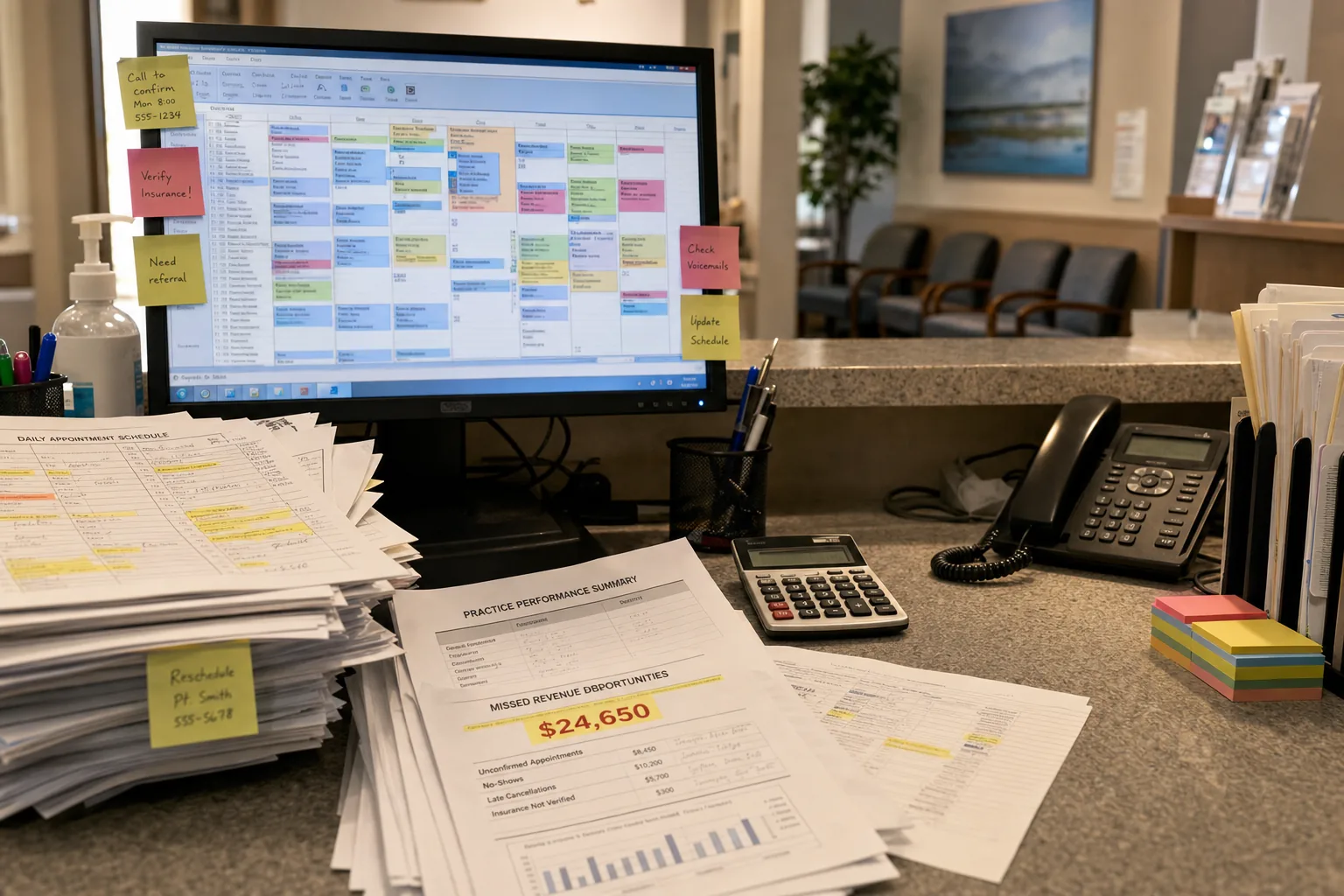
Manual scheduling looks simple until the work around the appointment is counted. Staff answer the call, find the right template, check eligibility, coordinate provider rules, enter details, confirm the slot, and handle changes later.
The cost is different in every practice. A reliable analysis starts with a time study instead of an industry-wide total.
Map the work before pricing it
For a worked example, assume 100 scheduling calls per week, six minutes of staff time per call, and a blended labor rate of $30 per hour. The illustrative labor burden is:
100 calls × 6 minutes ÷ 60 × $30 = $300 per week
That excludes no-shows, callbacks, and opportunity cost. Measure those separately. Label the inputs and show the calculation so the result remains a planning estimate rather than measured savings.
Track:
- Calls requiring scheduling
- Average handle and after-call-work time
- Transfers and callbacks
- Appointment changes and cancellations
- No-show and fill-in activity
- After-hours demand
Where manual work accumulates
A scheduling call often becomes a chain of tasks: checking provider availability, applying visit rules, verifying insurance, collecting missing information, and sending reminders. Each extra step increases the chance that a patient waits or calls again.
The goal is not to automate every decision. Exceptions involving clinical judgment, unusual scheduling rules, or unclear patient information should remain with staff.
What automation should change
A connected voice workflow can capture structured information, look up permitted scheduling data, confirm routine appointments, and route exceptions. It should preserve the practice’s rules and make the handoff visible in the EHR.
Across Pretty Good AI customers, 13% of bookings arrive after hours, and practices report measurable ROI in ~30 days. Customer-reported results. Your numbers will vary by workflow, staffing, seasonality and call mix. These are reported results and are not a promise of a particular savings percentage.
Build an honest ROI model
Use a baseline period and compare:
- Staff minutes released from routine scheduling
- Completed appointments after hours
- Callback volume
- No-show and reschedule rates
- Escalations requiring human judgment
A worked example may compare assumed subscription cost with the observed value of released labor and completed appointments. Keep those assumptions separate from measured outcomes.
Implementation
Start with one appointment type and a defined escalation path. Test provider rules, insurance questions, confirmation messages, and cancellations with staff before expanding. Review errors and patient feedback during the first month.
Manual scheduling is not merely a payroll line. It is an access workflow. Measure it honestly, automate the repeatable parts, and keep people responsible for exceptions.
See How It Works in Your Practice
A 15-minute live demo shows voice AI handling a real patient call, scheduling, insurance verification, and EHR lookup. No slides, no pitch deck.
Book a 15-Minute Demo →Written by Kevin Henrikson