Practice Operations
Radiology Prior Auth: Cut MRI and CT Approval Delays
MRI and CT prior auth delays cost imaging centers days per scan and flood staff with calls. AI voice agents work payer follow-up for your team.
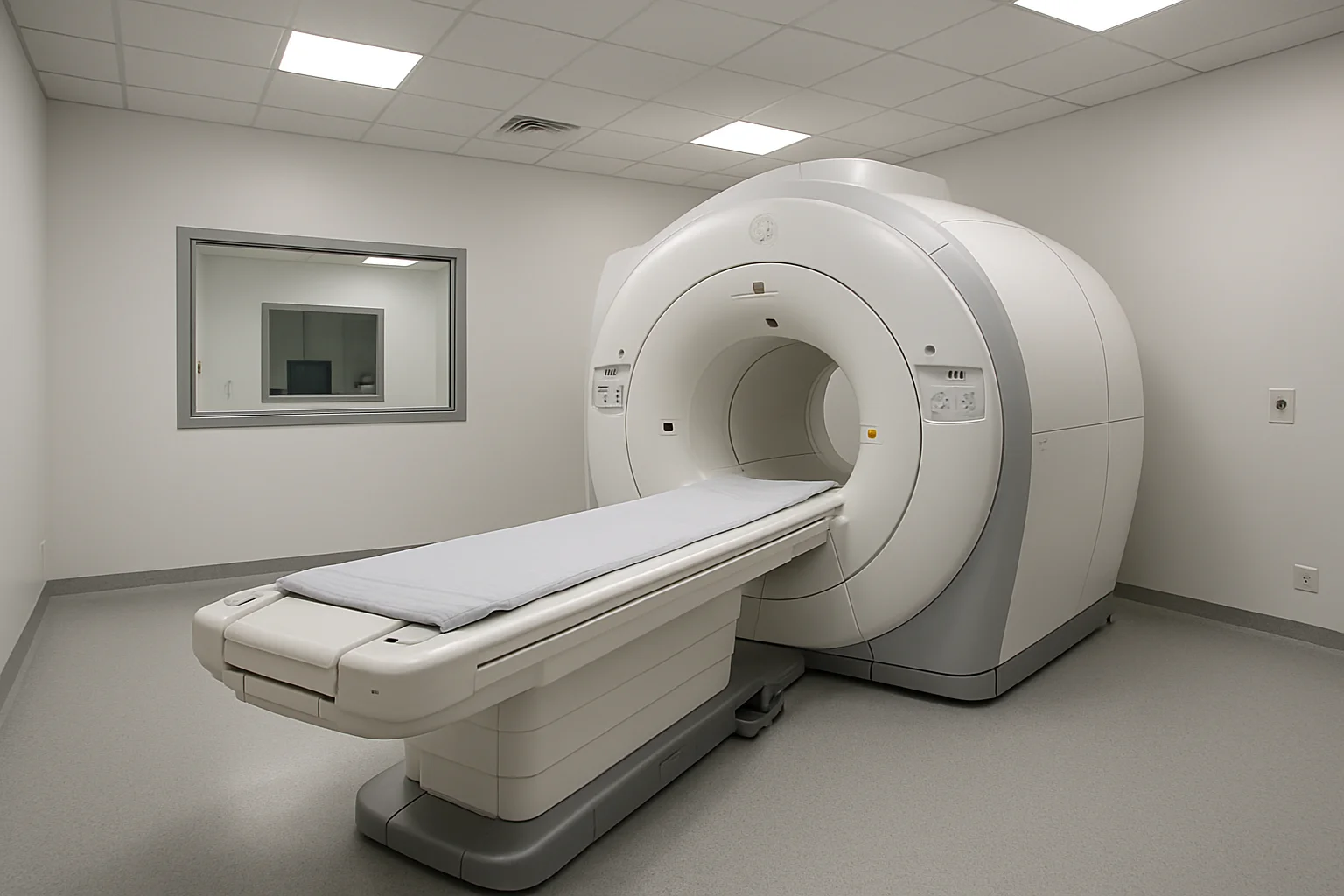
A patient needs an MRI. Their doctor sent the referral. Your front desk confirmed the order. Now someone needs to call the insurance company, navigate their IVR, wait on hold, confirm they received the documentation, call back in 48 hours to check status, call back again when nothing has moved, and eventually get an approval number so you can actually schedule the scan.
That sequence consumes more staff time than the scan itself takes to perform.
Imaging centers operate in a unique prior auth environment. Unlike a primary care practice where prior auth is one of many administrative tasks, for radiology facilities prior authorization is the central bottleneck of the entire operation. Your equipment is expensive and time-sensitive. Every day an MRI or CT scanner sits idle waiting for authorizations to clear is revenue that cannot be recovered.
The problem compounds because imaging orders come from dozens of referring physicians, each ordering for different payers, different procedure codes, and different patient indications. Your staff is managing hundreds of concurrent auth requests at various stages of completion, each with different payer requirements, different fax numbers, and different follow-up timelines.
How radiology prior auth works against you
Prior authorization for imaging differs from prior auth in clinical settings in a few important ways.
First, the volume is high. A mid-size imaging center running 40 to 60 scans per day is managing that many concurrent auth requests in various stages. Unlike a medical practice where prior auth is a fraction of the workflow, in imaging it is the workflow.
Second, the denial reasons are often technical, not clinical. The American Academy of Family Physicians noted in 2024 that common imaging auth denials involve unsent or incomplete documentation, another clinician ordering the same test, or ordering the wrong modality, such as a CT when an MRI was indicated. These are not clinically contested denials. They are administrative errors that a faster feedback loop could catch and fix.
Third, imaging prior auth involves coordination with referring physicians rather than just payers. When a payer requests additional clinical documentation, you need to go back to the referring physician, who may take another day to respond. When a payer says the order was for the wrong modality, you need the referring physician to revise the order before you can resubmit. Every loop through the referral chain costs days.
The practical result is that even straightforward MRI and CT auth requests take 3 to 5 business days on average, with contested or documented-incomplete requests stretching longer. In a scanner scheduling environment, 3 to 5 days means 3 to 5 days of empty appointment slots or scan slots held speculatively that may or may not be filled.
The follow-up burden is the real cost
Most imaging centers have adequate processes for submitting prior auth requests. The forms are known. The payer fax numbers are in the system. The clinical documentation checklist is established. Submission is not the problem. Retrieval usually is, which is why where the tracking number gets filed in athenaOne matters months after the scan.
Follow-up is the problem.
After submission, payers process requests in their own time and communicate status changes through channels that require your staff to be actively checking. Requests go into payer portals that need to be logged into and refreshed. Status update faxes arrive in a queue that someone needs to process. When a payer needs additional documentation, they may send a fax, update the portal, or call, and your staff needs to catch that request quickly or the clock resets.
The AMA’s 2024 prior authorization survey found that practices complete about 40 prior auth requests per physician per week and that physicians and their staff spend 13 hours a week completing them, with phone still the most commonly used method. Decisions take days, and nothing notifies you when a status changes. During that wait, your staff is allocating time to status checking, portal logging, and payer calls that produce no output until the status actually changes.
AI voice agents automate the follow-up calls. Once an auth request is submitted, the AI calls the payer on a scheduled cadence, navigates the IVR, provides the auth reference number, and captures the current status. If the status is pending with no new information, the AI logs the call and schedules the next check. If the payer requests additional documentation, the AI immediately flags the case with the specific request details so a staff member can respond within hours rather than the next time someone checks the fax queue.
The peer-to-peer review problem for imaging
For imaging centers, peer-to-peer reviews are particularly painful. When a payer denies an MRI or CT scan clinically and the referring physician requests a peer-to-peer, coordinating that review involves scheduling alignment between the referring physician’s availability and the payer’s medical director availability. Both parties have full schedules. The average peer-to-peer review for imaging auth requests can add 3 to 7 additional business days to the authorization timeline.
Research published in PubMed found that nearly all peer-to-peer reviews for CT and MRI prior authorization denials for orthopedic specialists are ultimately approved. The peer-to-peer process is largely a delay mechanism, not a genuine clinical review gate. But the delay is real and costs your imaging center real scan slots.
AI voice agents can handle the scheduling coordination on the payer side: calling to find available medical director time slots, capturing those options, and routing them to the referring physician’s office for confirmation. This removes one leg of the coordination loop and compresses the peer-to-peer scheduling timeline.
Scanner utilization and the scheduling gap
The connection between prior auth cycle time and scanner utilization is direct. When an auth takes 5 business days to process, a patient referred on Monday cannot be definitively scheduled until Friday at earliest. Your scheduling team either holds a speculative slot (blocking revenue if the auth comes back faster or slower than expected) or tells the patient to call back when the auth clears, which means the scheduling conversation has to happen twice.
For an imaging center with 3 MRI scanners running 8-hour days, speculative slot-holding and delayed scheduling can reduce daily booked capacity by 10 to 15%. Across a month, that is meaningful empty scanner time.
When AI follow-up compresses the auth cycle from 5 days to 3 days, the scheduling window tightens. Patients can be placed on a confirmed schedule earlier. Scanner utilization improves not because you are doing anything different clinically, but because the administrative cycle that precedes scheduling is faster.
Patient experience and repeat referrals
Referring physicians send patients to imaging centers that make the process easy. When a referring physician’s patient calls back to complain that their MRI has been pending for two weeks, the physician hears about it. Over time, physicians route referrals to imaging centers with faster turnaround, all else being equal.
Prior auth cycle time is not usually the metric imaging centers track to understand referral behavior. But it is one of the underlying drivers. When your auth process is faster and your staff is calling patients to confirm scheduling rather than managing auth follow-up, the patient experience is better and the referring physician relationship is better.
AI-driven auth follow-up gives your staff capacity to do proactive outbound work: calling patients to schedule as soon as auth clears, calling referring physicians to update them on pending cases, and handling the coordination work that builds the referral relationships that sustain imaging center volume.
What to measure
Track these metrics before and after deploying AI for prior auth follow-up:
- Average days from auth submission to approval, broken out by payer
- Auth-pending scan slots held speculatively per week
- Staff time on prior auth follow-up calls per week
- Peer-to-peer review scheduling cycle time
The first two directly connect to scanner utilization. If average auth cycle time drops from 5 days to 3 days, you can tighten your speculative slot window and book patients with more confidence. The staff time metric shows the operational savings.
Most imaging centers see auth cycle time improvement within 60 days. The scanner utilization benefit follows as your scheduling team adjusts to the faster confirmation window.
The competitor gap in imaging AI content
Most AI content in radiology focuses on the diagnostic side: AI reading images, detecting anomalies, assisting radiologists with interpretation. On the operational side, the tools that do target imaging centers mostly automate portal-based auth submission and status polling. The phone-based work, payer IVR follow-up, peer-to-peer scheduling, patient prep calls, still lands on your staff.
Pretty Good AI’s AI voice agents address the operational gap. The scanner’s job is to scan. Everything that happens before the patient arrives in the gantry should be as automated as possible. Prior auth follow-up is the highest-volume, highest-friction part of that pre-scan workflow, and it is the most straightforward to automate.
Your schedulers’ time is better spent booking patients and managing the physician relationships that drive volume. AI handles the hold queues.
Sources:
Stop Losing Scan Slots to Prior Auth Delays
Most imaging centers lose 3-5 days on every MRI and CT prior auth request. A 15-minute demo shows you how AI handles the follow-up calls that keep your scanner booked.
Schedule a 15-Minute Demo →Written by Kevin Henrikson