Practice Operations
Insurance Card Capture in Multi-Specialty Practices
Multi-specialty groups lose revenue every day to stale insurance data. AI voice agents integrated with athenaOne capture and verify insurance cards before patients arrive, not at check-in.
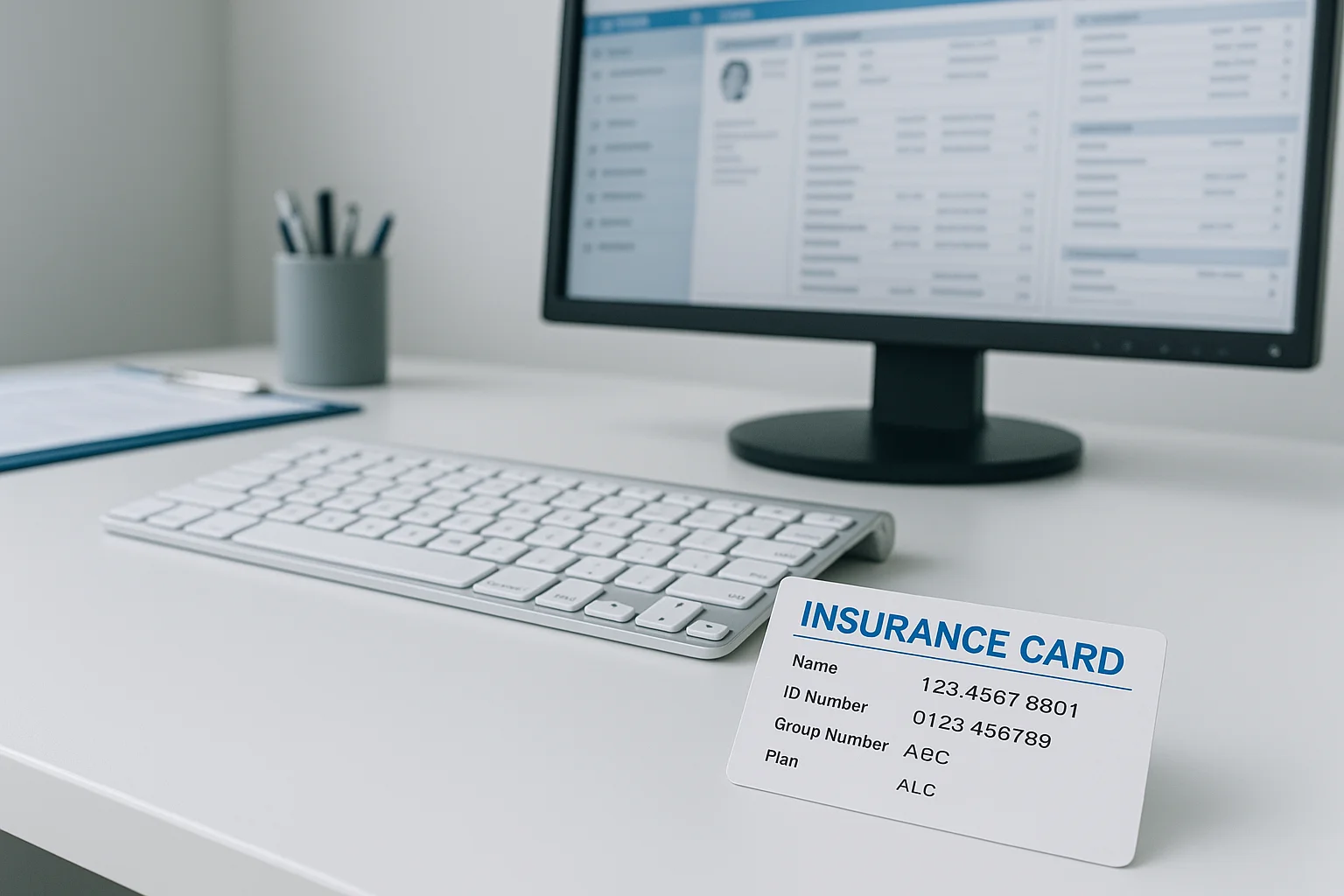
Your orthopedics coordinator just found out at check-in that the patient’s Blue Cross plan changed three months ago. New card, new group number, new prior auth requirements. The patient is already in the waiting room. Your biller is looking at a potential denial. Your front desk coordinator is trying to sort it out while three other patients wait to check in.
This happens at multi-specialty groups every day, in every department. It happens more at multi-specialty groups than at single-specialty practices because your patients cycle through multiple service lines over time. The cardiologist patient who was on a PPO when they first came in is now on their spouse’s Medicare Advantage plan. The orthopedics patient had surgery two years ago on one plan and is coming back for physical therapy on a different one. Each transition is an opportunity for stale insurance data to create a denial.
Manual insurance card capture at check-in is the industry’s default approach to this problem. It is also the worst possible moment to discover a coverage issue.
Why multi-specialty groups have more stale insurance data
A single-specialty practice with a stable patient panel might see insurance changes in 15 to 20% of patients annually. Multi-specialty groups see higher churn in active patient-insurance relationships because:
Patients visit more frequently. A patient treating with your primary care, cardiology, and physical therapy departments is making multiple appointments per year. Each visit is an opportunity for their insurance status to have changed since the last time they came in.
Plan transitions happen between specialty visits. A patient who completes a course of physical therapy, then returns 18 months later for an orthopedic consult, may have changed employers, spouses, or Medicare enrollment status in the interim. That information is not going to update itself in athenaOne.
Medicare Advantage switching is a steady source of churn. KFF finds roughly 10% of MA enrollees voluntarily switch plans in a typical open enrollment, and plan exits and benefit cuts force additional involuntary changes, as many practices saw after the 2025 enrollment season. Patients who switch may not realize their out-of-network coverage, prior auth requirements, or copay structure changed. Your front desk finds out when the claim bounces.
Different specialties accept different plans. Multi-specialty groups often have plan participation that varies by service line. A patient’s plan may be in-network for your primary care department but out-of-network for your cardiology group. Patients rarely know this. Staff need to verify it every time.
The result: multi-specialty groups are running a larger eligibility verification workload than comparable single-specialty practices, spread across more service lines, with more plan variation to manage.
What manual insurance card capture actually costs
The standard workflow at most multi-specialty groups is to ask patients to present their current insurance card at check-in and photograph or scan it at that point. Some groups do pre-appointment reminder calls that include a request to bring updated insurance information. Most do not.
The costs of handling this at check-in are concrete.
Check-in delays compound across service lines. A five-minute insurance card conversation at check-in is irritating at a single-specialty practice. At a multi-specialty group where your waiting room serves cardiology, orthopedics, and neurology patients simultaneously, five-minute delays stack. Your check-in staff are handling more volume, more variation, and more complexity.
Denials from stale data hit harder. Claim denials from incorrect insurance information require a rework cycle: identify the denial reason, obtain the correct plan information, resubmit. At a multi-specialty group with complex service lines, some of these rework cycles involve prior authorization that should have been obtained before the visit but wasn’t, because nobody knew the plan had changed.
Staff time is the hidden cost. A revenue cycle manager at a 15-physician multi-specialty group can expect their team to spend over an hour per day on insurance-related rework that originated from stale eligibility data. That is what happens when insurance verification is treated as a check-in task rather than a pre-visit task.
According to the American Medical Association’s 2024 Prior Authorization Physician Survey, 93% of physicians report care delays due to prior authorization requirements. When an insurance change goes undetected before a visit, the prior auth the new plan requires never gets initiated, which is how verification gaps become day-of-visit surprises. At a multi-specialty group, those surprises hit across multiple service lines at once.
How AI handles insurance card collection before the patient arrives
The AI approach moves insurance card collection from check-in to the pre-visit phone workflow. When a patient schedules an appointment or when a reminder call goes out before a visit, the AI asks the patient to confirm their current insurance information.
This is a call, not a form. Patients respond to calls differently than to portal messages. When the AI asks a patient to confirm their current insurance carrier and group number during a scheduling or reminder call, most patients answer the question. Or they say they need to check, and the AI schedules a callback before the appointment.
This is what the workflow looks like at a multi-specialty group integrated with athenaOne:
At scheduling. When a patient books an appointment in any department, the AI confirms current insurance information as part of the scheduling flow. If the patient has visited other departments in your group, the AI pulls the insurance information on file in athenaOne and asks the patient to confirm it is still current. If they report a change, the AI captures the new information and flags it for staff verification before the visit.
At the reminder call. Two to three days before the appointment, the AI places or handles a reminder call. The reminder includes a prompt for the patient to confirm their insurance card is current. Patients who have switched plans can provide the new information over the phone. The AI updates athenaOne or flags the update for a staff member depending on your workflow configuration.
At insurance card capture. The AI can prompt patients to send a photo of their insurance card to a secure intake link, or confirm verbal information that routes to your billing team for verification. Patients who have a new card but not the information memorized can complete the card submission before they arrive.
By the time a patient checks in at your multi-specialty group, your staff already know what is on file and whether it has been recently updated. The check-in conversation is confirmation, not discovery.
The athenaOne integration layer
Pretty Good AI connects to athenaOne through the Marketplace API. The integration is bidirectional: the AI reads patient records, scheduled appointments, and insurance information on file in athenaOne, and it writes updates back.
For multi-specialty groups, the relevant integration points are:
Real-time eligibility verification. After the AI captures or confirms insurance information, it triggers an eligibility check in athenaOne. If the check flags a coverage issue, lapsed coverage, incorrect subscriber ID, plan change, the AI routes the discrepancy to the appropriate revenue cycle staff member before the appointment, not at check-in.
Multi-department patient records. athenaOne tracks a patient’s visits across all departments in your group. The AI can access the full patient record context when handling a call, so a patient calling to schedule a cardiology follow-up gets a verification experience that accounts for their prior care history.
Prior auth flags. When a patient reports an insurance change, the AI can flag whether the new plan requires prior authorization for the scheduled service type. This does not replace your clinical prior auth workflow, but it surfaces the information early enough for your team to initiate the process before the visit.
Appointment confirmation updates. Insurance information confirmed during a reminder call updates the patient record before check-in, so your front desk staff see current information when the patient arrives.
What this changes for your revenue cycle team
The operational benefit of moving insurance verification upstream is not primarily about check-in speed. It is about giving your revenue cycle team enough lead time to act on coverage issues before they become denials.
A denial caught at claim submission is a rework cycle. A coverage gap caught two days before the visit is a phone call. The difference in cost is real.
For multi-specialty groups specifically, upstream insurance verification also helps with prior auth preparation. If a patient’s insurance change means a new prior auth requirement for their orthopedic injection or cardiac imaging, catching that two days before the visit means there is time to initiate the process. Catching it at check-in means a canceled or delayed procedure and a frustrated patient.
It also helps with plan-network verification across service lines. Confirming that a patient’s current plan is in-network for the specific department they are visiting, not just for your group generally, is a check that can run during the pre-visit call rather than at check-in.
And it changes the patient experience. Patients who find out about an insurance issue at check-in are frustrated. Patients who were contacted in advance and helped through the resolution are not. The AI handles the initial contact and flags the issue for staff. Staff have the conversation with the patient before they drive to the office.
Practical takeaways
- Insurance card data at multi-specialty groups goes stale faster than at single-specialty practices. Patients cycle through more service lines over longer time horizons.
- Manual check-in card capture is the industry default but it is the worst time to find a coverage problem.
- AI voice agents integrated with athenaOne move insurance verification to the scheduling and reminder call workflow before the patient arrives.
- The integration reads existing insurance data from athenaOne, prompts patients to confirm or update it, and triggers real-time eligibility checks before the visit.
- Prior auth gaps identified during pre-visit calls can be addressed before the appointment. The same issue found at check-in means delays, rework, and patient frustration.
- Multi-specialty groups with 10 or more physicians typically see measurable reductions in check-in delays and claim denials within the first 60 days of deployment.
The check-in desk does not need to be an insurance verification station. Moving verification upstream is how that happens.
If your multi-specialty group is running on athenaOne and your revenue cycle team is managing stale insurance data rework, Pretty Good AI integrates directly with your existing workflow. The AI handles the pre-visit verification calls. Your staff handles the edge cases. Your billers see fewer surprises.
Sources
Ready to reduce missed calls?
15-minute demo. See how an AI team works inside your athenaOne practice.
Schedule a Demo →Written by Kevin Henrikson