ROI Analysis
What Unanswered Patient Calls Cost a Practice
Missed patient calls create scheduling friction and lost opportunities. Learn how to measure demand, response gaps, and evaluate automation ROI honestly.
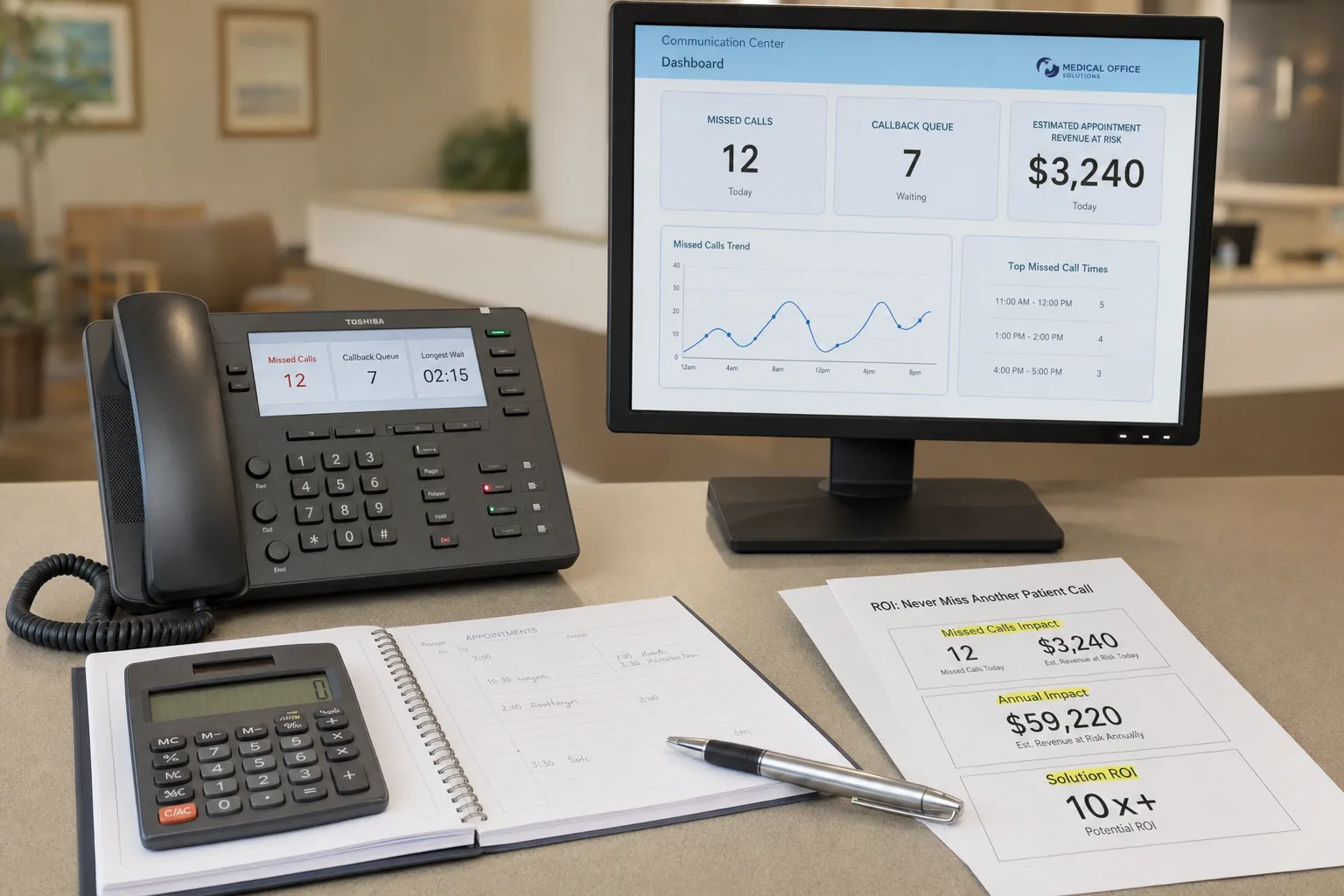
Your front desk is handling one call when another patient reaches voicemail. The issue is not one bad shift. It is the accumulation of unanswered calls, callbacks, and patients who never try again.
The exact financial effect depends on your call volume, conversion rate, appointment value, and follow-up process. Rather than claim a universal dollar loss, build a model from your own numbers.
Start with the calls you can measure
For a worked example, assume 500 inbound calls per week, a 65% answer rate, 175 unanswered calls, a 20% appointment conversion rate among those callers, and an average collected appointment value of $180. The illustrative opportunity value is:
175 calls × 20% × $180 = $6,300 per week
That is not measured lost revenue. Some callers will leave a voicemail, call back, book online, or never have intended to schedule. Track those outcomes before treating the model as a business case.
Useful baseline measures include:
- Calls by hour and day
- Answer rate and abandoned calls
- Voicemail return time
- Appointments booked after a missed call
- After-hours appointment volume
- Staff time spent on callbacks
Why missed calls compound
A missed call creates more than one task. It may produce a voicemail, a callback, a second attempt from the patient, and a scheduling request that arrives after the appointment slot is gone. During evenings and weekends, there may be no one available to resolve the request.
The practical question is not whether every call must be automated. It is which routine requests can be answered, scheduled, or routed consistently while exceptions reach staff.
A focused automation test
Begin with a baseline, then test a narrow workflow such as overflow or after-hours scheduling. Compare answer rate, completed bookings, callback volume, and patient feedback. Pretty Good AI’s customer-reported results include 13% of appointments booked after-hours and 50%+ call auto-resolution reported in approximately 30 days. Results vary by workflow and call mix.
A universal answer rate, appointment lift, or break-even date would obscure the differences between practices. Those are outcomes to measure in the practice.
The 30-day measurement plan
Baseline: Record call demand, answer rate, appointment conversion, and callback work.
Implementation: Configure one workflow, define escalation rules, and keep staff involved for ambiguous requests.
Review: Compare the same measures after launch. Calculate any financial effect from observed incremental appointments and documented labor time, not from a generic industry assumption.
The bottom line
Missed calls are an access problem before they are a revenue problem. Measure where patients are waiting, abandoning, or calling back, then decide whether automation can close that gap. A practice-specific model is more credible and more useful than a hard-dollar claim that may not fit your operations.
See your numbers. Calculate your ROI.
15-minute ROI analysis. We'll show you exactly what missed calls are costing your practice.
Calculate Your ROI → →Written by Kevin Henrikson