ROI Analysis
Prior Authorization Automation for Practices
Prior authorization automation can organize intake, documentation, and follow-up. Learn how to measure workload and preserve clinical review at every step.
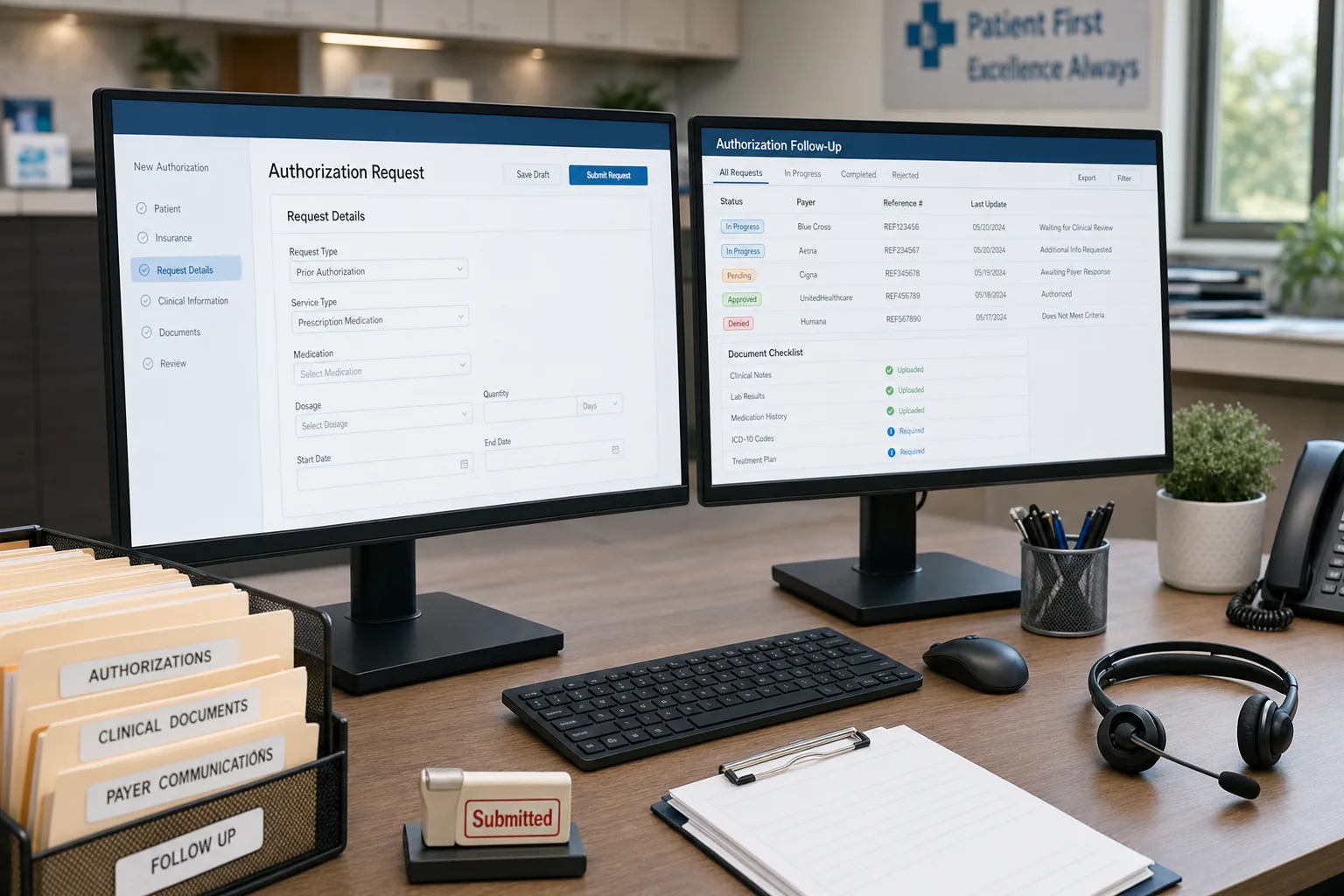
Prior authorization is a coordination problem as much as a paperwork problem. Requests move between providers, staff, payers, and patients, and every handoff can create delay.
The American Medical Association’s prior authorization survey reports 13 hours per week of combined physician and staff time spent on prior authorization tasks among surveyed physicians (AMA prior authorization physician survey). That is a cited national survey result, not a claim about every practice.
Start with a workload baseline
For a worked example, assume a 20-provider group uses 13 combined hours per provider per week on prior authorization and values blended time at $75 per hour. The illustrative annual labor model is:
20 providers × 13 hours × $75 × 52 weeks = $1,014,000
This is an assumption-based planning example. A practice-specific time study makes the estimate more useful, while the derived total remains a planning figure rather than measured labor cost.
Measure request volume, time per stage, denials, appeals, patient status calls, and provider review time.
Where automation fits
A useful workflow can capture request details, find documentation already in the EHR, track status, prompt follow-up, and route exceptions. Clinical staff remain responsible for medical-necessity review and final submission decisions.
Universal reductions in prior-auth time, approval speed, denial rate, or recovered revenue would not reflect every practice. A credible estimate uses a specific, verifiable source for each number.
A safer implementation path
Intake: Capture the order, payer, patient, and required documentation.
Review: Surface missing or ambiguous information for staff and providers.
Follow-up: Track payer status and notify the right person when action is needed.
Communication: Give patients a consistent status update without making clinical promises.
Measurement: Compare hours, turnaround time, rework, appeals, and patient calls against the baseline.
Across Pretty Good AI customers, 50%+ of calls are handled start to finish in the first weeks, calls are answered in under five seconds, hold times fall to under five minutes, and practices report measurable ROI in ~30 days. Customer-reported results. Your numbers will vary by workflow, staffing, seasonality and call mix. Those results describe call workflows; they do not establish prior-authorization savings.
What to ask a vendor
Ask whether the system connects to your EHR, how it handles incomplete records, where human review occurs, and how the audit trail is maintained. Request customer evidence for any performance or financial claim.
Prior authorization automation should make routine coordination visible and repeatable while keeping clinical judgment with clinicians. That is a more durable business case than an unsupported savings promise.
Sources:
See How It Works in Your Practice
A 15-minute live demo shows voice AI handling a real patient call, scheduling, insurance verification, and EHR lookup. No slides, no pitch deck.
Book a 15-Minute Demo →Written by Kevin Henrikson