Practice Operations
Rural Health Clinic After-Hours Coverage
Rural health clinics face after-hours coverage gaps with limited staff. AI voice agents capture calls in athenahealth and escalate clinical concerns safely.
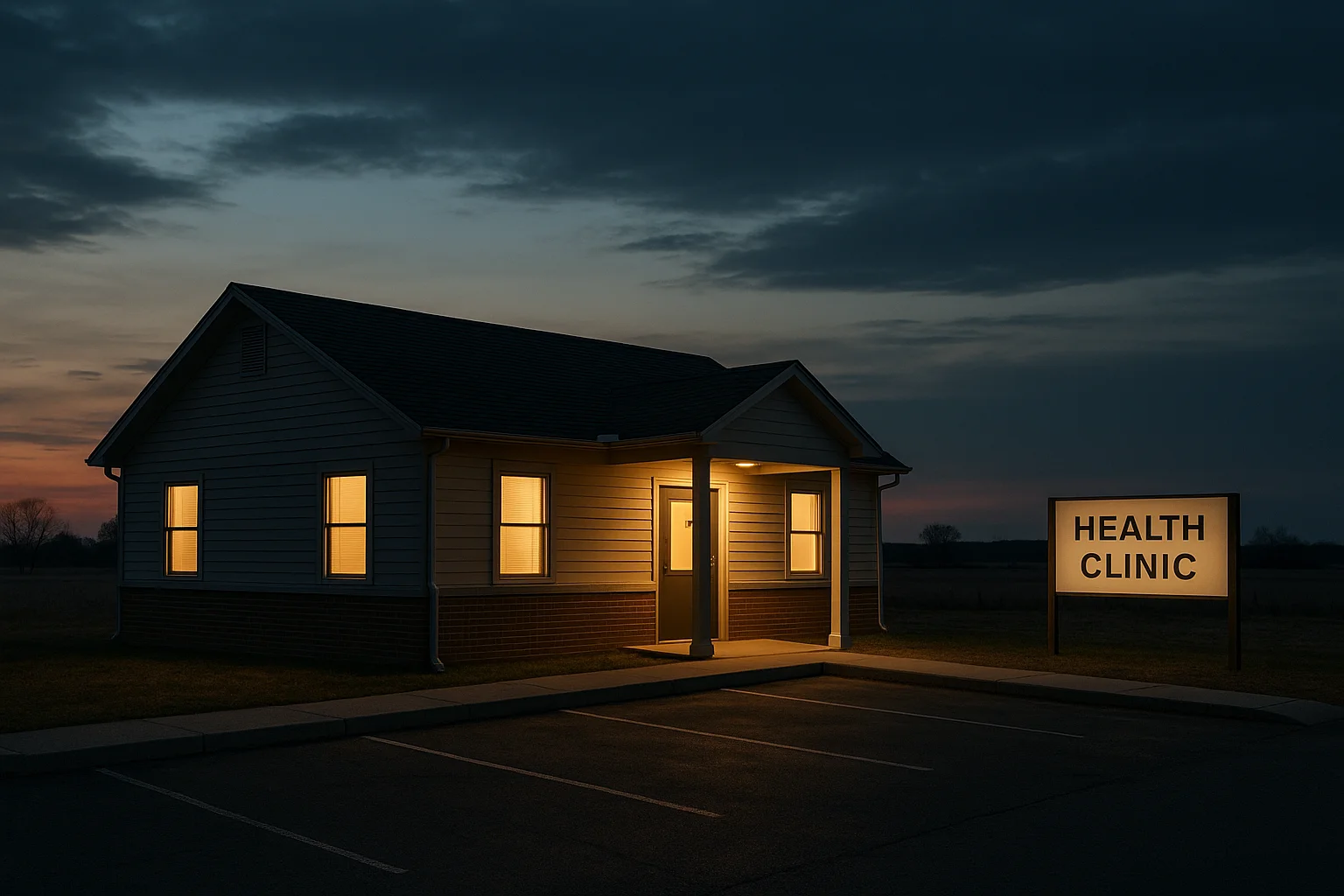
A rural health clinic in a county with 12,000 residents has one physician and one nurse practitioner. After 5 PM, the phones roll to the on-call provider’s personal cell phone. That provider also did a full day of clinic, has rounds at the critical access hospital across town, and has to be back in clinic at 7:30 AM.
Most of the after-hours calls are not emergencies. Medication refill requests. Questions about a lab result that came back that afternoon. A parent worried about their child’s fever and whether it warrants a drive to the hospital 45 miles away. A patient asking if they can take ibuprofen with their blood pressure medication.
These calls need to be handled. The patient on the other end of the line has nowhere else to turn - the nearest urgent care is an hour away, the ER is the only alternative for anyone who can’t get through to the clinic, and the on-call provider is the only bridge between those two extremes.
AI voice agents built for rural health settings answer around the clock, capture structured intake, complete supported administrative work, and escalate clinical calls to the practice’s clinicians.
The rural health coverage problem
Rural health clinics and critical access hospitals operate under resource constraints that urban and suburban practices don’t face. The staffing math is different. The backup options are different. The patient population is different.
Staff-to-patient ratios: A rural health clinic serving 3,000-8,000 active patients with 2-4 providers has no natural redundancy in after-hours coverage. When the on-call provider is unavailable, there is no pool of colleagues to distribute calls to.
Patient alternatives: An urban patient who can’t reach their physician after hours has immediate access to urgent care, telehealth platforms, retail pharmacy clinics, and multiple emergency rooms. A rural patient may have a 30-60 minute drive to the nearest urgent care and a 45-90 minute drive to the nearest hospital with full emergency services. The after-hours call to the clinic isn’t a convenience - it’s a safety valve.
Provider burnout: Rural physicians report burnout at rates comparable to their urban peers - around 45% (JABFM 2024) - but with far fewer clinicians to share coverage, the after-hours call burden concentrates on a handful of providers. A provider taking 6-10 after-hours calls per night across a rotating on-call schedule loses meaningful sleep on call nights - and sleep loss affects clinical performance the next day.
Telehealth access gaps: Rural patients have lower broadband access rates, reducing the effectiveness of telehealth options that rely on video capability. Voice-based AI that works on any phone connection is more accessible than video telehealth for this population.
What the after-hours call volume looks like
After-hours call volume varies by practice, season, staffing, and patient population. Practices should review their own call logs to understand the mix and plan coverage.
Common categories include:
- Medication and refill requests: Requests can be captured and entered into the provider-approved workflow; medication decisions stay with clinicians.
- Clinical concerns: The agent captures what the caller reports, applies practice-owned red-flag rules, directs emergencies to 911 or the appropriate emergency service, and escalates other clinical concerns to the on-call clinician.
- Lab result inquiries: The agent records the request and routes interpretation questions to the practice.
- Scheduling and administrative: Appointment requests, office hours, records, insurance, and prescription transfer requests can be completed or routed.
- Calls needing clinician response: Reports of chest pain, serious symptoms, or a mental health crisis are escalated with a structured summary.
Administrative categories can be handled or routed without waking the physician. Clinical concerns require escalation, and without an intake layer every call goes directly to the on-call provider.
What AI handles in rural health
After-hours call intake
An AI voice agent that answers the after-hours line identifies the caller, captures the request as structured data, completes supported administrative work, and escalates clinical concerns immediately.
For a patient calling with a child’s fever, the agent records the child’s age, the caller’s report, when it started, and any information the caregiver volunteers. It checks practice-owned red flags to route an emergency, but does not diagnose or interpret the report; the practice’s clinicians receive the structured summary for judgment.
The on-call physician receives the clinical call with a structured summary, while administrative requests can follow the practice’s approved workflow.
Medication refill routing
After-hours refill requests for maintenance medications - blood pressure medications, diabetes management, thyroid medications - can often be handled through the practice’s refill protocol with a call logged in athenahealth for provider review the next morning. The AI collects the refill request, documents it, and routes it to the provider’s next-morning queue. Patients get a callback confirmation within the next business day. The same shortage of staff hours shows up in the revenue cycle, where billing work sits in a queue nobody has time for and earned revenue ages.
Controlled substance refill requests route differently - logged but not processed until provider review.
Clinical calls from chronic disease patients
Patients may call about blood sugar values, respiratory symptoms, blood pressure readings, or other clinical concerns. The agent records the caller’s report and checks practice-owned red flags before routing it to the practice or emergency services; it does not define normal ranges or make a clinical decision.
The agent documents the call and routes the report according to practice-owned rules. It can relay documented practice instructions or emergency-routing directions, but does not diagnose or make the clinical decision; the care team handles interpretation and follow-up.
Lab result inquiry routing
When a patient calls about a lab result flagged in the portal, the agent records the request and routes interpretation to the practice. It does not classify results or provide an automated clinical response.
The critical access hospital dimension
Critical access hospitals (CAHs) have specific regulatory requirements that affect after-hours call management. CAH providers are required to maintain 24/7 emergency services, but the operational reality for many small CAHs is that their emergency coverage is provided by the same providers doing primary care clinic.
When the on-call primary care physician also covers the emergency department, after-hours non-emergency calls are a particular burden - they interrupt a provider who may need to be available for an actual emergency at any moment.
Structured intake that gives clinicians the caller’s context can improve the after-hours handoff in critical access settings, not just administrative efficiency.
The athenahealth integration for rural practices
Rural health clinics on athenahealth benefit from the same AI capabilities as urban practices, with specific value in the after-hours context:
- Patient identity verification via athenahealth records without requiring portal login
- Real-time patient identification and chart context for structured clinician handoffs
- Call documentation that syncs to athenahealth without staff re-entry
- Escalation routing that reaches the on-call provider with patient context attached
For rural practices that have limited IT staff and limited budget for custom integrations, an athenahealth-native AI solution requires no additional technical infrastructure.
What rural health administrators and providers get from AI
Reduced on-call burden: Capturing administrative requests before handoff can restore provider time on call nights and reduce avoidable interruptions.
Consistent intake for all callers: Every patient who calls after hours can provide information to an agent rather than reaching voicemail.
Better morning handoffs: Every after-hours call is documented in athenahealth with the patient’s report, how the call was routed, and any follow-up needed. The morning team starts with a complete picture instead of reconstructing overnight events from incomplete notes.
Provider recruitment and retention: Rural practices struggle to recruit and retain providers partly because of the after-hours burden. AI that meaningfully reduces that burden is a retention tool as much as an efficiency tool.
Key takeaways
- Rural health clinics operate with minimal backup coverage - after-hours calls go to a single on-call provider who also manages a full clinical day
- Administrative after-hours calls can be captured without physician involvement; clinical calls are escalated with structured context
- AI captures symptom reports, routes refill and lab-result requests, and escalates clinical questions to the physician
- Critical access hospitals benefit when on-call providers receive structured clinical handoffs instead of unstructured refill requests
- athenahealth-native integration means rural practices get AI after-hours coverage without additional IT infrastructure or an integration project of their own
If your rural practice’s on-call provider is handling administrative calls alongside clinical questions, that is a workflow problem. Structured intake can separate the requests without replacing clinical judgment.
See how Pretty Good AI handles rural health clinic workflows in athenahealth
Sources:
- Rural Health Information Hub: Rural Health Care Challenges
- National Rural Health Association, Provider Burnout in Rural Settings: NRHA Resources
- American Board of Family Medicine: Family Physician Burnout Does Not Differ With Rurality
Ready to reduce missed calls?
15-minute demo. See how an AI team works inside your athenaOne practice.
Schedule a Demo →Written by Kevin Henrikson