Twelve Objections to Front-Office AI, Answered Straight
The twelve things practice administrators actually push back on when they evaluate front-office AI for athenaOne, and the honest answer to each one of them.
9 min readSpecialty Resources
AI automation guides for multi-specialty groups: coordinate across departments, standardize workflows, and scale without proportional headcount.
The twelve things practice administrators actually push back on when they evaluate front-office AI for athenaOne, and the honest answer to each one of them.
9 min readThe athenahealth Authorization and Consent form sits between signing a vendor and anything happening. What it authorizes, who signs it, and what stalls it.
9 min readEvery workflow Pretty Good AI runs on athenaOne today, named and grouped: calls, referrals, scheduling, outreach, prior auth, forms, and practice analytics.
11 min readWhat building one athenaOne workflow really involves: three anonymized accounts from first description to live, including the stages that stalled and why.
9 min readCalls handled is the easiest number to report and the least useful one. The measures a multi-specialty practice should ask any athenaOne vendor to show instead.
8 min readDesk-bound patient communication makes every reply wait for a workstation. What a multi-specialty group loses to that, and which parts never need a chair.
7 min readA photo of an insurance card only works if it reaches the right place. In athenaOne it attaches to a policy, not the chart. How AI captures and files it right.
9 min readFront-office AI that only answers the phone hands the hard part back. Here is the athenahealth surface a multi-specialty group's work actually lives on.
8 min readEvery front-office vendor says they integrate deeply. Six live demo tests that separate a real athenahealth integration claim from a read-only connection.
9 min readMost practices buy front-office AI on a demo and measure nothing. A front-office automation checklist for what to baseline, require, and review at 90 days.
8 min readVendors call every athena integration real-time. The phrase covers two different architectures, and which one you bought decides how clean your queues stay.
9 min readThe administrator’s job leaves the building several times a day. What has to be true of the phones, the queues, and the oversight so the front office keeps moving.
8 min readA patient asks the same thing by phone and by secure message, and only one channel usually has rules. What it takes to route both into a single queue.
8 min readReassignment is the most-used verb in front-office task work and the least designed. What a patient case has to carry so the next person is not starting over.
9 min readIf every front-office case closes as completed, the queue reports success and teaches you nothing. Close reasons are the measurement system, not a dropdown.
9 min readReminders go out by the thousand while confirmation status sits unread. It is the earliest signal a practice has about which appointments are already at risk.
9 min readAsking every patient is the compliance rule. Review request routing decides which encounters are eligible today, so the ask lands and the channel survives.
9 min readForms, insurance updates, and prep instructions all come due before the visit. Why the pre-visit task list stalls in multi-specialty groups and how to close it.
8 min readA canceled slot is worth nothing unless something fills it within hours. Why waitlist backfill fails in multi-specialty groups and what the list has to know.
7 min readMost front-desk automation fails at the destination, not the conversation. How smart call routing uses athenaOne departments and staff inboxes to route calls.
8 min readReferring offices ask three questions and most groups cannot answer any of them. How referral status tracking closes the loop using athenaOne referral records.
7 min readCard on file only works if the patient understood what they agreed to. How a multi-specialty group runs stored card consent so it holds up months later.
7 min readA healthcare payment link fails for reasons that have little to do with the link. What has to be true about timing, the balance, and the conversation around it.
8 min readOnce every call is transcribed, sampling stops being a constraint and becomes a choice. How to decide what a call review console should surface first.
8 min readTraditional call QA scored five calls a month per person because listening was expensive. Per-call QA scoring at full coverage changes what QA is even for.
8 min readNew-patient registration is a data completion problem, not a form. What a multi-specialty group should collect, when to call, and what to stop asking twice.
7 min readMost practices ask for an online review days late, to the wrong patients, breaking platform rules. Review request timing is the variable that matters.
7 min readMost practices collect patient survey answers and act on almost none. What closing the survey feedback loop takes, and why it is a routing problem underneath.
7 min readWhen a provider gives notice, the booked panel becomes a rescheduling job with a hard deadline. How multi-specialty groups move it all inside athenaOne.
8 min readSome form fields must stay manual: race, ethnicity, insurance, anything attested. Deciding where automation stops is what makes the rest of it trustworthy.
7 min readFMLA paperwork stalls because the certification sits in a pile while a deadline runs. How AI pre-fills and routes the form inside athenaOne, minus guessing.
7 min readPortal-requested forms arrive as free text in a message queue and leave as a signed document. How to make that path structured instead of improvised work.
7 min readA prior-auth letter is one page of clinician writing wrapped in twenty pages of assembly. Automate the assembly and routing, never the necessity statement.
7 min readAn auto-filled form is only useful if the approval step is honest. Here is exactly what a provider reviews, corrects, and signs, and what never gets pre-filled.
7 min readForms turnaround time is invisible in most practices because form requests are never tracked as items. Here is how to define, instrument, and act on the number.
7 min readResults notification is a logistics job with a hard boundary. Automate the availability, the delivery, and the callback booking; leave meaning to a clinician.
7 min readA post-visit follow-up should confirm the logistics the visit created, not ask how a patient feels. What to call about, and what to route to clinical staff.
7 min readA multi-specialty group runs many billing rules under one tax ID. See how AI voice agents work denials and balances across departments so RCM staff focus on appeals.
4 min readA multi-specialty call center routes for a dozen departments at once. See how AI voice agents absorb structured calls and route the rest, integrated with athenahealth.
4 min read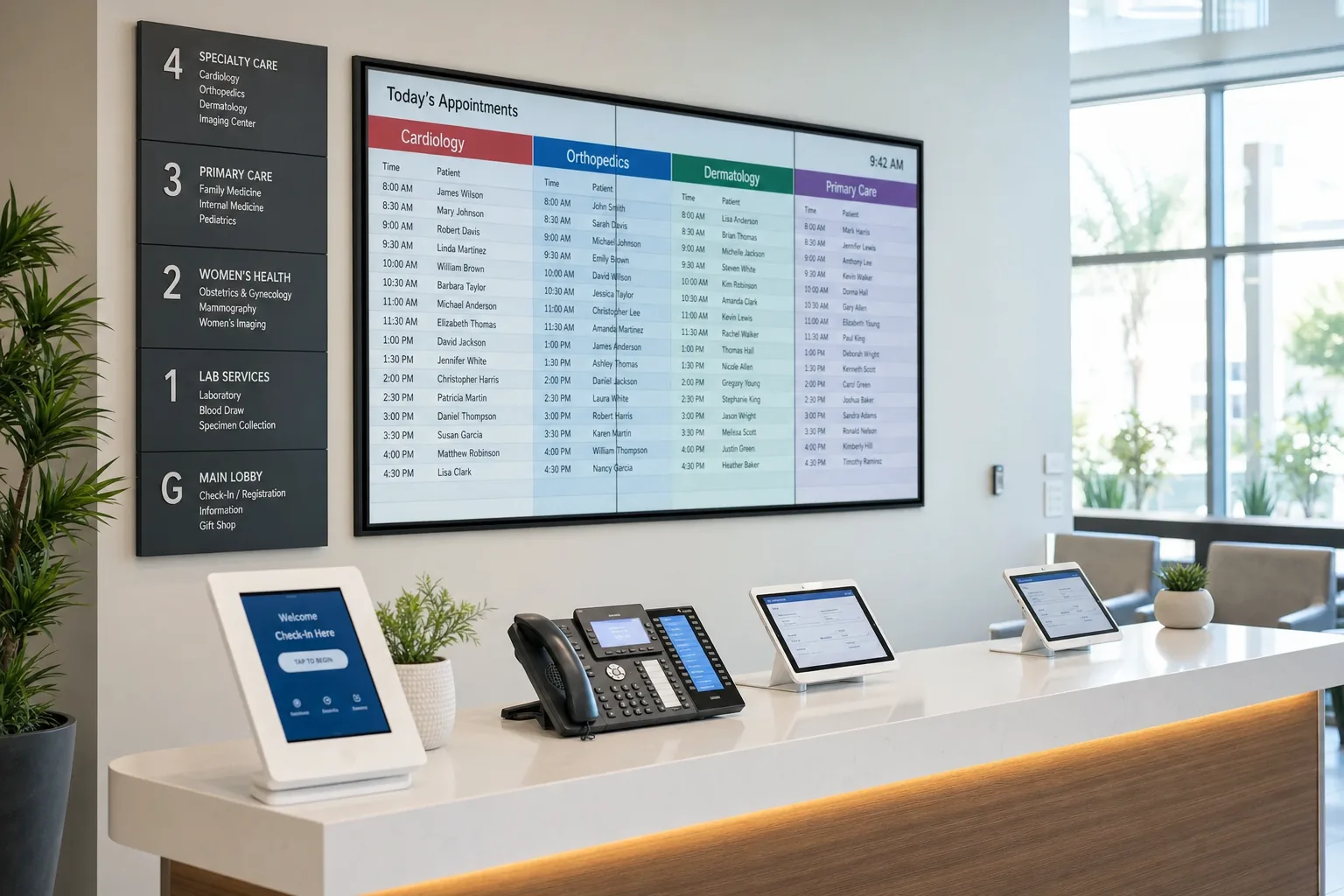
Multi-specialty groups run scheduling workflows that differ by department, payer, and appointment type. AI standardizes operations without a department-by-department rollout.
7 min read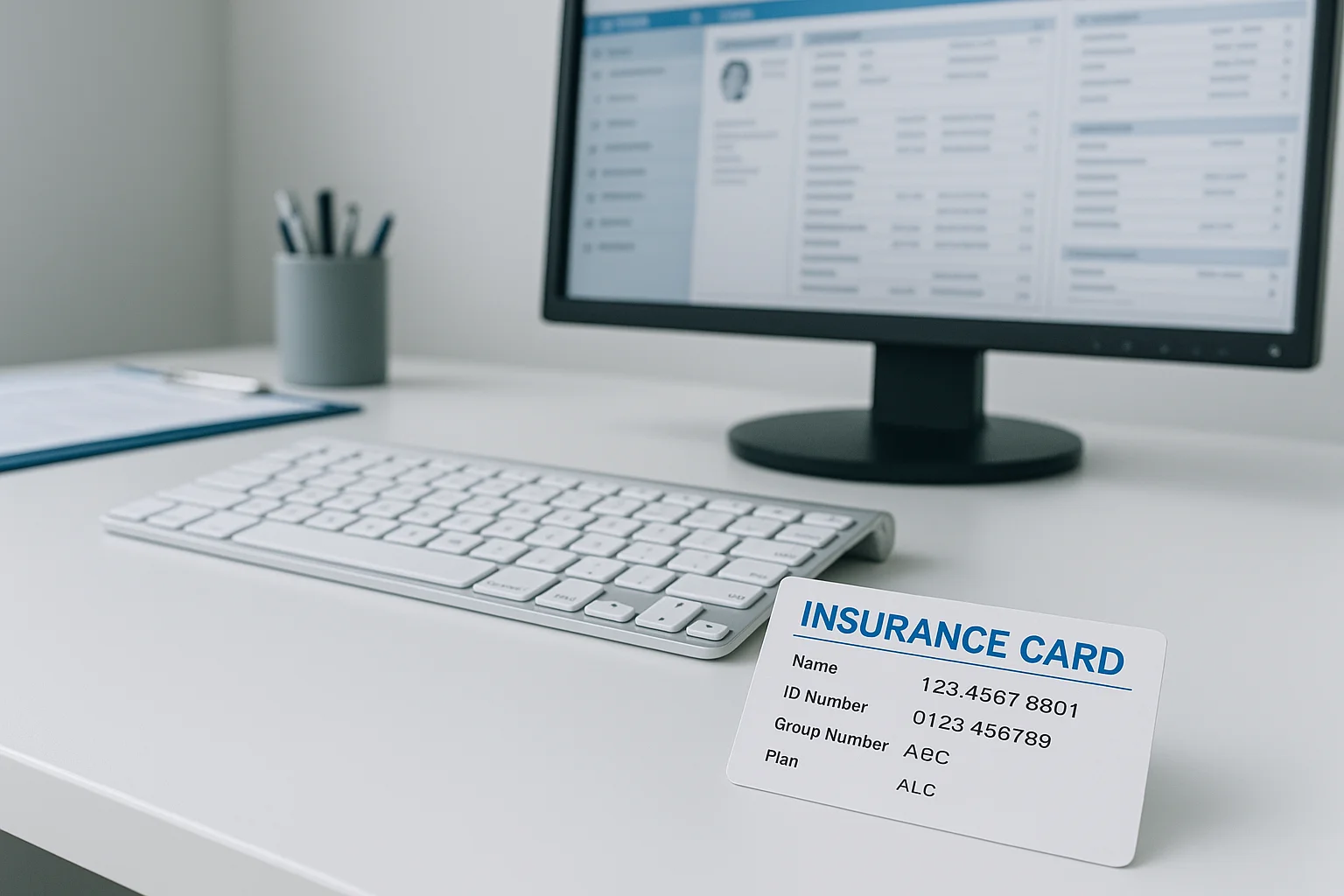
Multi-specialty groups lose revenue every day to stale insurance data. AI voice agents integrated with athenaOne capture and verify insurance cards before patients arrive, not at check-in.
9 min read
Two new market reports forecast major growth in AI scheduling. Then athenahealth launched agentic AI. We break down what analysts got right and wrong.
6 min read
Insurance verification can consume front-desk attention and create rework. Learn to measure the burden and automate routine steps without overclaiming savings.
2 min read
Front-desk turnover creates training and workflow disruption. Learn how to model the burden honestly and where voice automation can support staff effectively.
2 min read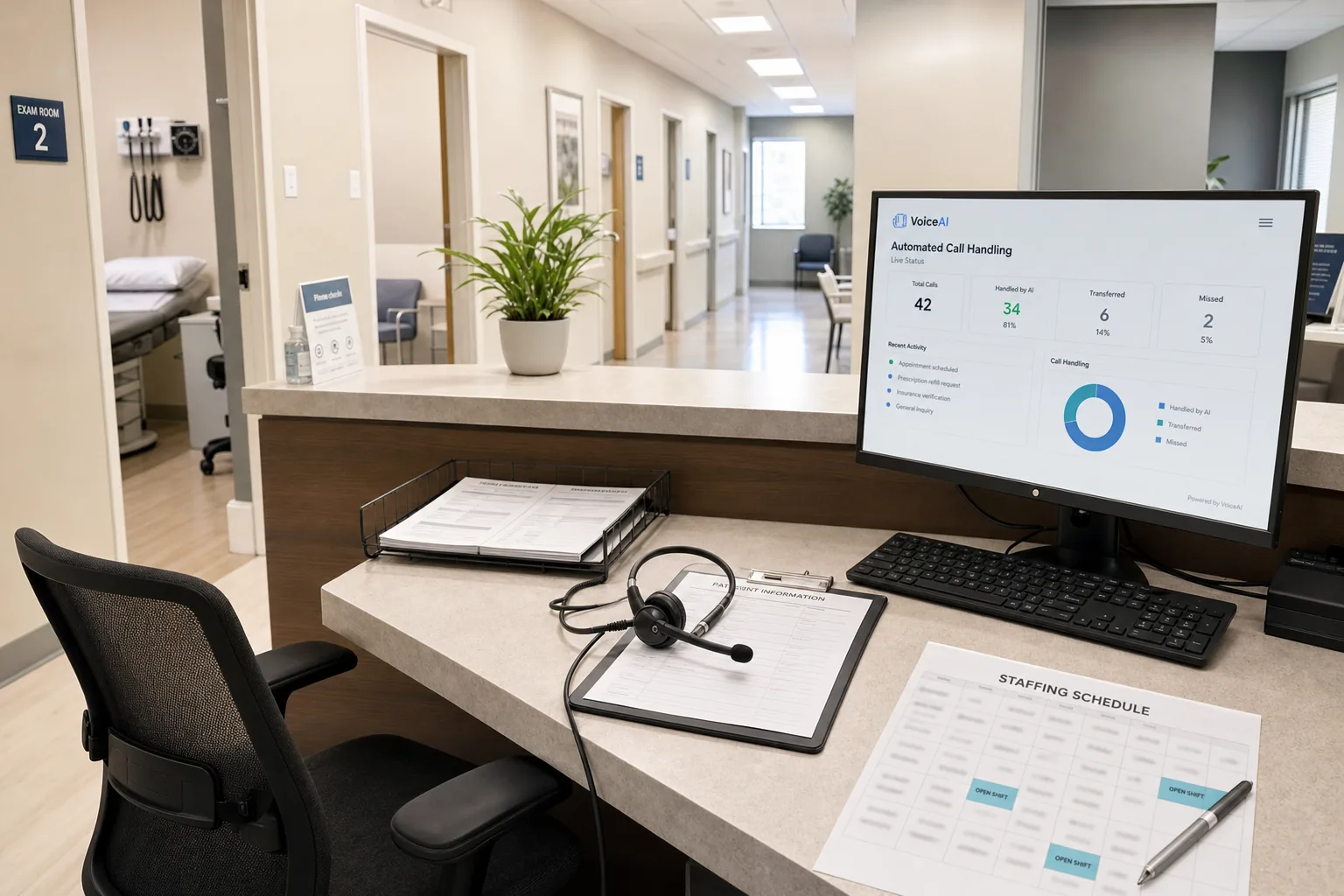
Medical practices struggle to hire MAs while existing staff burn out. Voice AI can absorb routine work so your team can focus on patient care and judgment.
8 min read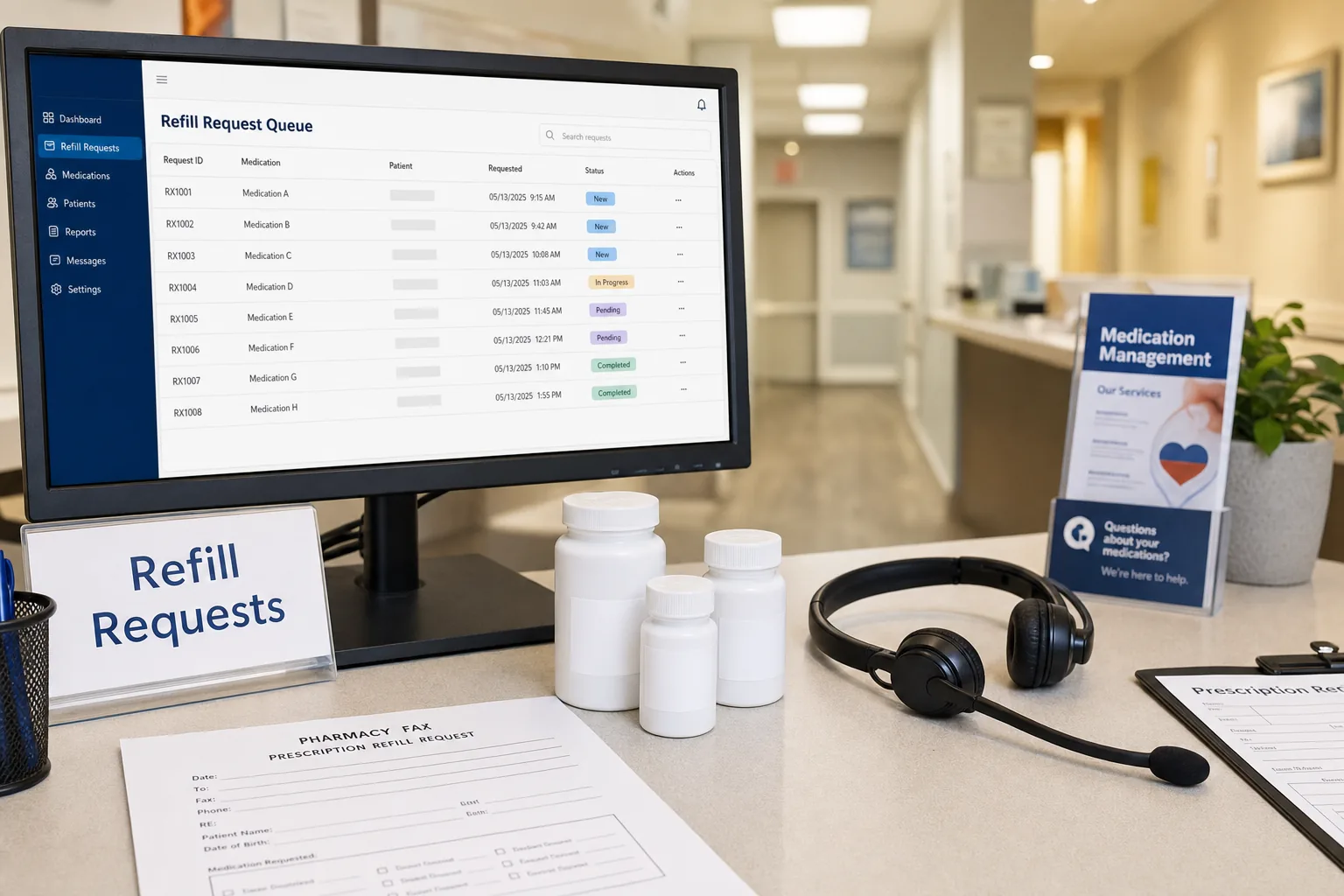
Providers lose 30+ minutes a day to refills. See how AI voice agents automate routine prescription refill calls, phone trees, and faxes.
6 min read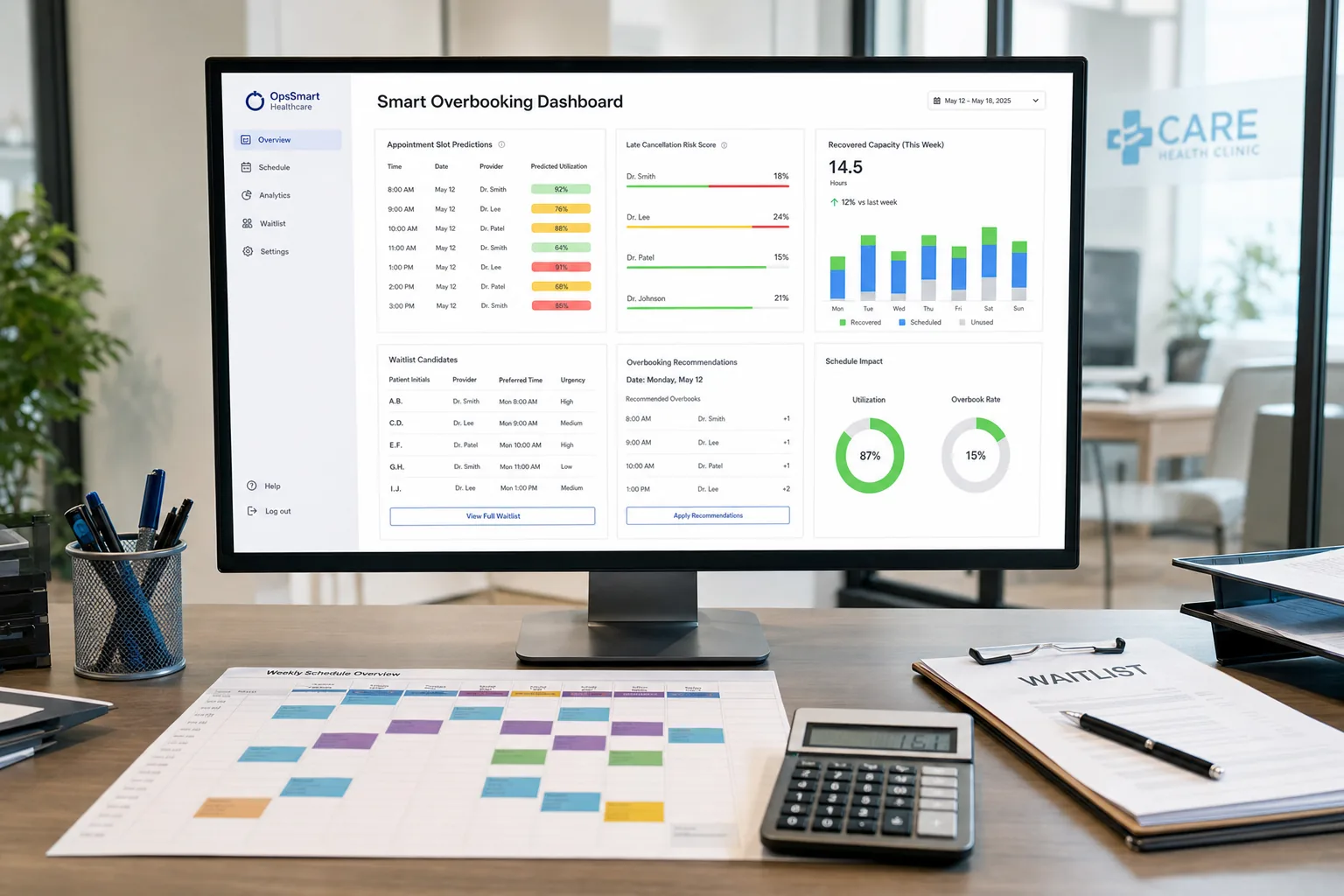
Late cancellations and no-shows leave appointment capacity unused. Learn how smart overbooking and waitlists can fill gaps while protecting patient trust.
7 min read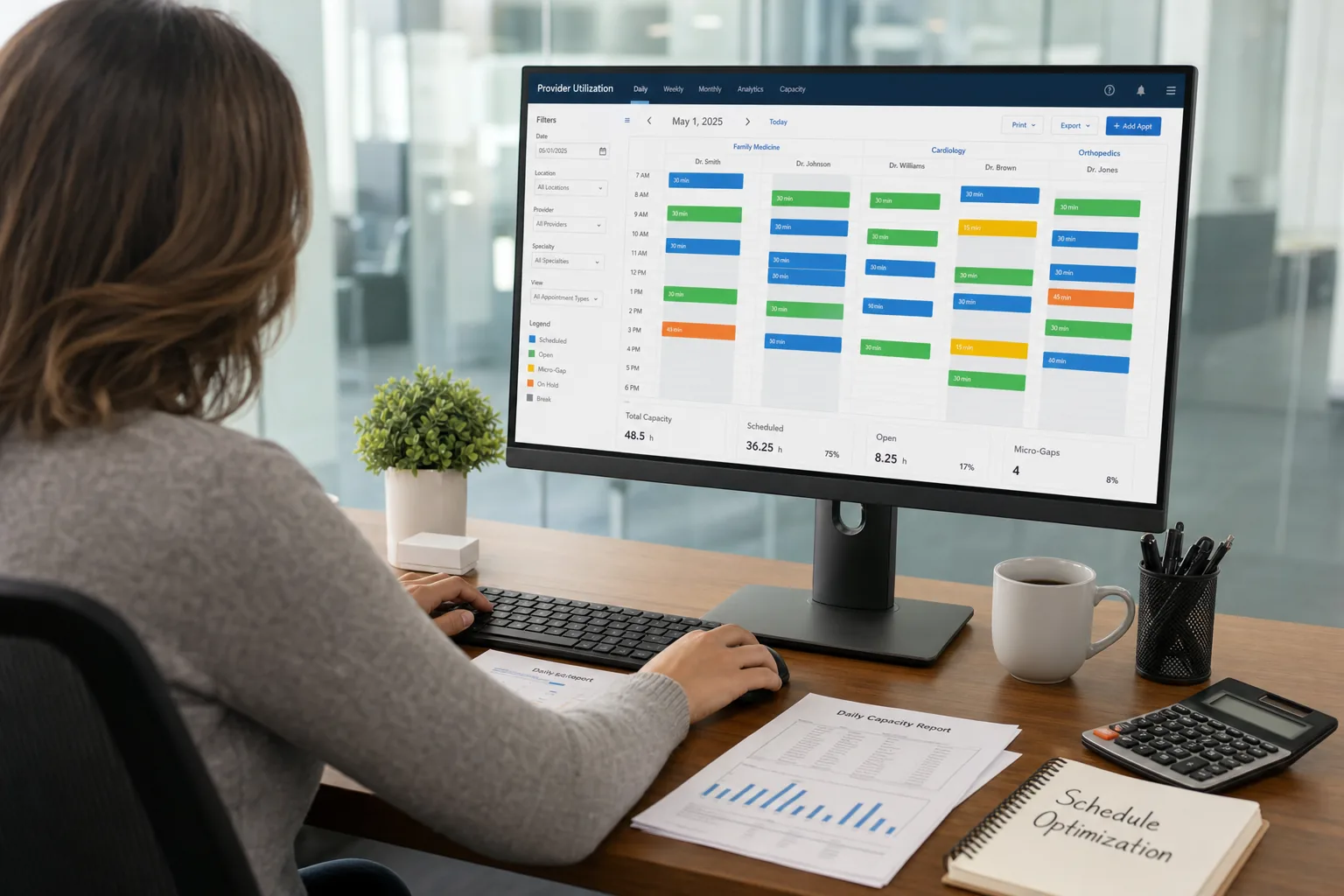
Scheduling micro-gaps leave provider capacity unused. Learn how AI can analyze appointment patterns, fill cancellations, and protect provider time over time.
7 min read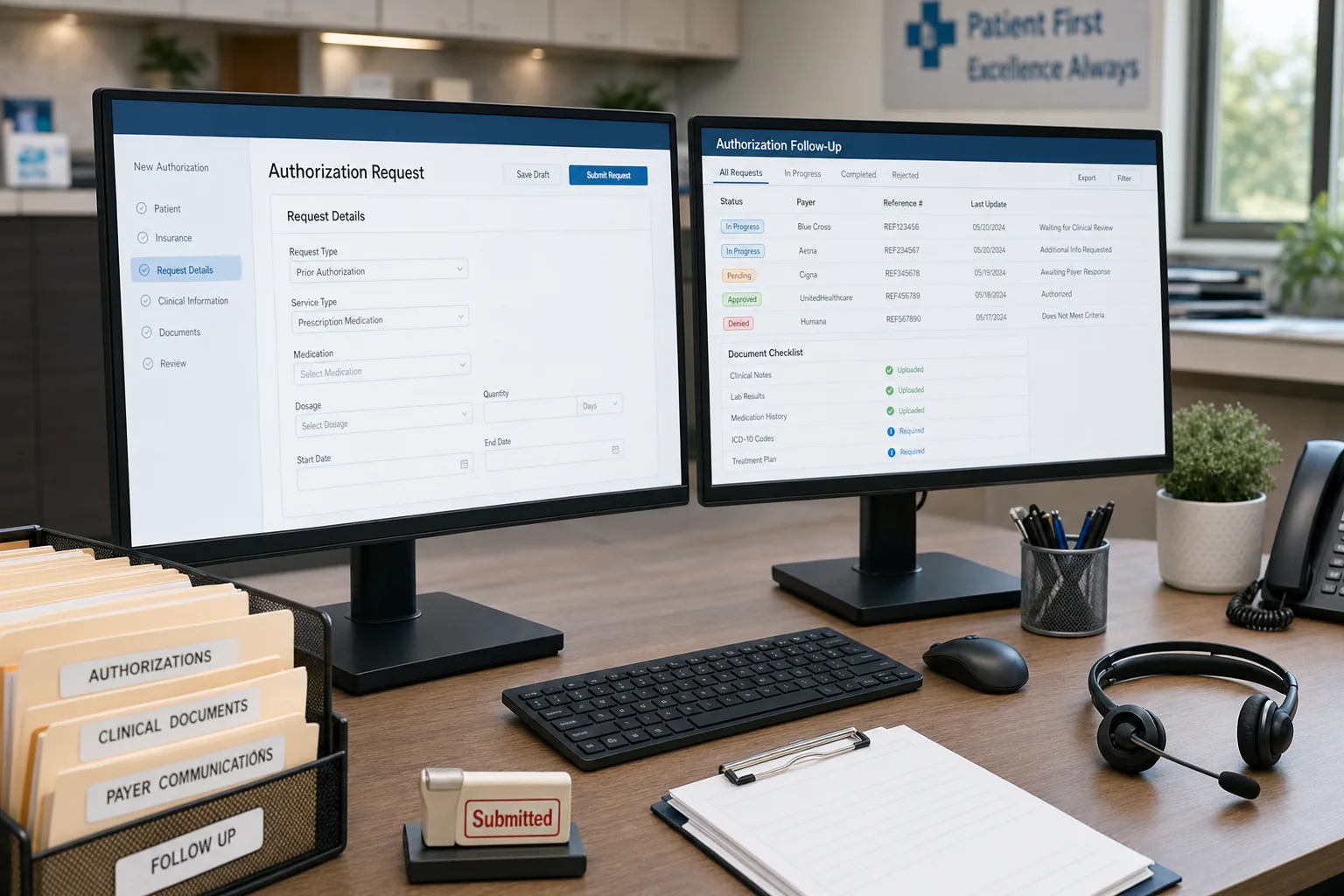
Prior authorization automation can organize intake, documentation, and follow-up. Learn how to measure workload and preserve clinical review at every step.
2 min read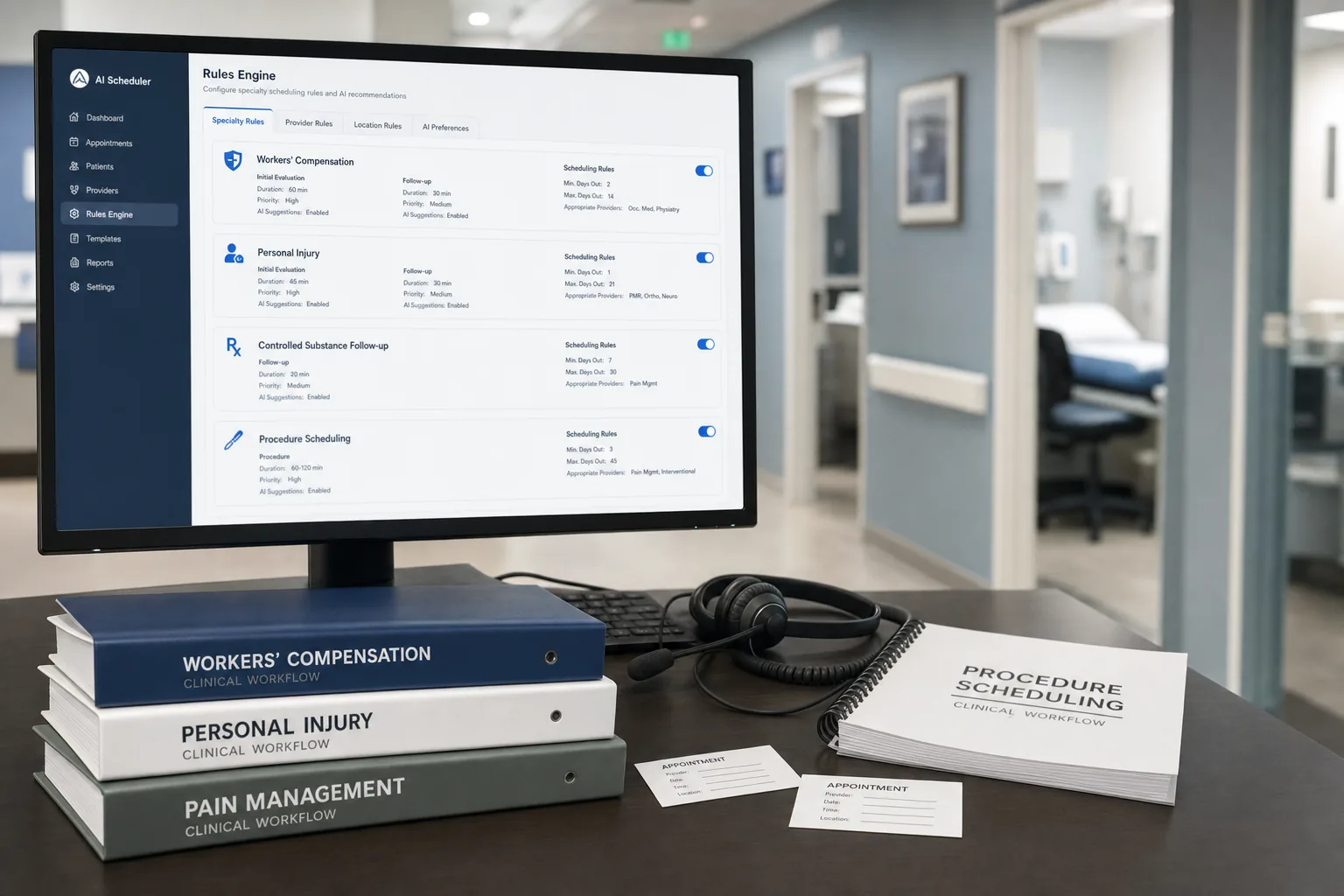
Workers comp. Personal injury. Controlled substances. Complex scheduling rules. Your specialty has requirements generic AI does not understand.
8 min read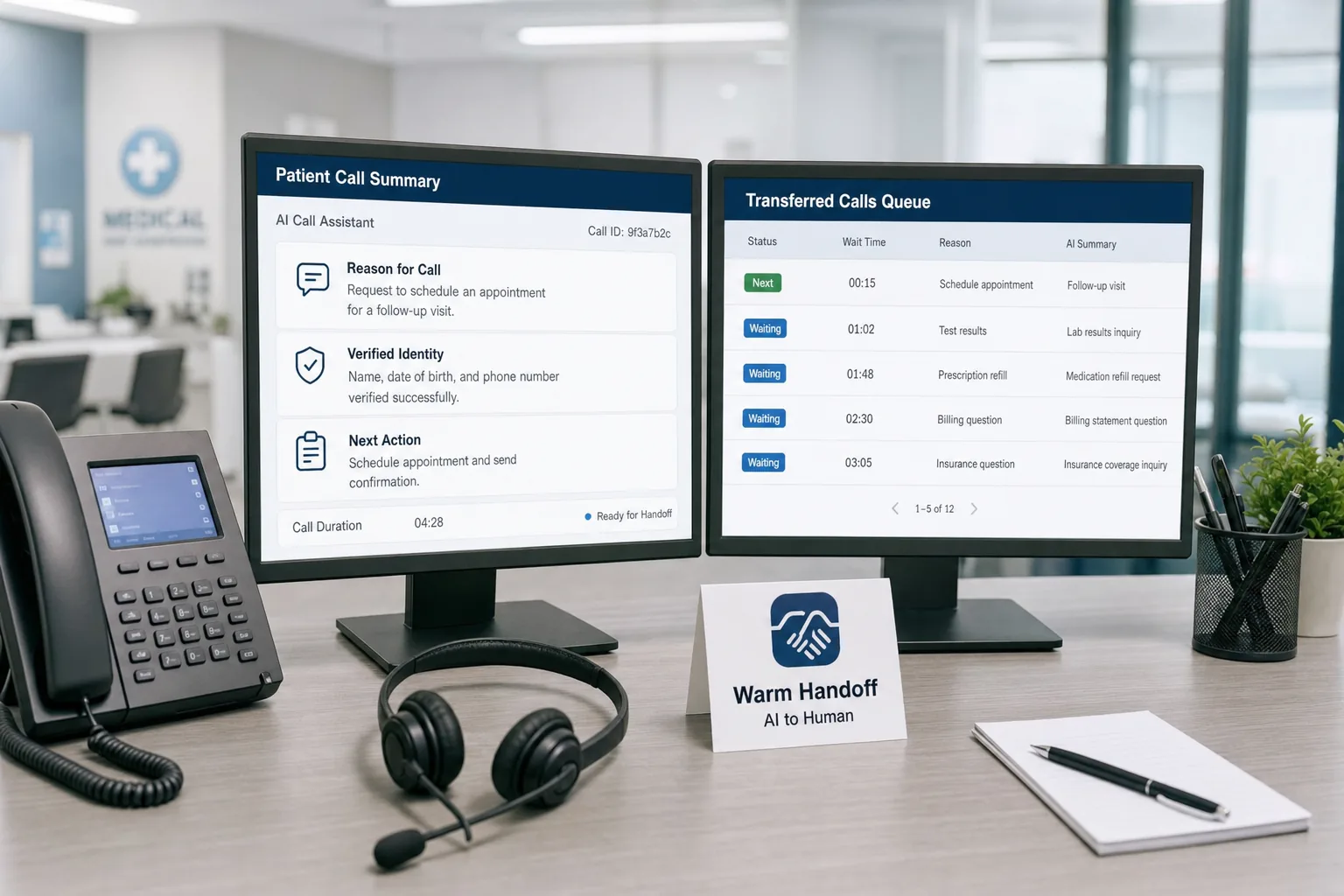
When AI transfers a call to your staff, what context comes with it? For most systems, the answer is nothing. Here is how to fix it.
7 min read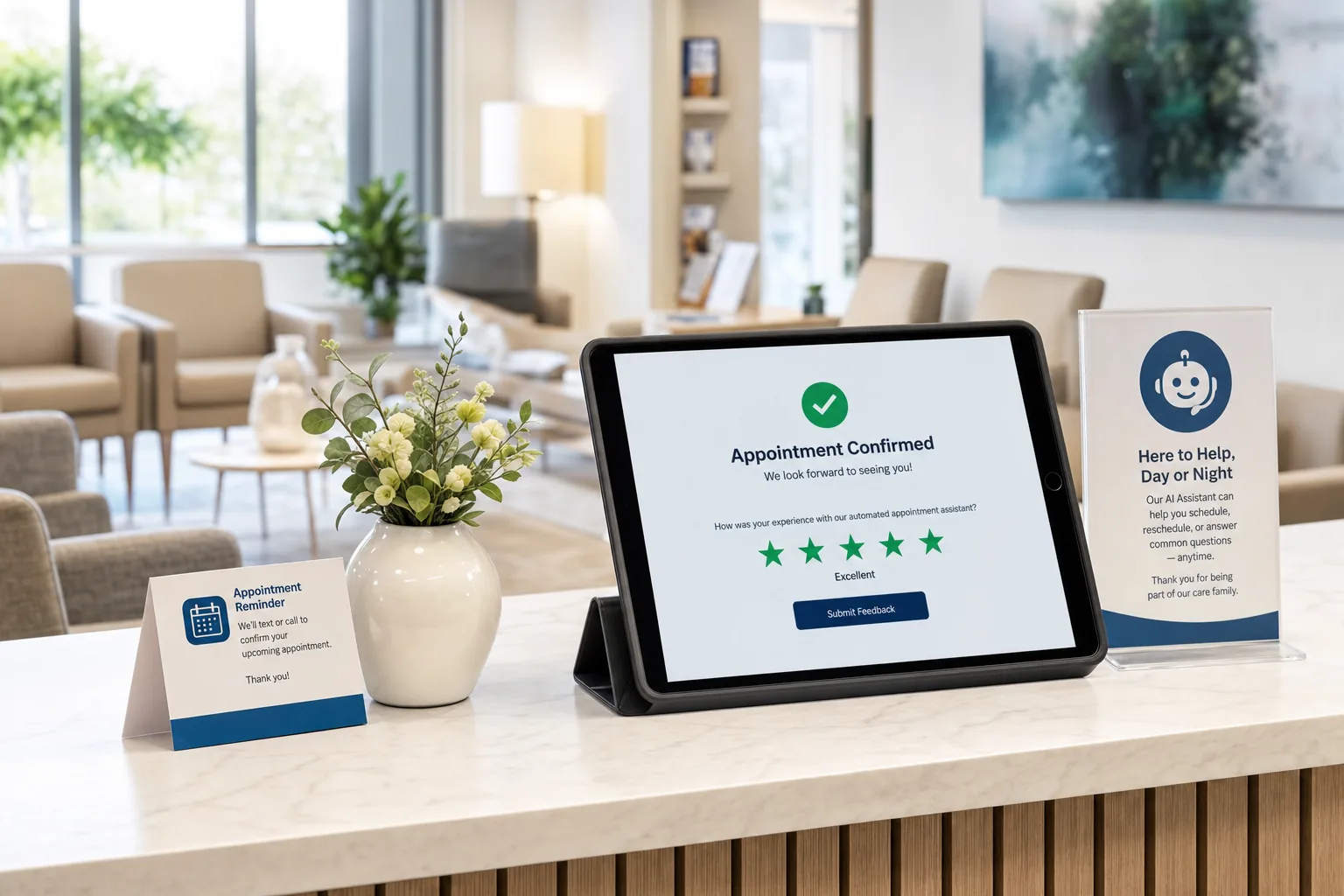
Practices report strong patient satisfaction with voice AI across completion rates, age demographics, and channel preference. What the numbers look like once patients actually use it.
8 min read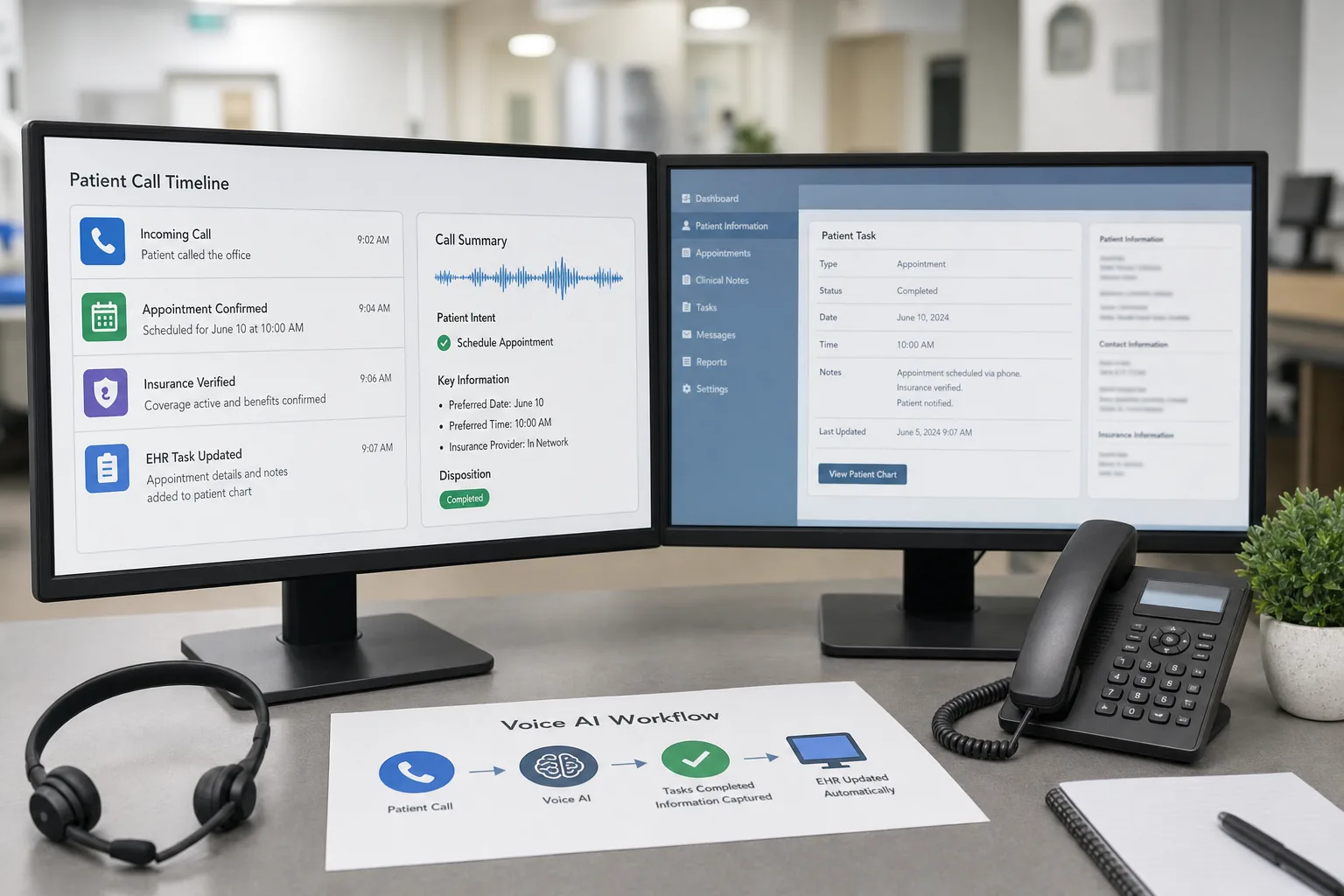
How to tell true bidirectional EHR sync from a read-only voice AI integration, and why write-back to scheduling, referrals, and orders is what matters.
6 min read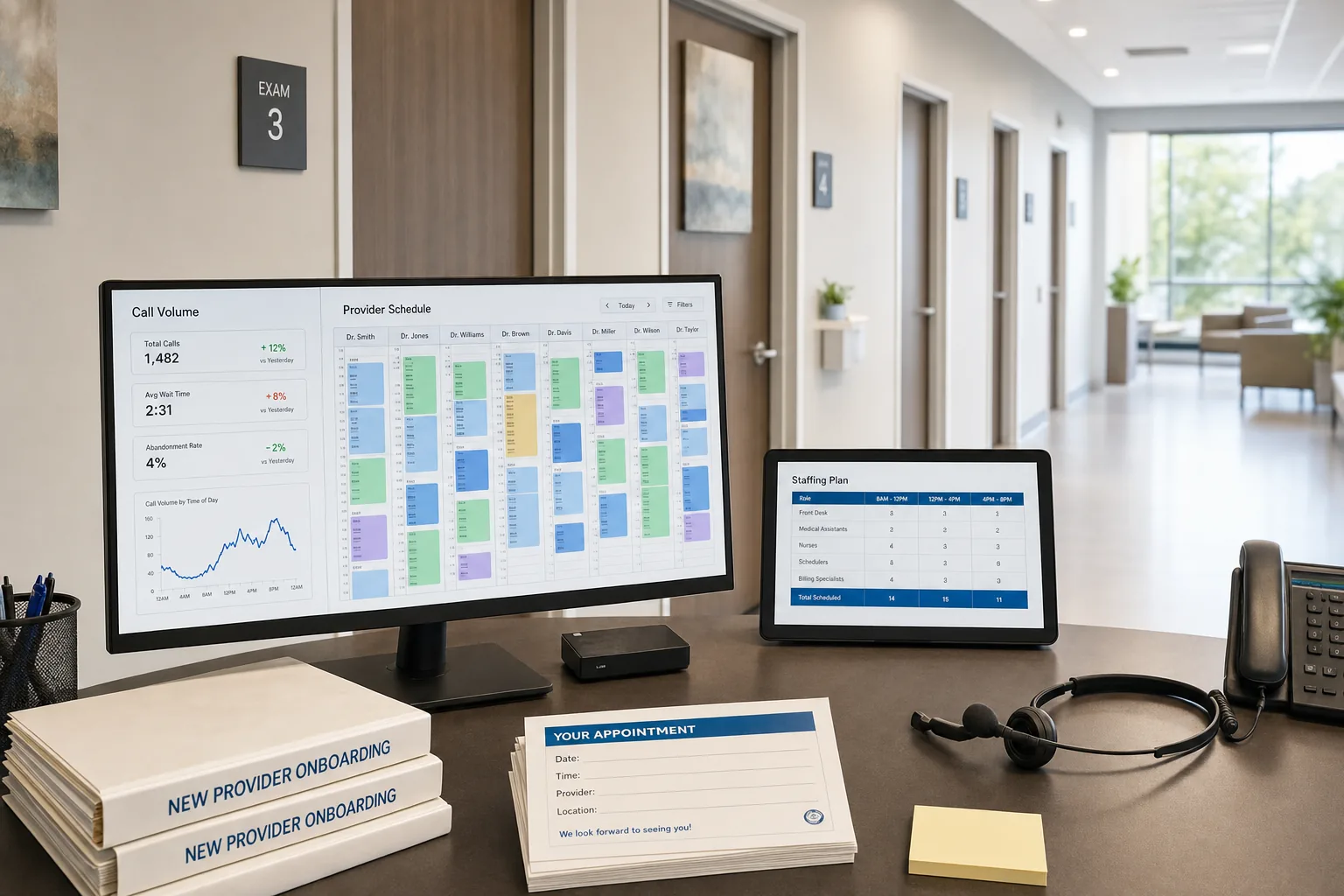
Growing from 4 to 10 providers? Scale access with AI and selective hiring while measuring staff time, call volume, and workflow capacity as you grow now.
7 min read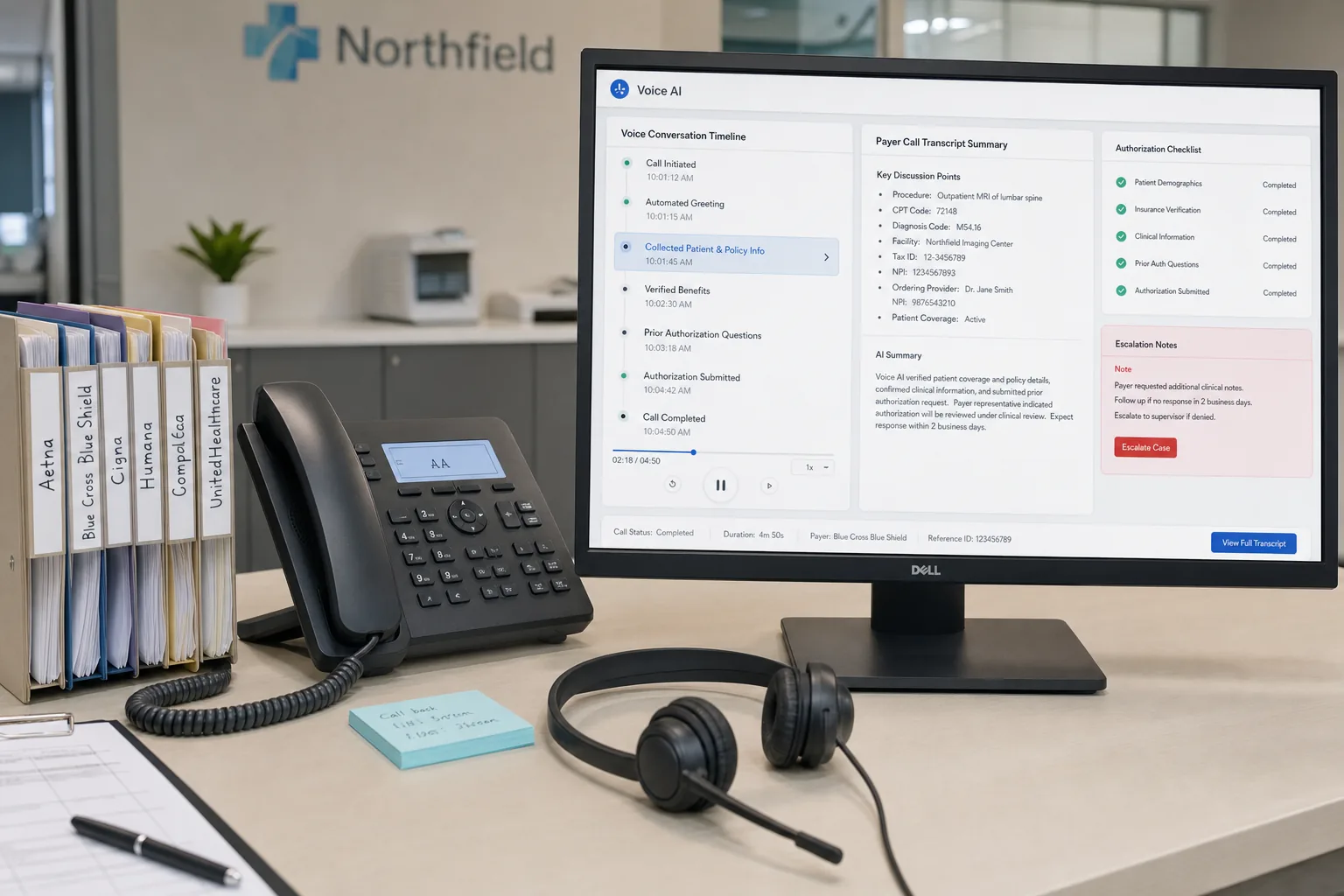
The AMA reports 13 hours per week on prior authorizations. See how voice AI automates follow-up, reduces denials, and helps practices measure results.
7 min read
The AMA 2024 survey reports 13 hours per week on prior authorizations. See how AI automates status checks, payer follow-ups, and exception routing now.
8 min read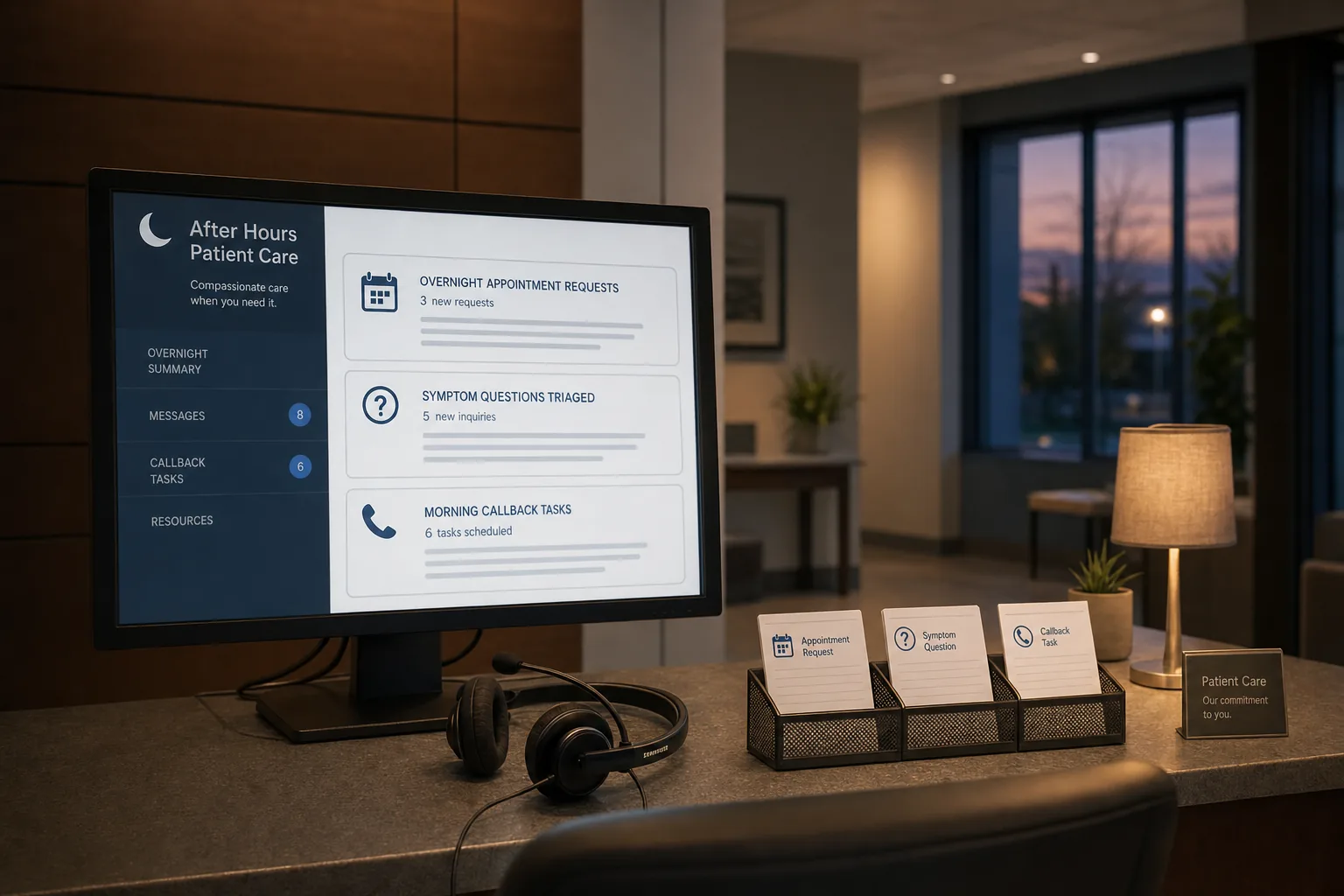
How a multi-specialty group uses AI to handle after-hours patient calls: answer routine requests, book visits, and route urgent concerns to the on-call path.
8 min read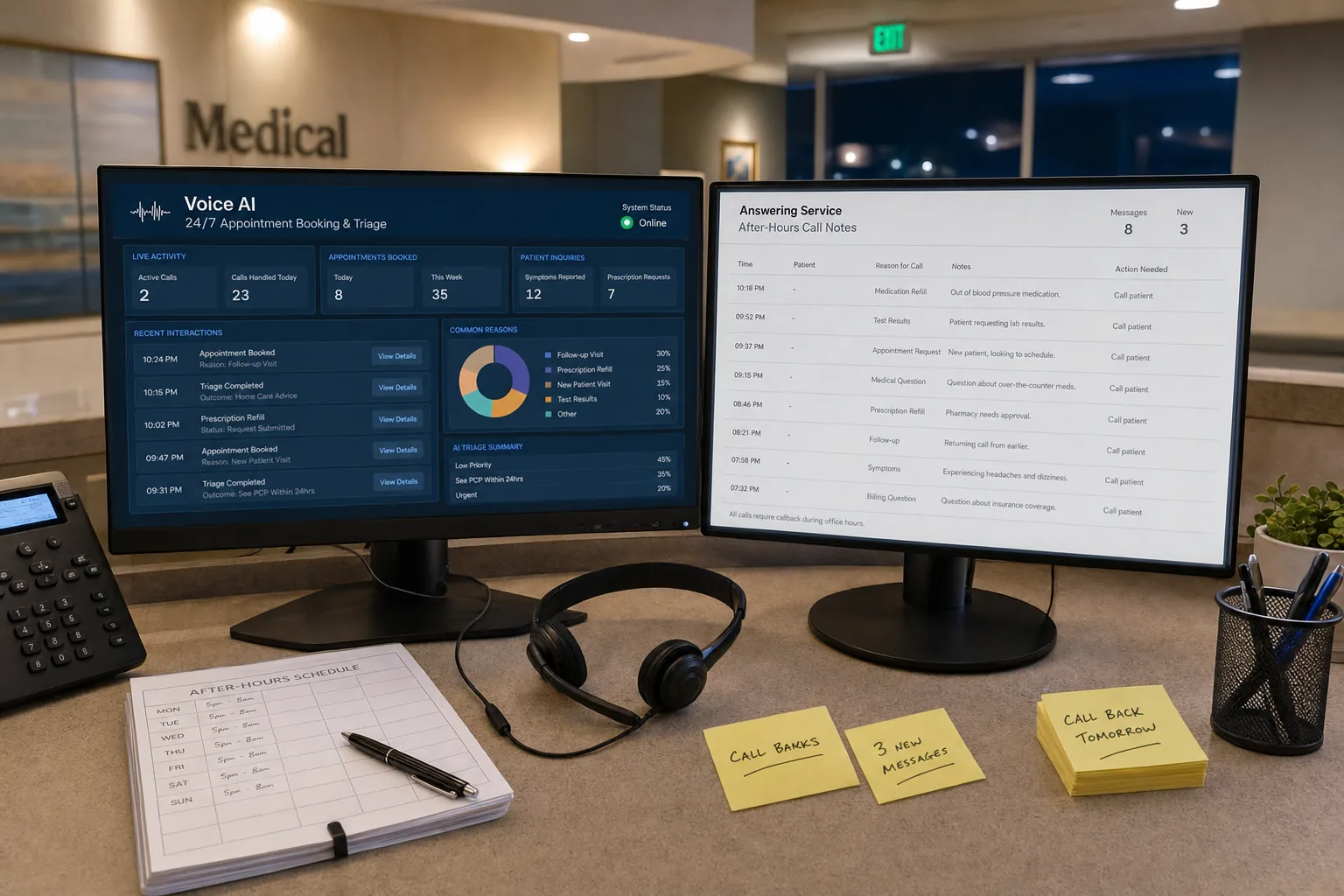
After-hours patient calls need more than message-taking. Compare voice AI and answering services by workflow, escalation, documentation, and outcomes.
3 min read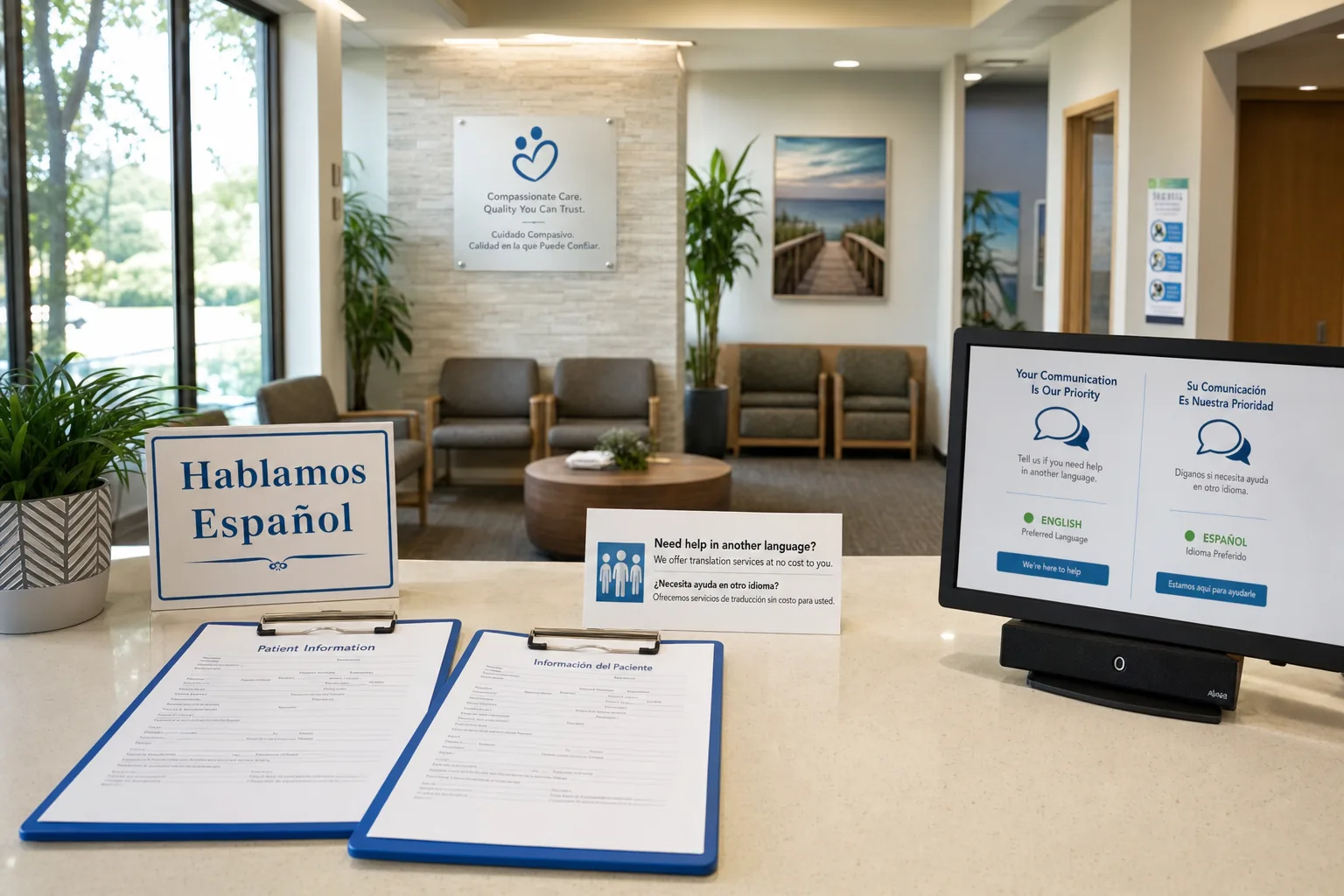
Yes. An AI voice agent takes the whole booking, reschedule and reminder conversation in Spanish, so Spanish-preferring patients stop waiting for the one bilingual person at the desk.
6 min read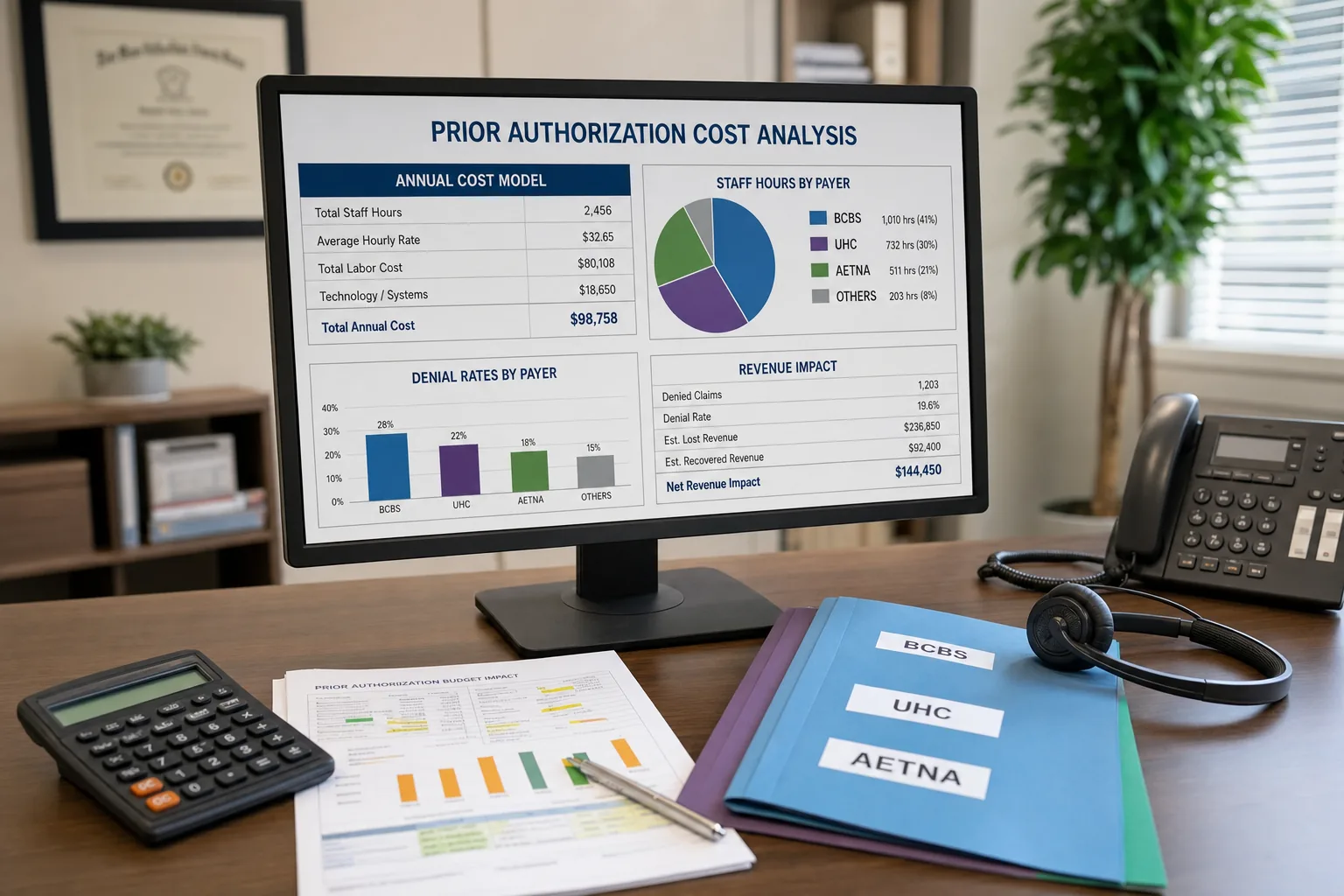
Manual prior authorization creates hidden labor and delay costs. Learn how to model your practice burden, identify workflow gaps, and evaluate automation.
3 min read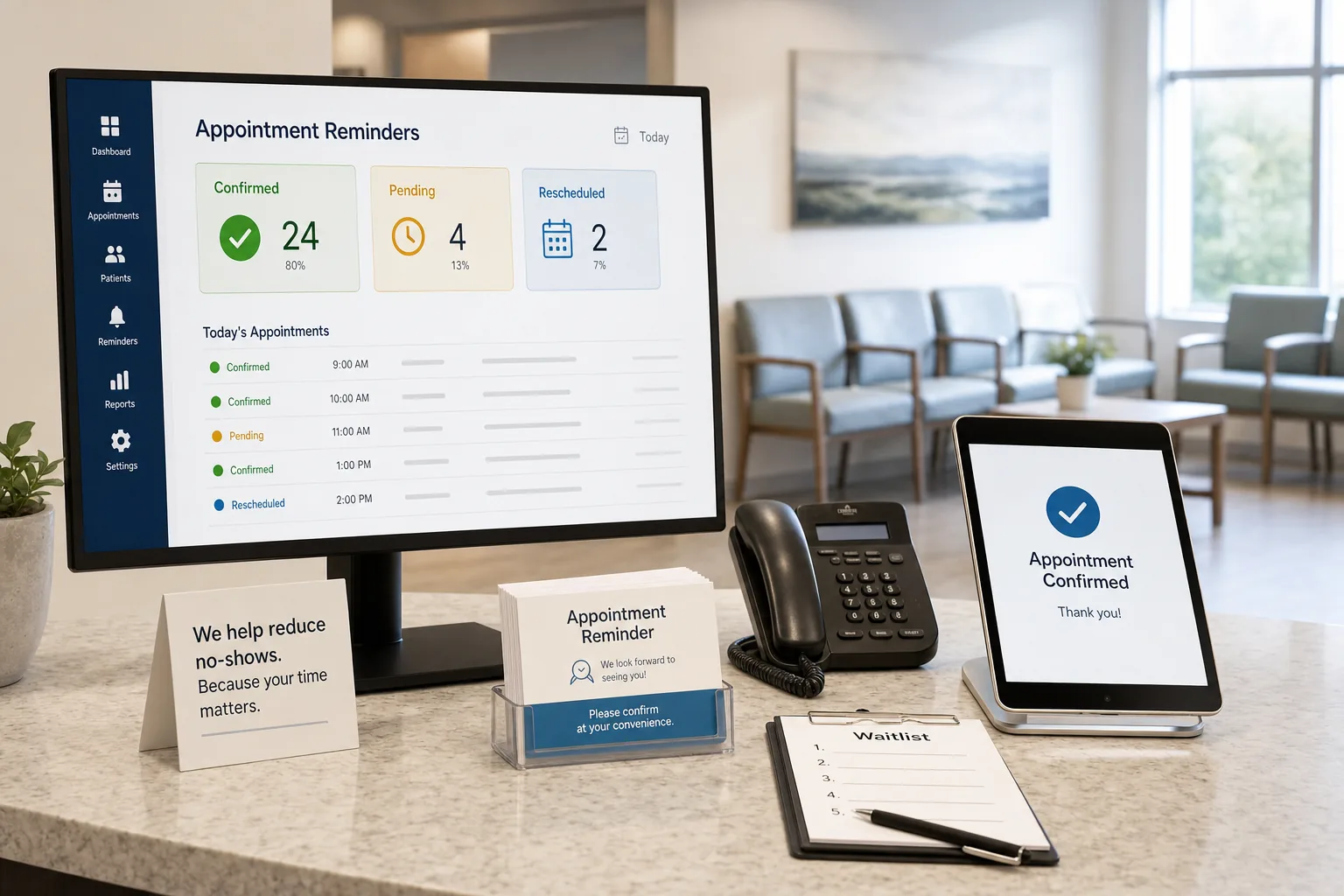
No-shows disrupt schedules, continuity, and revenue. Learn how AI voice agents support reminders, two-way rescheduling, and waitlist management for practices.
6 min read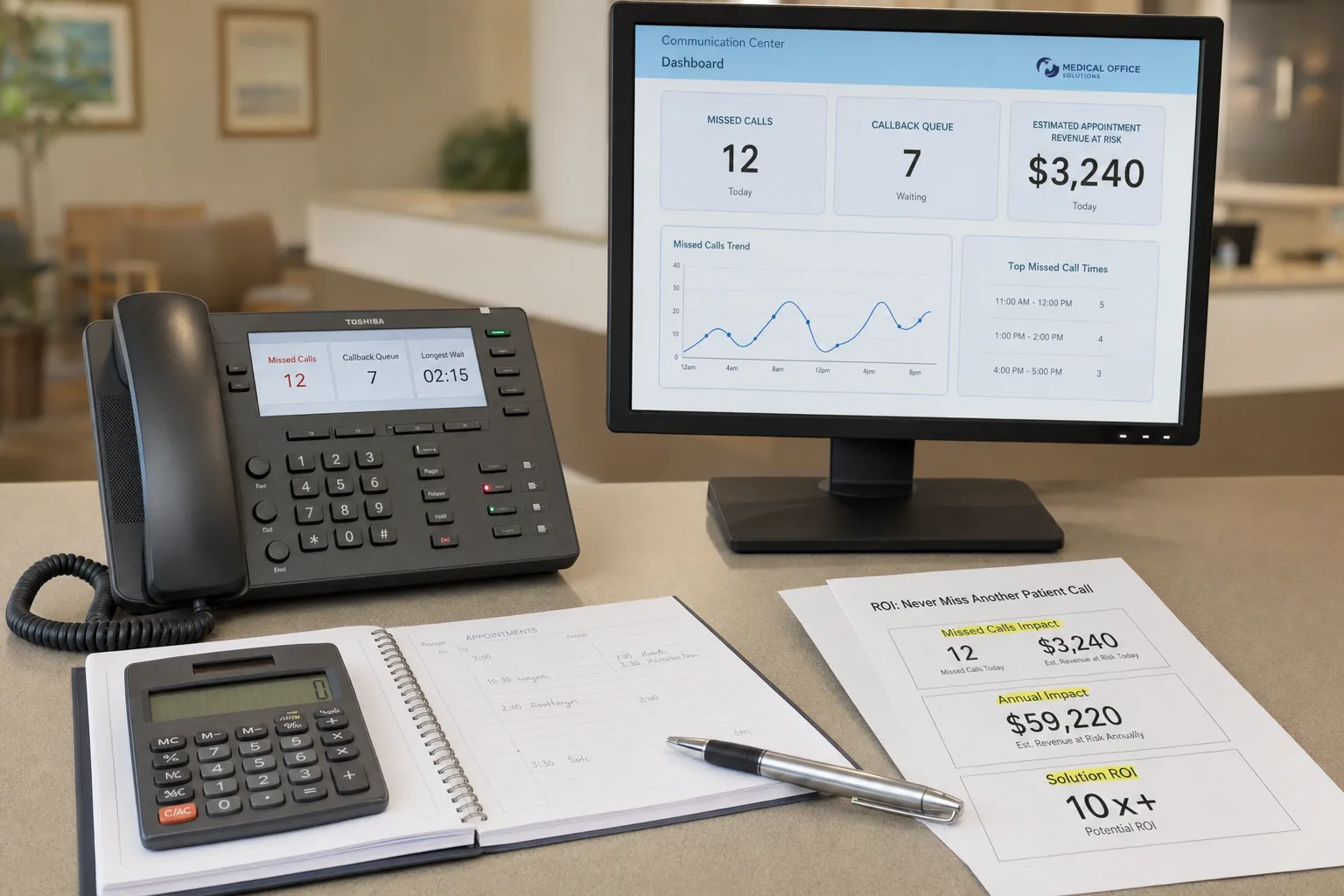
Missed patient calls create scheduling friction and lost opportunities. Learn how to measure demand, response gaps, and evaluate automation ROI honestly.
2 min read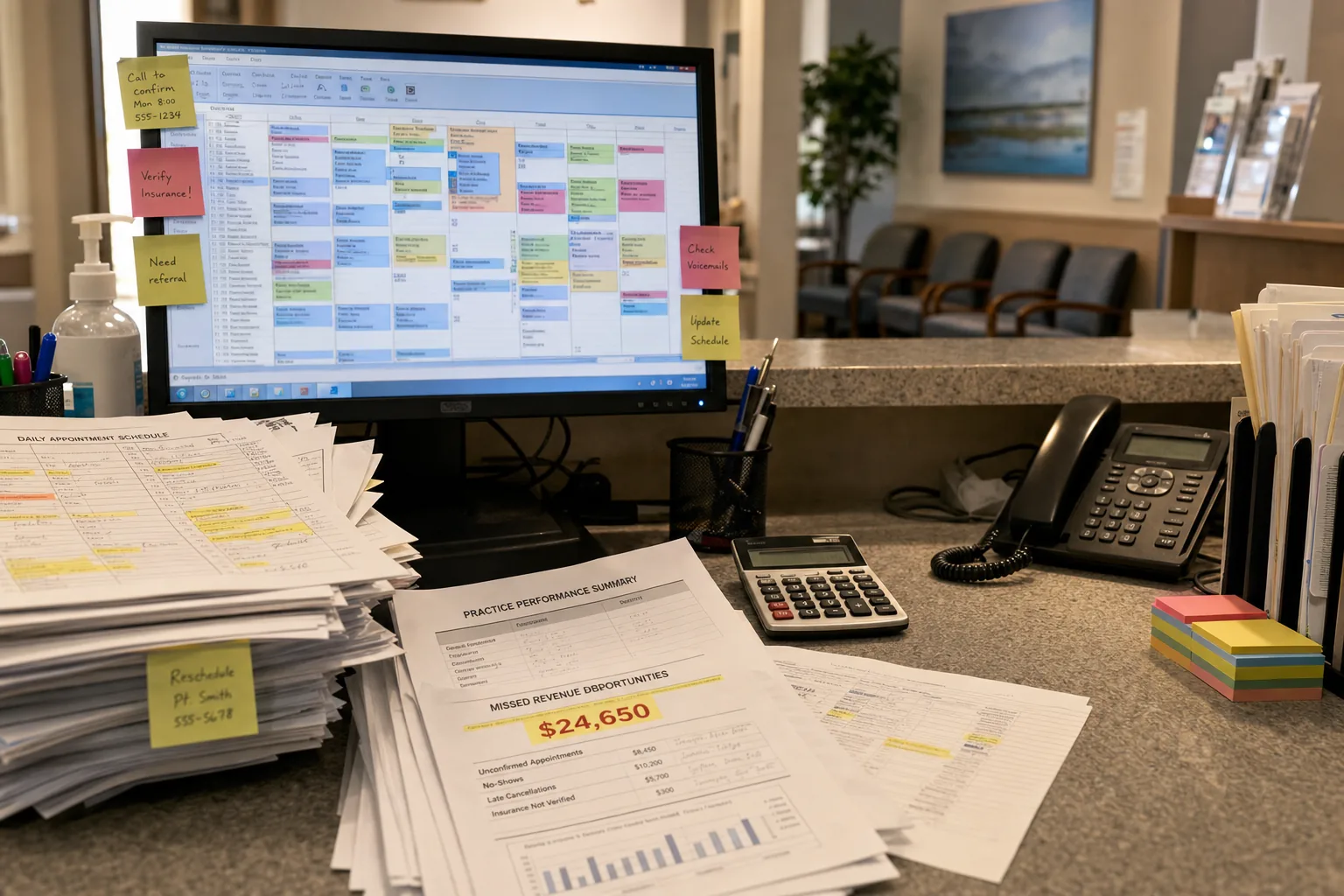
Manual scheduling creates callbacks, rework, and missed access opportunities. Learn how to measure the burden and build a transparent automation model.
2 min read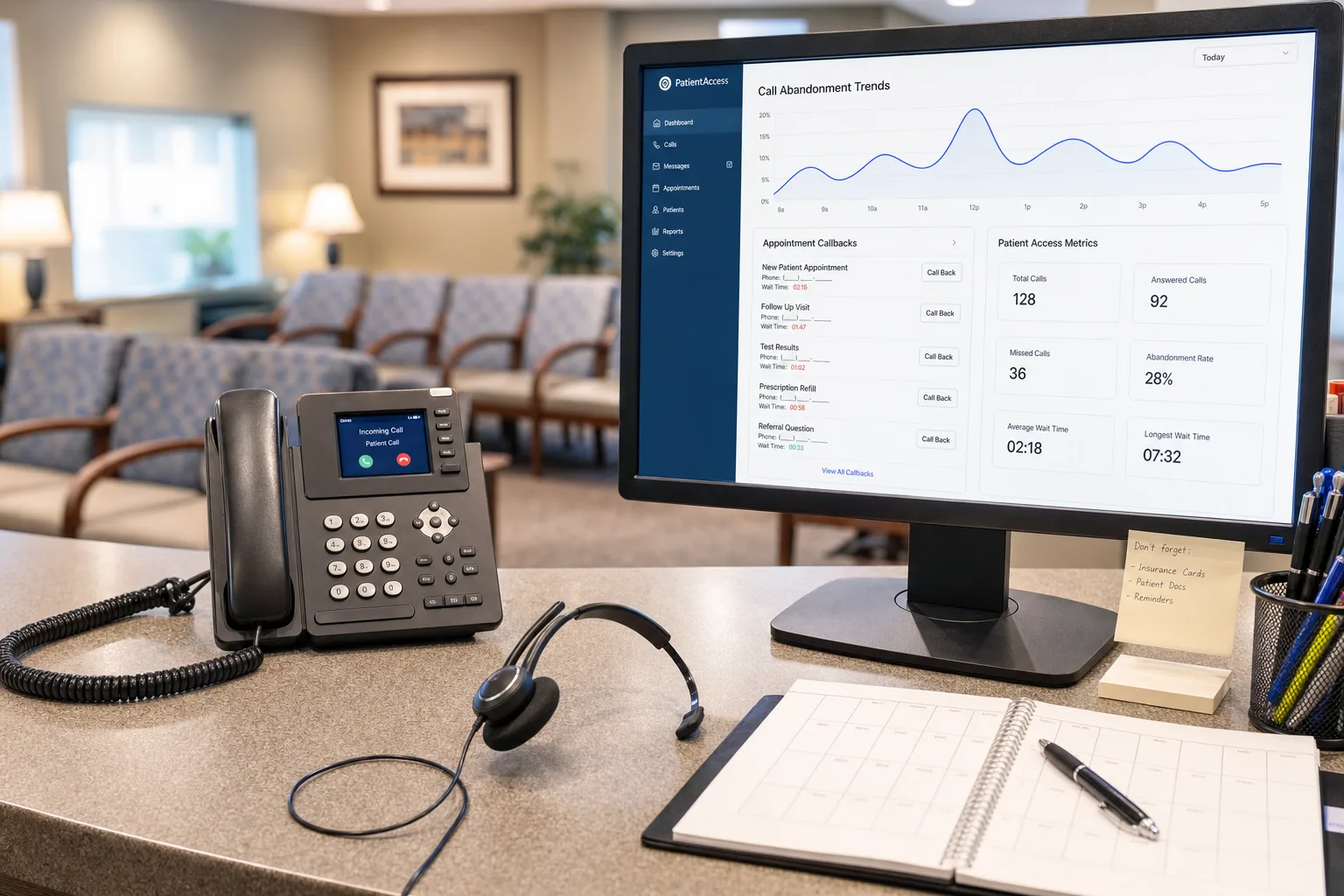
Practices miss patient calls at predictable hours, not at random. How to measure the gap, find the hours that leak, and decide whether voice AI closes it.
11 min read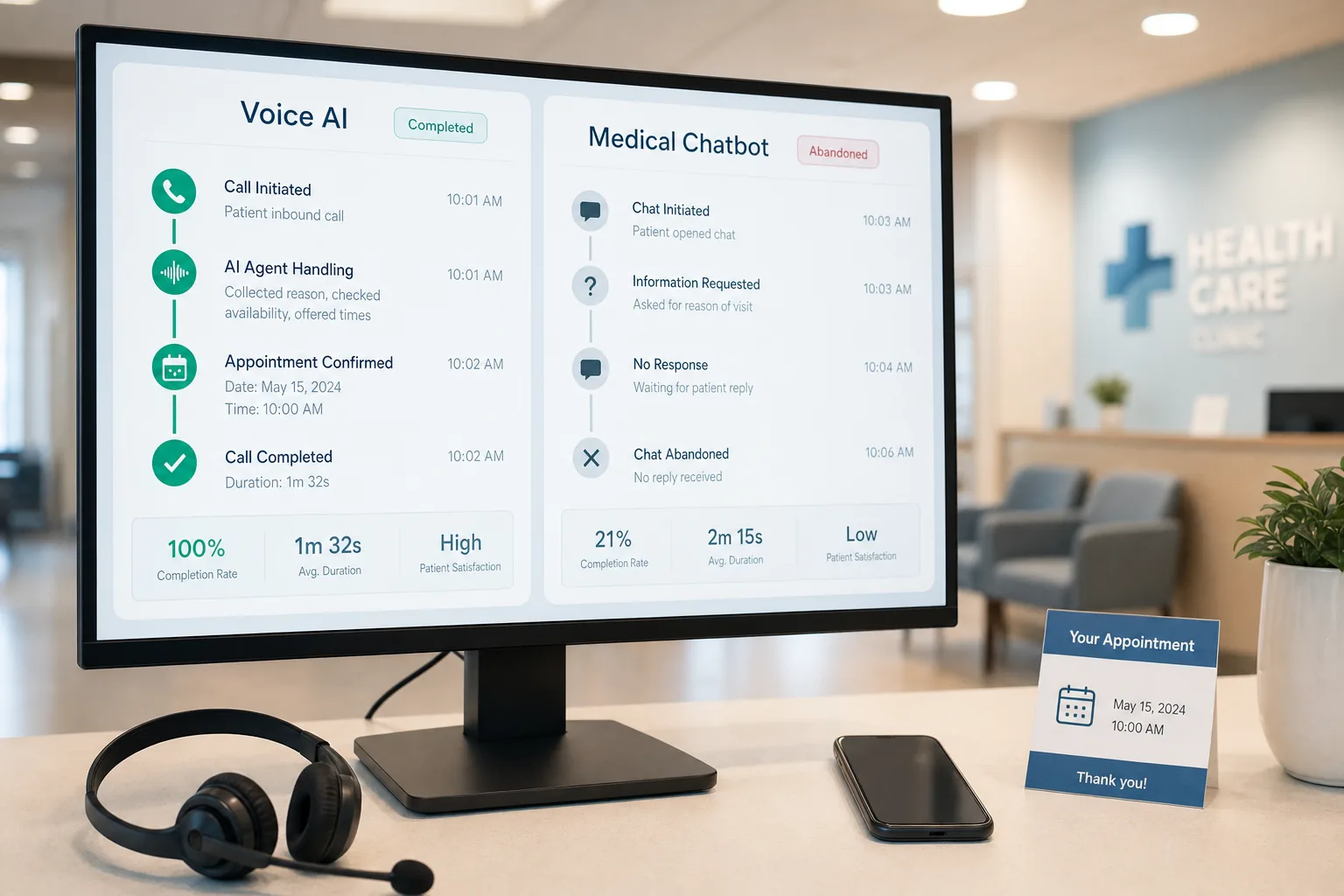
Patients abandon text-based medical chatbots at high rates. Voice AI keeps conversations going. See why practices are switching to voice automation for access.
5 min read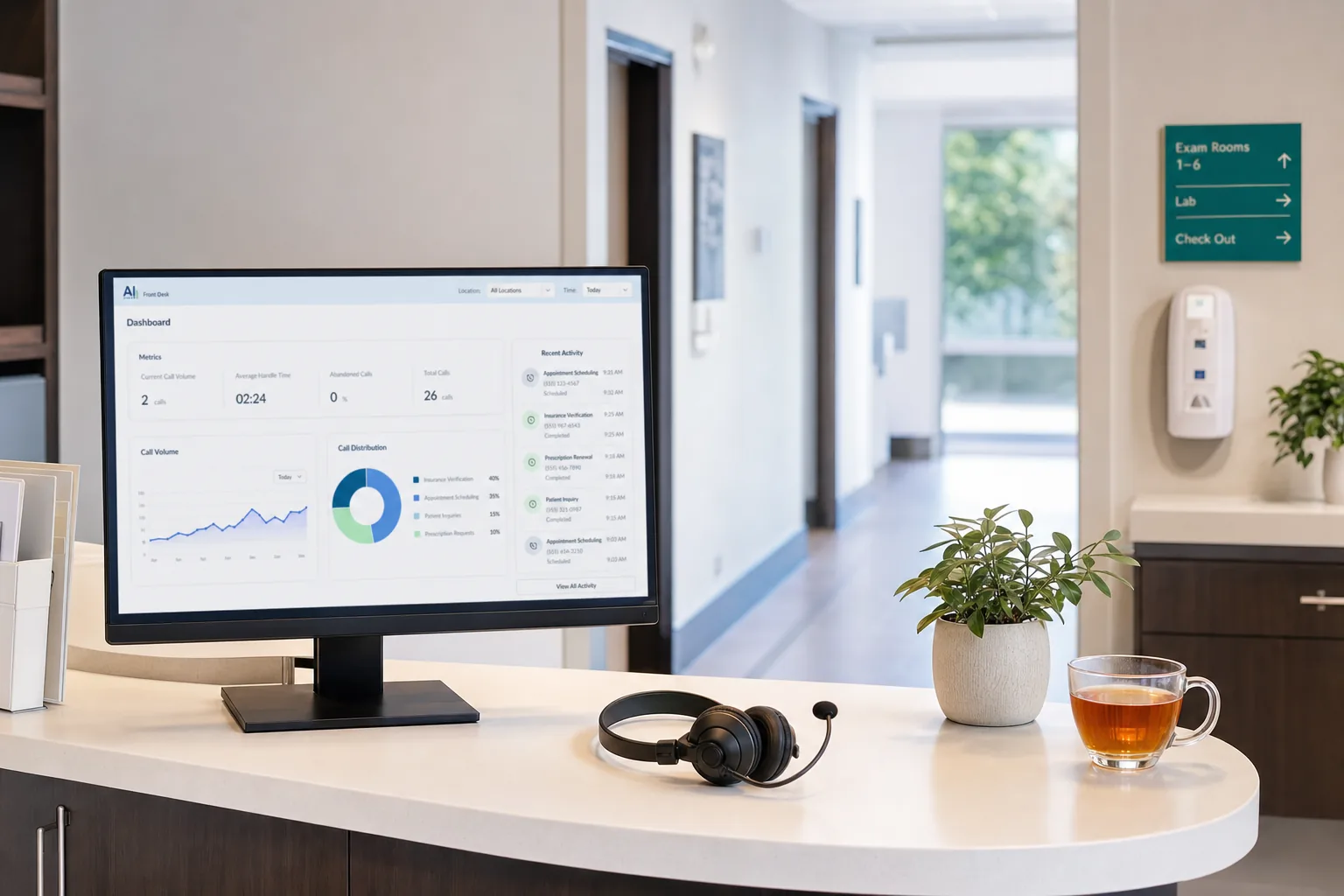
Repetitive phone work can fuel staff burnout and turnover. Learn how voice AI handles routine requests while your team focuses on complex patient needs.
5 min read
Learn how AI-powered voice technology is improving patient communication and operational efficiency for healthcare practices through connected workflows.
4 min read