Practice Operations
Urology Prior Auth and Post-Procedure Calls: How AI Reduces the Burden
Urology practices face prior auth for cystoscopies, testosterone therapy, and cancer diagnostics while managing high post-procedure call volume. AI voice agents handle auth status calls and post-op follow-up in athenahealth.
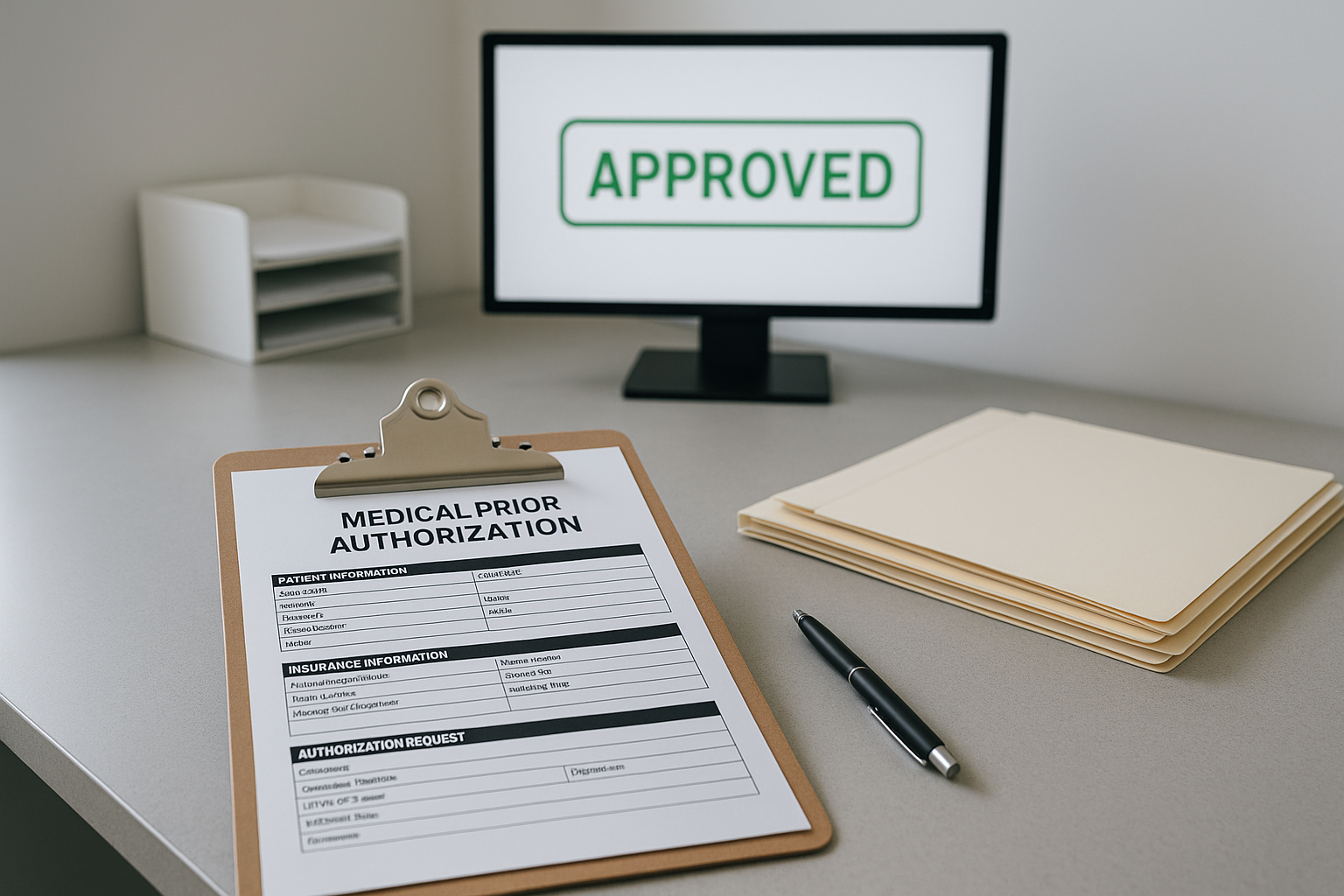
A urology practice gets a prior authorization denial for a testosterone therapy patient. The payer wants updated lab values showing deficiency confirmation, a second testosterone measurement taken at a different time of day, and documentation that the patient was counseled on lifestyle modifications first.
The MA who handles prior auth has this conversation with that payer’s portal every week. Different drug, same documentation game.
Urology prior authorization hits on multiple fronts: diagnostic procedures, surgical interventions, specialty medications, and cancer treatment. The breadth is what makes it hard. A urology practice isn’t managing one type of prior auth process - it’s managing 6-8 different workflows simultaneously, each with different payer requirements and documentation standards.
AI voice agents don’t manage the payer portals. But they handle the patient communication layer around prior authorization - the status calls, the notification calls when approvals land, the routing when things go wrong - so the billing and prior auth staff can work the submissions without constant interruption.
The prior auth workload in urology
Urology generates prior authorization requirements across several distinct clinical categories:
Diagnostic procedures
Cystoscopy and urodynamic testing require prior auth from most commercial payers. Patients scheduled for these procedures call to confirm their authorization is in place before their appointment. For a practice doing 30+ cystoscopies per month, that’s a steady stream of pre-procedure authorization confirmation calls.
Surgical procedures
TURP (transurethral resection of the prostate), robot-assisted prostatectomy, nephrectomy, and other urologic surgeries require prior auth with clinical documentation. Surgical auth requests generate more documentation overhead than diagnostic procedure requests, and denials require peer-to-peer review processes.
Testosterone replacement therapy
TRT prior auth is a recurring, documentation-intensive process. Many commercial payers require:
- Two testosterone measurements confirming deficiency (often at different times of day)
- Documentation of symptoms
- Evidence of other contributing factors ruled out
- Trial of lifestyle modification
- Specific diagnosis codes that payers accept
TRT patients call frequently about their prior auth status because the medication is expensive without coverage and they’re often managing symptoms while waiting for approval.
Prostate cancer diagnostics
PSA monitoring, multiparametric MRI of the prostate, and biopsy procedures require prior auth from some payers. For patients actively being worked up for prostate cancer, delays due to authorization hold-ups are particularly anxiety-provoking.
Overactive bladder medications
Newer OAB medications (beta-3 agonists, oncology-pathway OAB drugs) require step therapy documentation showing failure of first-line anticholinergics. The step therapy documentation process is formulaic but time-consuming.
The post-procedure call pattern in urology
Urology procedures generate specific post-procedure call patterns that differ from most medical specialties.
Post-cystoscopy calls: Patients call with questions about blood in urine, urinary frequency, or discomfort following cystoscopy. Most of these are within normal recovery range and addressable by protocol. Calls with symptoms outside the normal range - fever, inability to void, significant bleeding - require clinical escalation.
Post-vasectomy calls: Vasectomy patients call with questions about scrotal swelling, activity restrictions, and the timeline for their confirmation semen analysis. These calls are high-frequency in the days following the procedure and largely protocol-driven.
Post-TURP and post-prostatectomy calls: These patients have more complex post-operative questions and are more likely to require clinical response, but the initial triage can be handled by AI to separate routine recovery questions from concerning symptoms.
Catheter management calls: Patients with indwelling catheters call about care questions, leakage, and when to return for removal. Catheter management protocols are well-defined and AI can handle the initial call.
In a 3-physician urology practice doing 15-20 procedures per week, post-procedure calls can represent 30-50 contacts per week that don’t require clinical staff for initial handling.
Where AI reduces the burden
Prior auth status calls
When a TRT patient calls asking whether their testosterone prescription is approved this month, the AI checks athenahealth for current authorization status and gives a direct answer. For pending appeals, it routes to billing. Staff processing the monthly TRT reauthorizations aren’t interrupted by every patient status inquiry.
Pre-procedure authorization confirmation
Two days before a scheduled cystoscopy, patients often call to confirm their procedure is covered. AI handles this with an athenahealth authorization lookup and confirms the appointment. Patients who discover an authorization issue at this stage route to billing for emergency resolution.
Post-procedure triage
Post-vasectomy calls get an AI triage: the patient describes their symptoms, the AI walks through the post-vasectomy protocol, and routine recovery questions are addressed without clinical staff involvement. Symptoms that fall outside the protocol - fever, hematoma signs, inability to void - route immediately to the on-call provider.
Testosterone denial notifications
When TRT prior auth is denied and the patient needs to be notified, AI handles the outbound call: provides factual information about the denial, explains the next steps (appeal or alternative medication), and offers a billing callback for patients who want to discuss options. The billing specialist focused on the appeal isn’t simultaneously making notification calls.
Appointment reminders with auth context
For diagnostic procedures with prior auth requirements, outbound reminder calls that confirm both the appointment and the authorization status prevent the day-of situation where a procedure slot is lost because authorization wasn’t confirmed in advance.
The testosterone patient population
Testosterone replacement therapy patients are a significant administrative segment in many urology practices. They require:
- Regular lab monitoring (testosterone levels, hematocrit, PSA)
- Quarterly or annual prior auth renewals for continued coverage
- Prescription refill coordination between the urology practice, pharmacy, and sometimes an endocrinologist
- Counseling calls when payers change formulary coverage
This is a managed, ongoing patient relationship with consistent administrative touchpoints. AI handles the routine communication layer - lab reminder calls, prior auth status, refill routing - so the urology MA isn’t spending the afternoon on TRT patient calls while the billing specialist is working the surgical auth requests.
The robotic surgery prior auth workload
Robot-assisted prostatectomy is one of the higher-value procedures in urology, and its prior authorization requirements reflect that. Payers require documentation of:
- Prostate cancer diagnosis and Gleason score
- Clinical staging information
- Shared decision-making documentation between patient and provider
- Discussion of alternative treatment modalities
For a practice doing 4-6 robotic cases per month, the surgical prior auth workload is a significant billing function. The patient-facing communication around that process - status calls, documentation request routing, peer-to-peer scheduling - is AI-addressable without adding to the billing team’s submission workload.
Key takeaways
- Urology prior auth spans diagnostic procedures, surgery, TRT, prostate cancer diagnostics, and OAB medications - each with different payer requirements and documentation standards
- TRT patients generate monthly prior auth renewals and regular status call volume - AI handles the status call layer without interrupting the billing staff processing the renewals
- Post-procedure call triage for cystoscopy, vasectomy, and TURP patients is largely protocol-driven and addressable by AI for routine recovery questions
- Pre-procedure authorization confirmation calls - the “is my cystoscopy approved on Tuesday” call - route through AI with a real-time athenahealth lookup
- A 3-physician urology practice managing 6-8 concurrent prior auth workflows needs AI to handle the patient communication layer around those workflows without adding headcount
If your TRT billing cycle is generating monthly patient status calls while your surgical prior auth is waiting on peer-to-peer scheduling, you’re managing two bandwidth problems simultaneously.
See how Pretty Good AI handles urology practice workflows in athenahealth
Sources:
- American Urological Association, Practice Management Resources: AUA Practice Management
- American Medical Association 2024 Prior Authorization Survey: Prior Authorization Reform
Ready to reduce missed calls by 50%?
15-minute demo. See how voice AI works with your athenaOne practice.
Schedule a Demo →Written by Kevin Henrikson