Practice Operations
Urology Practice Scheduling Automation With AI
Urology practices manage complex procedure scheduling alongside high-sensitivity patient calls. AI voice agents integrated with athenaOne handle the coordination so staff can focus on clinical work.
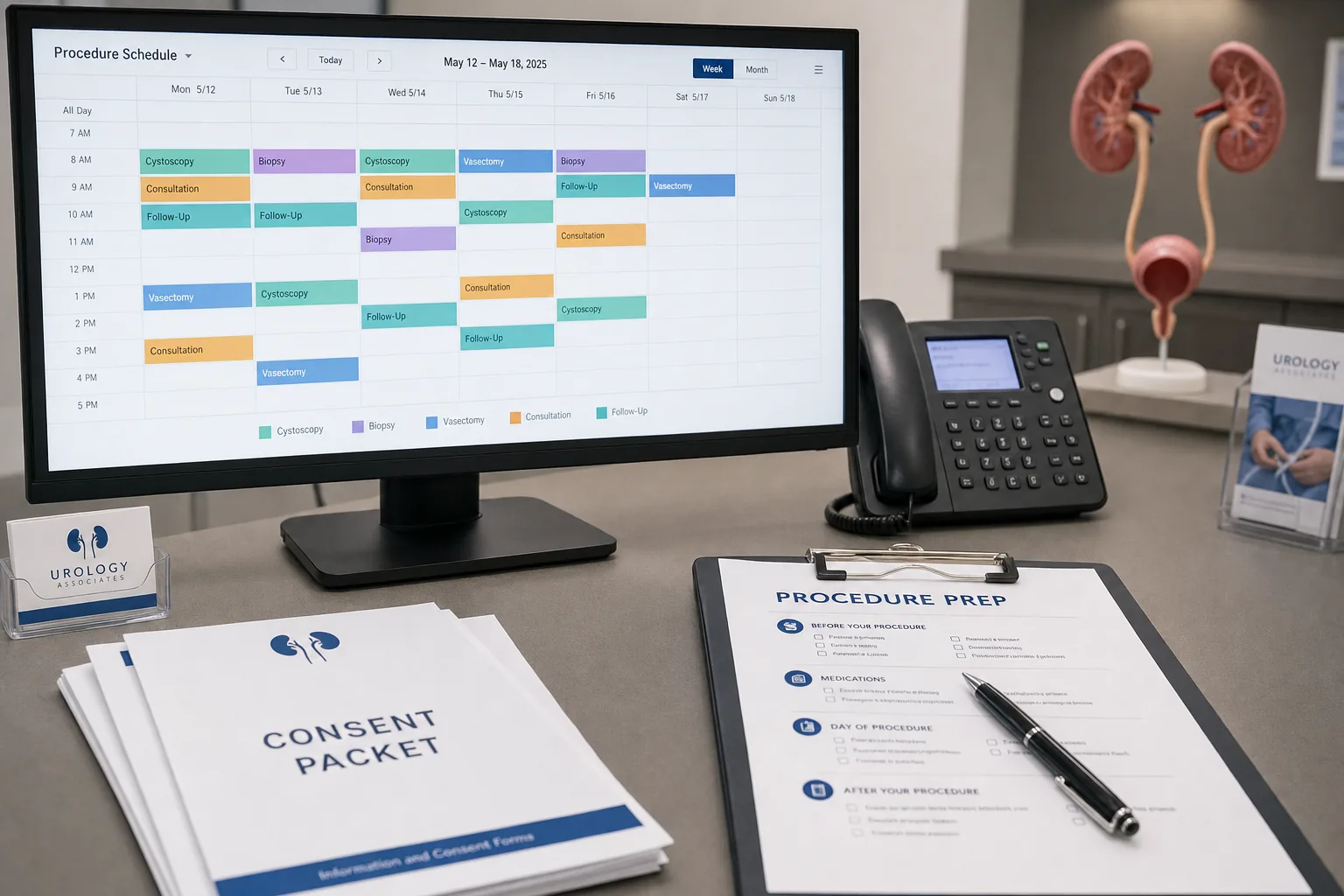
A urology practice schedules five types of appointments that have almost nothing in common with each other.
A new patient consultation for elevated PSA requires a 45-minute slot, pre-visit lab results, and patient intake forms. A cystoscopy requires a procedure room, specific prep instructions, a follow-up call within 24 hours, and an authorization confirmed before the slot is used. A vasectomy requires consent forms, a prep call, a procedure block, and a post-procedure check. A prostate biopsy requires imaging, a longer procedure window, anesthesia coordination in some cases, and an anxious patient who will call multiple times before and after the visit. A routine urology follow-up is 20 minutes.
These are not the same scheduling problem. But in most urology practices, they go through the same front desk, the same phone line, and the same staff person who is also handling incoming calls, refill requests, and insurance questions.
The coordination complexity is not unreasonable. The challenge is that each of these appointment types has its own pre-visit workflow, its own patient communication sequence, and its own post-visit follow-up requirement. Managing all of it manually means something consistently falls through the gap.
What makes urology scheduling different from general practice
Procedure scheduling requires multi-step patient preparation. Cystoscopies, prostate biopsies, urodynamic studies, and office-based procedures each have specific pre-visit preparation requirements, medication holds, bowel prep in some cases, specific hygiene instructions. These need to be communicated clearly before the appointment, confirmed that the patient understood them, and verified the day before the procedure.
When a patient arrives for a cystoscopy without completing the required prep, the procedure often cannot proceed. That appointment slot is wasted, the patient is frustrated, and the practice loses the procedural revenue. A failed appointment in urology is not just a no-show; it is a preparation failure, and preparation is the practice’s responsibility.
Diagnostic follow-up calls are high-stakes and time-sensitive. A patient who underwent a prostate biopsy last Thursday and has not heard anything is not a patient who will wait patiently until the next available appointment. Pathology results carry significant anxiety weight. Practices that communicate promptly when results are available, even if the result is “still pending”, have fewer after-hours calls, fewer complaints, and better patient satisfaction scores than practices where patients are left to wonder.
Post-procedure follow-up calls are standard of care but often deprioritized. The 24-hour follow-up call (after a cystoscopy, after a vasectomy, after a prostate biopsy) is standard clinical practice. It exists to catch complications early, answer patient questions, and confirm that the patient is recovering as expected. In a busy urology practice, those calls are often made inconsistently (when the nurse has time), which is not always within 24 hours.
Sensitive scheduling requests require careful handling. Urology practices receive scheduling calls about conditions that patients find embarrassing to discuss. Erectile dysfunction, urinary incontinence, pelvic pain: these are not calls that patients want to make three times because they could not get through. Every time a call to book a sensitive appointment goes to voicemail and is not returned promptly, there is a real chance the patient does not call back.
The pre-procedure communication failure
A urology practice with 10 procedure slots per day and a 15% failed-prep rate is losing 1.5 appointments per day to patients who arrived unprepared. Across 250 procedure days per year, that is 375 lost procedure slots.
Failed prep is almost entirely preventable. Patients who receive clear written prep instructions at the time of booking, a confirmation call 48 hours before the procedure, and a reminder the morning of the procedure fail at significantly lower rates than patients who receive the prep instructions once and are expected to remember them.
AI handles all three touchpoints automatically. When a procedure is booked in athenaOne, the AI sends prep instructions via the patient’s preferred channel, call, text, or portal. Two days before the procedure, the AI calls to confirm the patient has the instructions and has not started any medications that would require the procedure to be rescheduled. The morning of, the AI sends a reminder with arrival time and parking.
Staff does not make these calls. The AI makes them on schedule, every time, without depending on the nurse having a free 10 minutes.
What AI handles in urology scheduling
Appointment type routing. When a patient calls to schedule, the AI determines whether they need a new patient consult, a procedure appointment, a diagnostic follow-up, or a routine visit, and routes them to the appropriate slot type. This prevents the common problem of patients being booked in the wrong appointment type and arriving for a 20-minute slot when they needed a 60-minute procedural evaluation.
Pre-procedure prep communication. For each procedure type, the AI sends the relevant prep instructions at booking, confirms receipt before the procedure, and makes a day-before confirmation call. Prep delivery is tracked in athenaOne. If the patient has not confirmed receipt, the AI flags it for staff before the appointment.
Diagnostic result status calls. When pathology or lab results are pending after a procedure, the AI makes proactive status calls at the practice’s defined interval: “Your results are still pending, we expect them by [date], we’ll call you as soon as we have them.” These calls take less than a minute and eliminate most of the inbound calls from anxious patients checking on results.
Post-procedure follow-up. The 24-hour follow-up call after in-office procedures is automated. The AI calls the patient with a structured check-in: are you experiencing any unusual symptoms, are you taking pain medication as prescribed, do you have any questions. Responses that indicate a potential complication are flagged immediately to the on-call provider. Routine responses are logged in athenaOne.
Sensitive intake and scheduling. When a patient calls about a sensitive condition, the AI handles the intake with appropriate professionalism and collects the information needed to book the right appointment type. The patient does not need to repeat themselves to three different people. The AI books the appointment and sends confirmation without requiring the patient to leave a message that will sit in a voicemail queue.
Cancellation and rescheduling. When a urology patient cancels a procedure appointment, the protocol is different from a routine visit cancellation. The AI confirms whether the patient wants to reschedule, flags the cancellation for clinical staff review when the procedure type warrants it, and presents available slots. Procedure slot cancellations that cannot be filled quickly represent real revenue loss; the AI actively works to rebook them.
The new patient pipeline in urology
New patient consultations in urology often come from primary care referrals following a concerning PSA reading, unexplained hematuria, or urinary symptoms. These patients are referred because something potentially serious was found. They are not scheduling a routine physical.
The time between referral and first urology appointment matters clinically and matters to the patient. A patient who waits three weeks for a callback after a primary care referral for an elevated PSA is a patient who has spent three weeks in anxiety. A patient who is called within 24 hours of the referral and scheduled within a week has a fundamentally different experience.
AI handles the new patient intake call. When a referral comes in, the AI contacts the patient to confirm the referral, explain what the consultation will involve, and book the appointment. The call includes a request for the primary care records and any relevant lab or imaging results. The consultation is better prepared because the intake was handled promptly.
The after-hours question for urology practices
Urology practices with active patients in the post-procedure period, the 72 hours after a biopsy, the week after a procedure, receive after-hours calls that require clinical judgment. A patient calling at 11pm because they are experiencing unusual bleeding after a prostate biopsy is not a call that can wait until morning.
Most urology practices use an answering service for after-hours coverage. The answering service takes a message and pages the on-call provider. The on-call provider calls back, often without the patient’s chart. The patient explains the situation twice.
AI handles the front end of after-hours calls by collecting the patient’s name, date of birth, and the reason for the call, verifying the call against recent procedure records in athenaOne, and routing clinical calls to the on-call provider with the relevant chart context already pulled. The provider calls back with the chart open rather than starting from scratch.
Non-clinical after-hours calls, patients calling to reschedule a routine follow-up, patients with questions about prep instructions, patients wanting to know if their results are ready, are handled entirely by AI without waking anyone up.
Key takeaways for urology practice administrators
- Five procedure types with different prep requirements cannot be managed with one generic scheduling workflow: procedure-specific pre-visit communication is the highest-yield improvement in urology scheduling
- Failed prep rates above 10% are preventable: structured three-touchpoint communication (booking, 48-hour confirm, day-of reminder) addresses the cause
- Diagnostic result status calls reduce anxiety-driven inbound volume: a proactive “still pending” call eliminates most of the check-in calls before results arrive
- Post-procedure follow-up calls are standard of care: AI makes them consistently, without competing for staff time on high-volume days
- Sensitive appointment intake requires professionalism, not warmth: AI handles these calls with appropriate directness and books the right appointment type
- New patient referral speed matters clinically: a 24-hour callback and a one-week appointment window changes the patient’s experience and reduces referral loss
The procedure volume question
Urology practices typically operate below their procedural capacity because the scheduling infrastructure cannot keep pace with the coordination demands. A urologist who can perform 12 cystoscopies per day but regularly runs 8 because of failed preps, last-minute cancellations, and new patient intake delays is not revenue-constrained. The schedule is constrained.
AI addresses the scheduling constraints specifically, prep completion, new patient intake speed, cancellation fill rate. Procedural capacity that existed but was never captured becomes accessible.
The ceiling in urology scheduling is usually not the physician’s time. It is the practice’s ability to get prepared, confirmed patients into the right procedure slot on the right day.
Ready to reduce missed calls?
15-minute demo. See how an AI team works inside your athenaOne practice.
Schedule a Demo →Written by Kevin Henrikson